Kadmon Guni, Kadmon Martina
Heidelberg University, Medical Faculty, Heidelberg, Germany.
Carl-von-Ossietzky-University of Oldenburg, Faculty of Medicine and Health Sciences, Oldenburg, Germany.
GMS J Med Educ. 2016 Feb 15;33(1):Doc7. doi: 10.3205/zma001006. eCollection 2016.
Admission to undergraduate medical training in Germany occurs by central and local pathways. Central admission includes two distinct groups: Students with top school-leaving grades (best-SLG group) and students with inferior school-leaving grades who are admitted with a delay of up to seven years (delayed admission group). Students with academic difficulties and early dropouts are present in both groups. Local admission at our university involves the German Test for Medical Studies (TMS) and allows the admission by merit of students with a wide range of school-leaving grades.
To examine the justification of a TMS-based strategy to reduce the admission of potentially weak best school-leavers and enhance the admission of potentially able candidates with mediocre school-leaving grades.
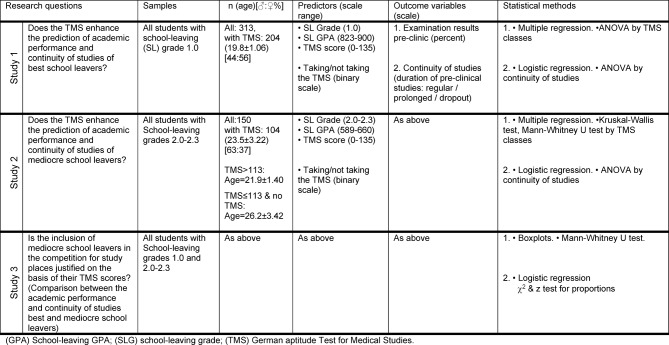
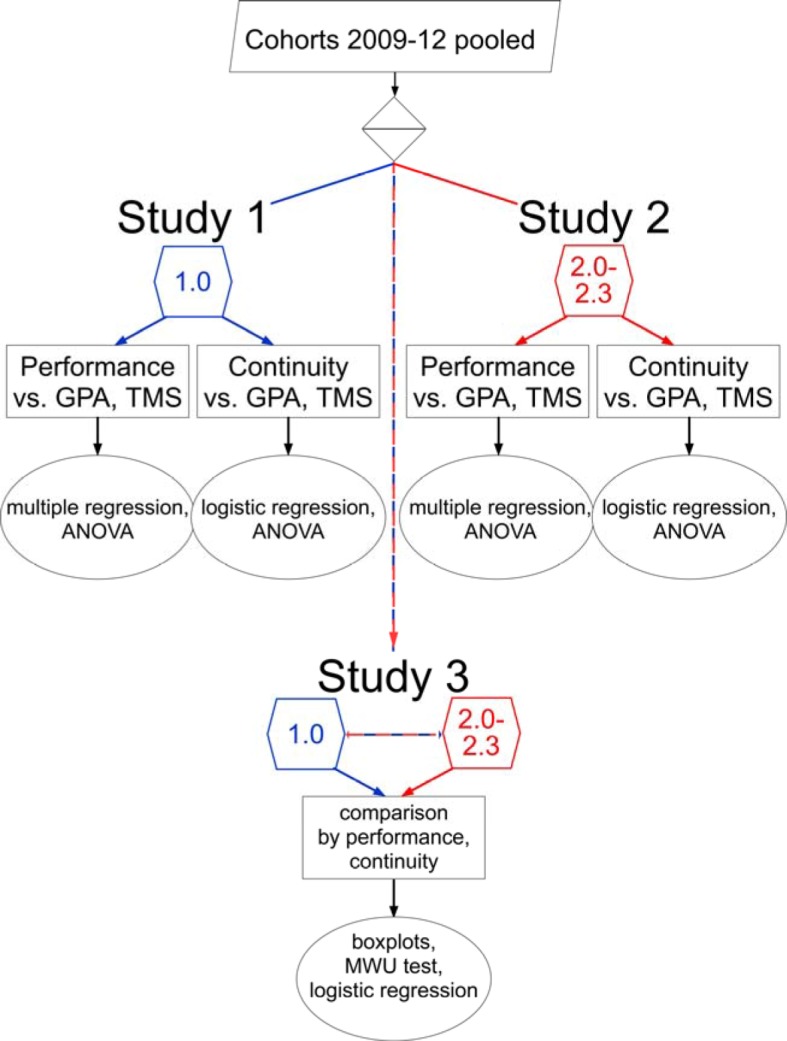
The prognostic contribution of the school-leaving (SL) GPA and the TMS to academic performance and to continuity in the pre-clinical part of the undergraduate medical program was examined in two study groups: best school leavers (SL grade 1.0, SL-GPA 823-900 points) and mediocre school leavers (SL grades 2.0-2.3, SL-GPA 689-660 points). The outcomes in both groups were compared in relation to their TMS results. The prospective study included four consecutive cohorts.
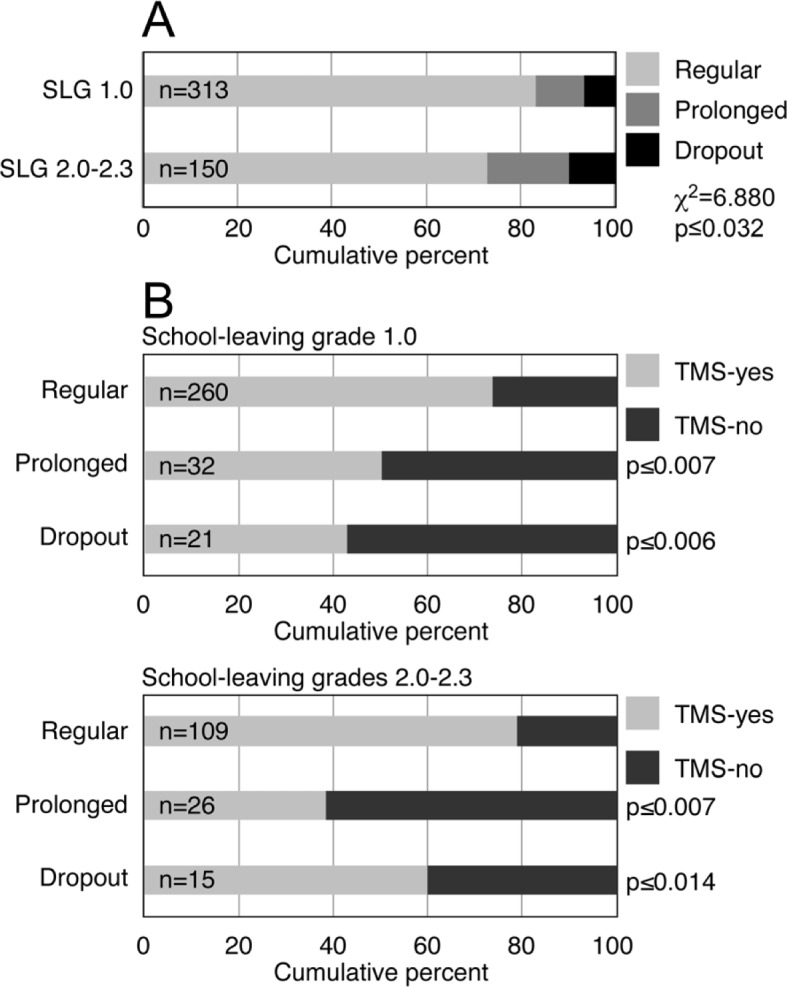
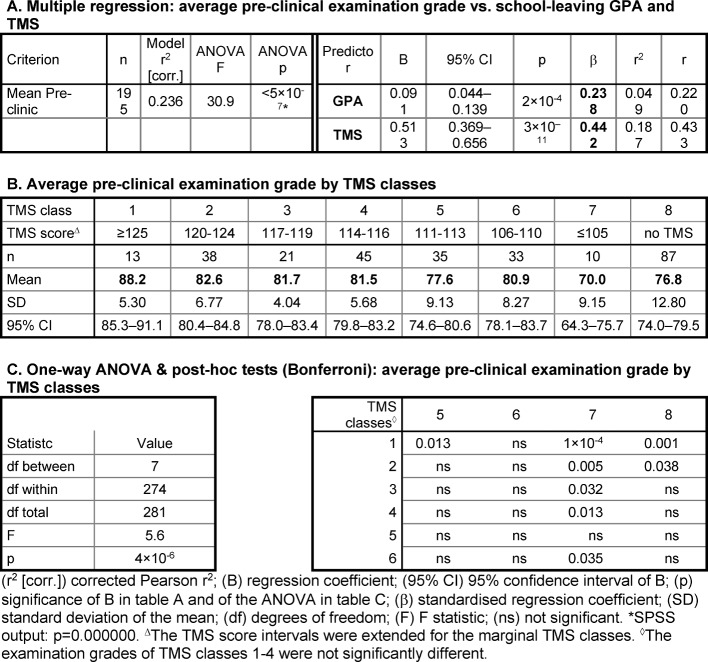
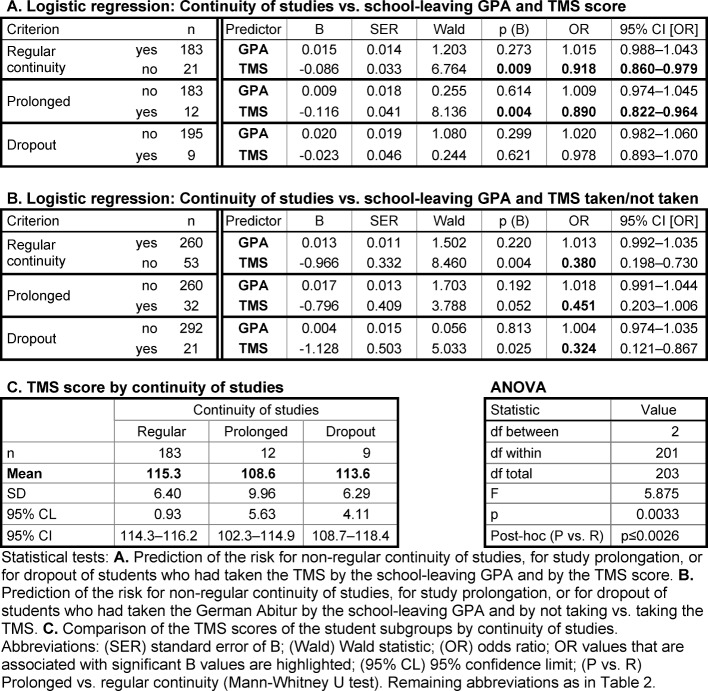
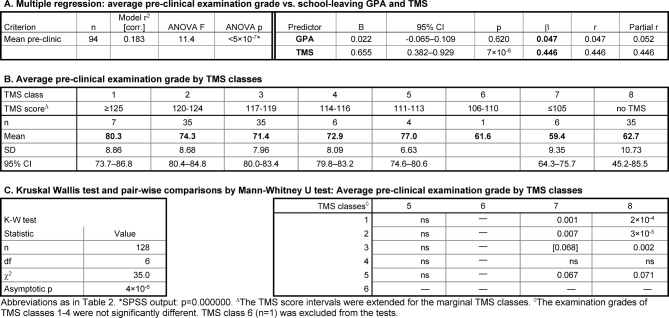
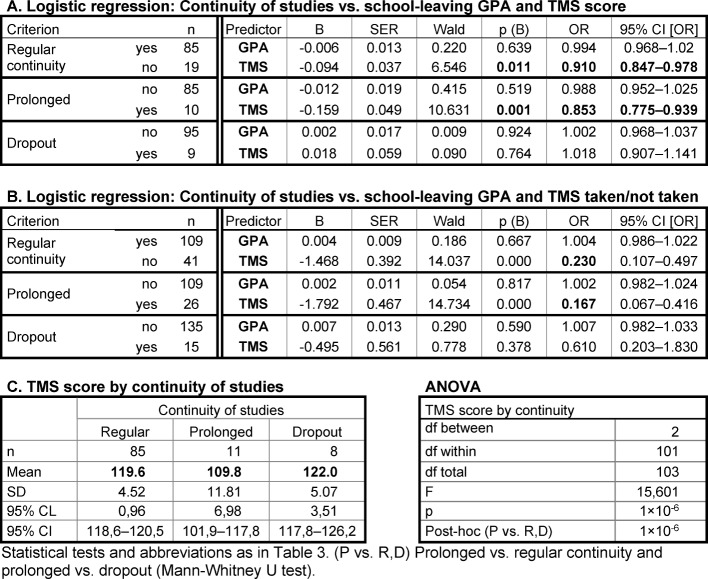
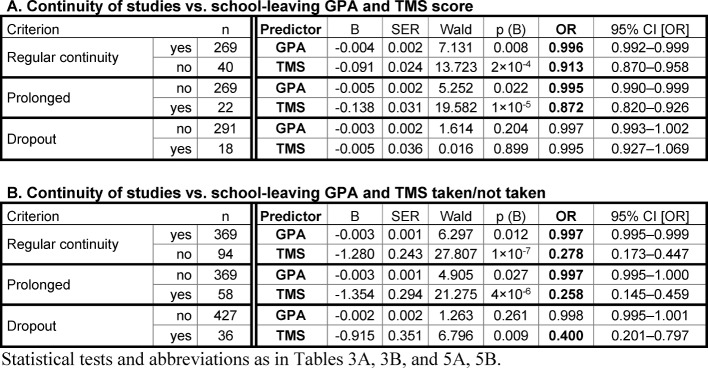
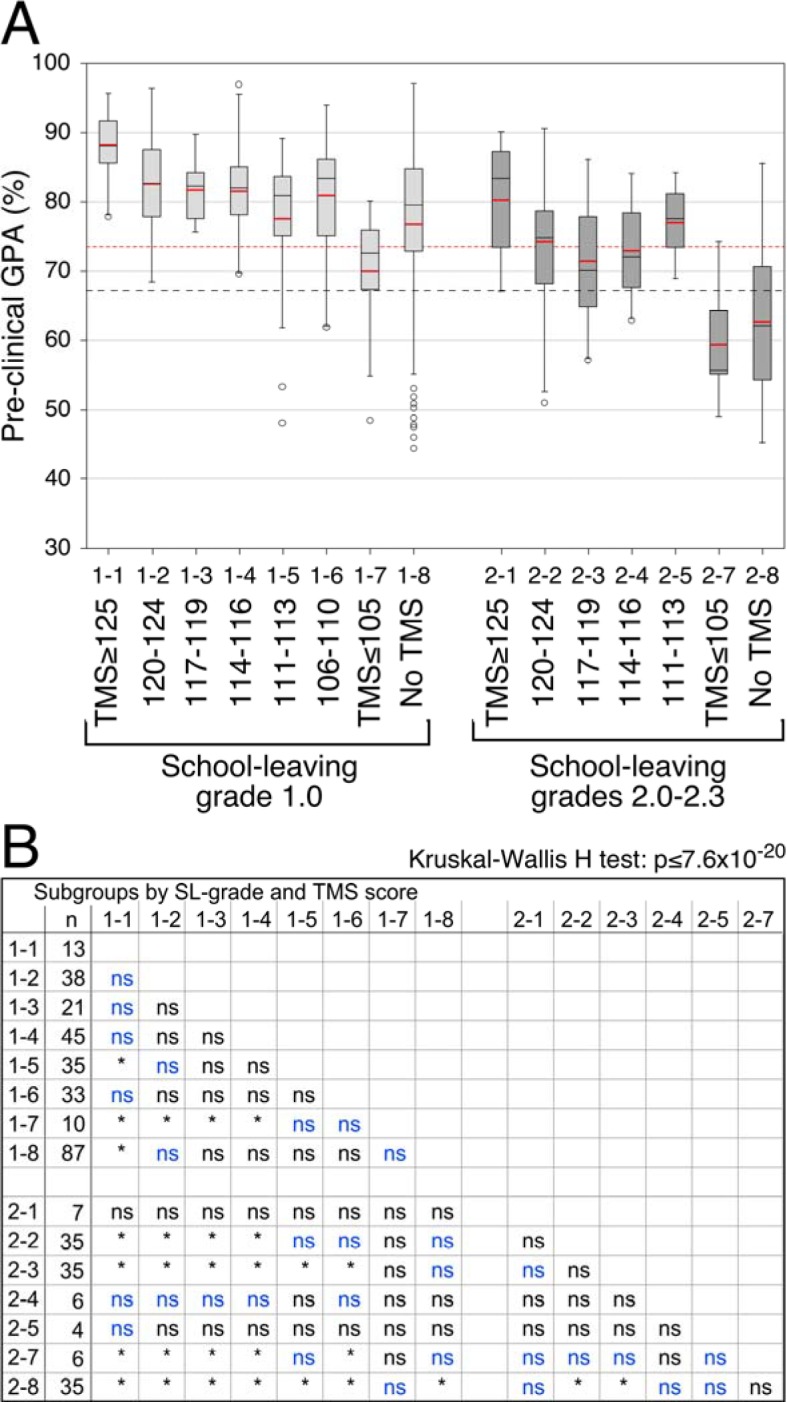
In each study group the TMS predicted the academic performance (β=0.442-0.446) and the continuity of studies (OR=0.890-0.853) better than the SL-GPA (β=0.238-0.047; OR=1.009-0.998). Attrition was most strongly associated with failing to take the TMS (OR=0.230-0.380). Mediocre school leavers with TMS scores ≥125 performed as well as the best school leavers. Mediocre school leavers with TMS scores between 110-124 performed on average less well but within the required standards. Best school leavers with mediocre TMS scores and 30% of the best school leavers who hadn't taken the TMS performed less well than most mediocre school leavers with high TMS scores.
The TMS appears to differentiate between potentially successful and less successful students in both GPA categories. Mediocre school leavers (SLG 2.0-2.3) with exceptionally high TMS results reach better pre-clinical examination results than best school leavers (SLG 1.0) with mediocre TMS results. Thus, the present data justify the use of the TMS to facilitate the participation of mediocre school leavers in the competition for admission slots.
德国本科医学培训的录取通过中央和地方途径进行。中央录取包括两个不同的群体:高中毕业成绩优异的学生(最佳高中毕业成绩组)和高中毕业成绩较差但延迟至多七年入学的学生(延迟录取组)。两个群体中都存在学习困难和提前辍学的学生。我校的地方录取涉及德国医学学习测试(TMS),允许成绩范围广泛的学生凭成绩录取。
研究基于TMS的策略的合理性,以减少潜在能力较弱的最佳高中毕业生的录取,并增加高中毕业成绩中等但有潜力的考生的录取。
在两个研究组中考察高中毕业(SL)平均绩点和TMS对本科医学课程临床前部分的学业成绩和学习连续性的预测作用:最佳高中毕业生(SL成绩1.0,SL平均绩点823 - 900分)和中等高中毕业生(SL成绩2.0 - 2.3,SL平均绩点689 - 660分)。比较两组的结果与其TMS成绩的关系。前瞻性研究包括连续四个队列。
在每个研究组中,TMS比SL平均绩点更能预测学业成绩(β = 0.442 - 0.446)和学习连续性(OR = 0.890 - 0.853)(β = 0.238 - 0.047;OR = 1.009 - 0.998)。退学与未参加TMS的关联最为强烈(OR = 0.230 - 0.380)。TMS成绩≥125的中等高中毕业生表现与最佳高中毕业生相当。TMS成绩在110 - 124之间的中等高中毕业生平均表现较差,但在要求标准之内。TMS成绩中等的最佳高中毕业生以及30%未参加TMS的最佳高中毕业生表现不如大多数TMS成绩高的中等高中毕业生。
TMS似乎能区分两个平均绩点类别中潜在成功和不太成功的学生。TMS成绩极高的中等高中毕业生(SLG 2.0 - 2.3)在临床前考试中的成绩比TMS成绩中等的最佳高中毕业生(SLG 1.0)更好。因此,目前的数据证明使用TMS有助于中等高中毕业生参与入学名额竞争是合理的。