Department of Medical Ethics and Philosophy of Medicine, Erasmus MC, University Medical Centre Rotterdam, Wytemaweg 80, 3015, CN, Rotterdam, The Netherlands.
BMC Med Ethics. 2019 Nov 9;20(1):80. doi: 10.1186/s12910-019-0420-8.
Patients with unmet medical needs sometimes resort to non-standard treatment options, including the use of unapproved, investigational drugs in the context of clinical trials, compassionate use or named-patient programs. The views and experiences of patients with unmet medical needs regarding unapproved, investigational drugs have not yet been examined empirically.
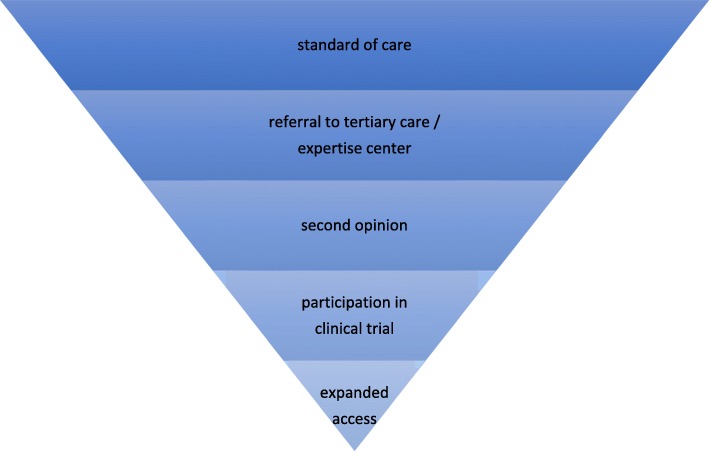
In this qualitative study, exploratory interviews and focus groups were held with patients with chronic or life-threatening diseases (n = 39), about topics related to non-standard treatment options, such as the search for non-standard treatment options, patients' views of the moral obligations of doctors, and the conditions under which they would or would not wish to use non-standard treatment options, including expanded access to unapproved, investigational drugs.
Respondents had very little knowledge about and/or experience with existing opportunities for expanded access to investigational drugs, although some respondents were actively looking for non-standard treatment options. They had high expectations of their treating physicians, assuming them to be aware of non-standard treatment options, including clinical trials elsewhere and expanded access programs, and assuming that they would inform their patients about such options. Respondents carefully weighed the risks and potential benefits of pursuing expanded access, citing concerns related to the scientific evidence of the safety and efficacy of the drug, side effects, drug-drug interactions, and the maintaining of good quality of life. Respondents stressed the importance of education and assertiveness to obtain access to good-quality health care, and were willing to pay out of pocket for investigational drugs. Patients expressed concerns about equal access to new and/or non-standard treatment options.
When the end of a standard treatment trajectory comes into view, patients may prefer that treating physicians discuss non-standard treatment options with them, including opportunities for expanded access to unapproved, investigational drugs. Although our respondents had varying levels of understanding of expanded access programs, they seemed capable of making well-considered choices with regard to non-standard treatment options and had realistic expectations with regard to the safety and efficacy of such options. Dutch patients might be less likely to fall prey to false hope than often presumed.
未满足医疗需求的患者有时会诉诸非标准治疗方案,包括在临床试验背景下使用未经批准的研究性药物、同情用药或指定患者计划。尚未从实证角度研究过未满足医疗需求的患者对未经批准的研究性药物的看法和体验。
在这项定性研究中,对 39 名患有慢性或危及生命疾病的患者进行了探索性访谈和焦点小组讨论,主题涉及非标准治疗方案,例如寻找非标准治疗方案、患者对医生道德义务的看法,以及他们愿意或不愿意使用非标准治疗方案的条件,包括扩大获得未经批准的研究性药物的途径。
受访者对扩大获得研究性药物的现有机会知之甚少,或者没有相关经验,尽管一些受访者正在积极寻找非标准治疗方案。他们对治疗医生寄予厚望,认为他们了解非标准治疗方案,包括其他地方的临床试验和扩大准入方案,并认为他们会向患者提供这些方案的信息。受访者仔细权衡了扩大准入的风险和潜在获益,他们提到了对药物安全性和疗效的科学证据、副作用、药物相互作用以及维持良好生活质量的担忧。受访者强调了获得高质量医疗保健的教育和自信的重要性,并且愿意自费购买研究性药物。患者对新的和/或非标准治疗方案的平等获得机会表示关注。
当标准治疗轨迹的终点出现时,患者可能更希望治疗医生与他们讨论非标准治疗方案,包括扩大获得未经批准的研究性药物的机会。尽管我们的受访者对扩大准入方案的理解程度不同,但他们似乎能够对非标准治疗方案做出深思熟虑的选择,并且对这些方案的安全性和疗效持有现实的期望。荷兰患者可能不像人们通常认为的那样容易陷入虚假希望的陷阱。