Sierra Ana Paula Rennó, Lima Giscard Humberto Oliveira, da Silva Elton Dias, Maciel Jaqueline Fernanda de Souza, Benetti Marino Pereira, de Oliveira Rodrigo Assunção, Martins Patrícia Fátima de Oliveira, Kiss Maria Augusta Pedanti, Ghorayeb Nabil, Newsholme Philip, Pesquero João Bosco, Cury-Boaventura Maria Fernanda
School of Physical Education and Sport, University of São Paulo, Sao Paulo, Brazil.
Sports Cardiology Department, Dante Pazzanese Institute of Cardiology, Sao Paulo, Brazil.
Front Genet. 2019 Oct 25;10:984. doi: 10.3389/fgene.2019.00984. eCollection 2019.
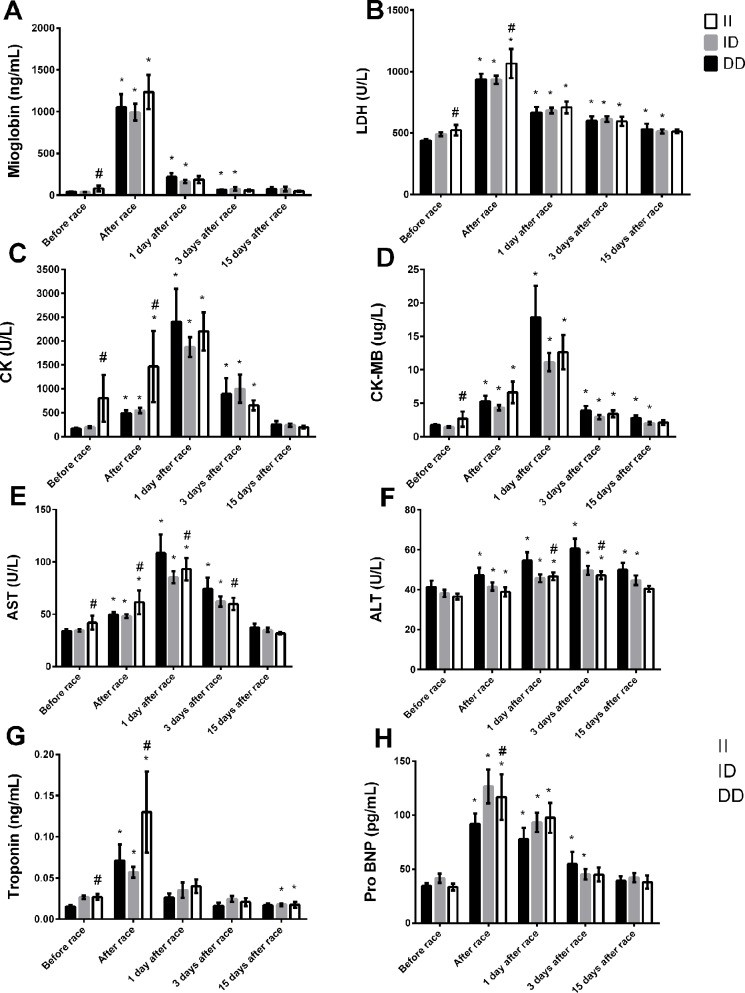
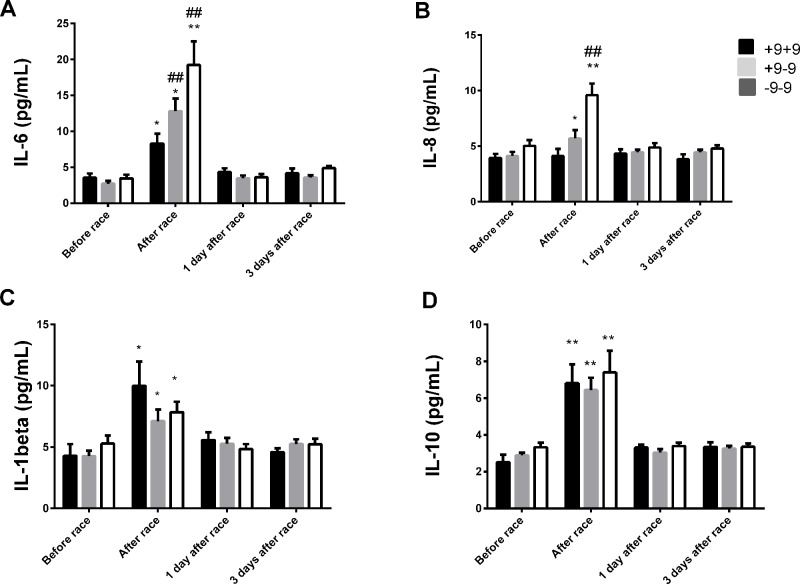
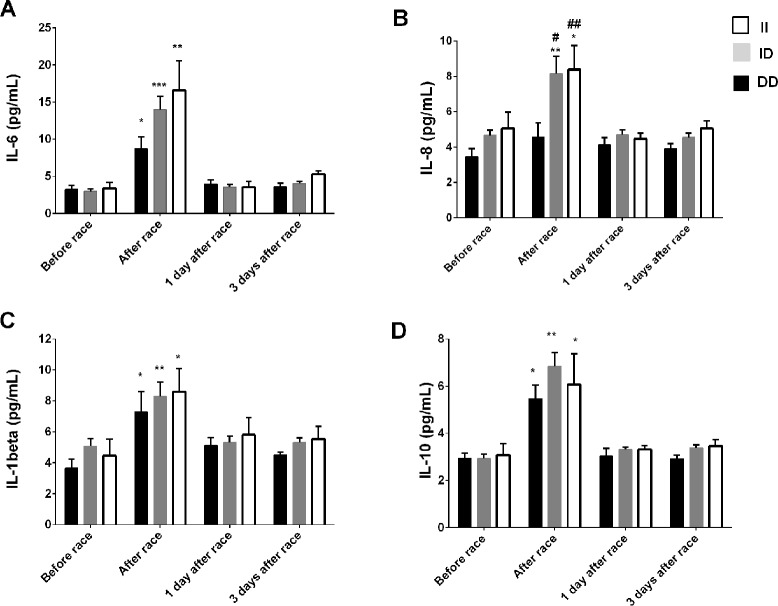
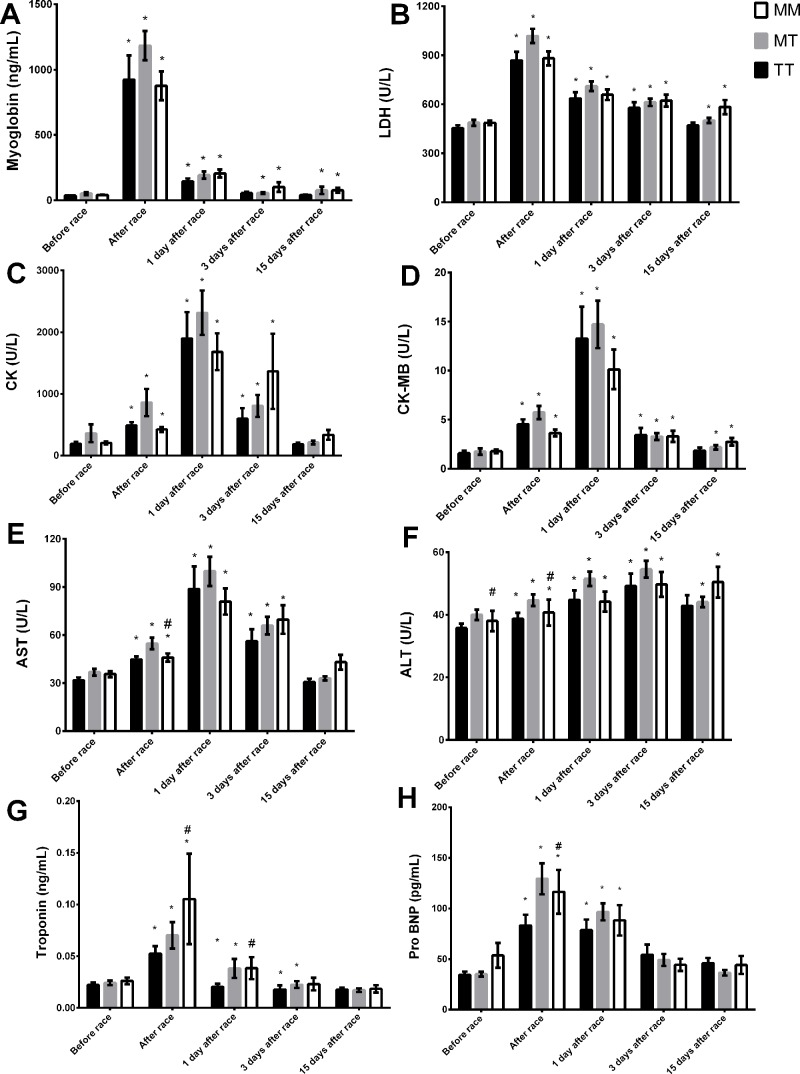
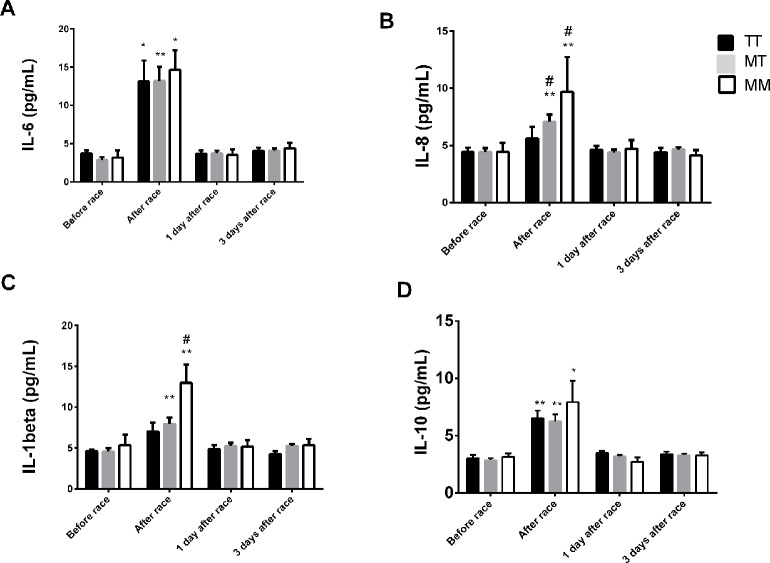
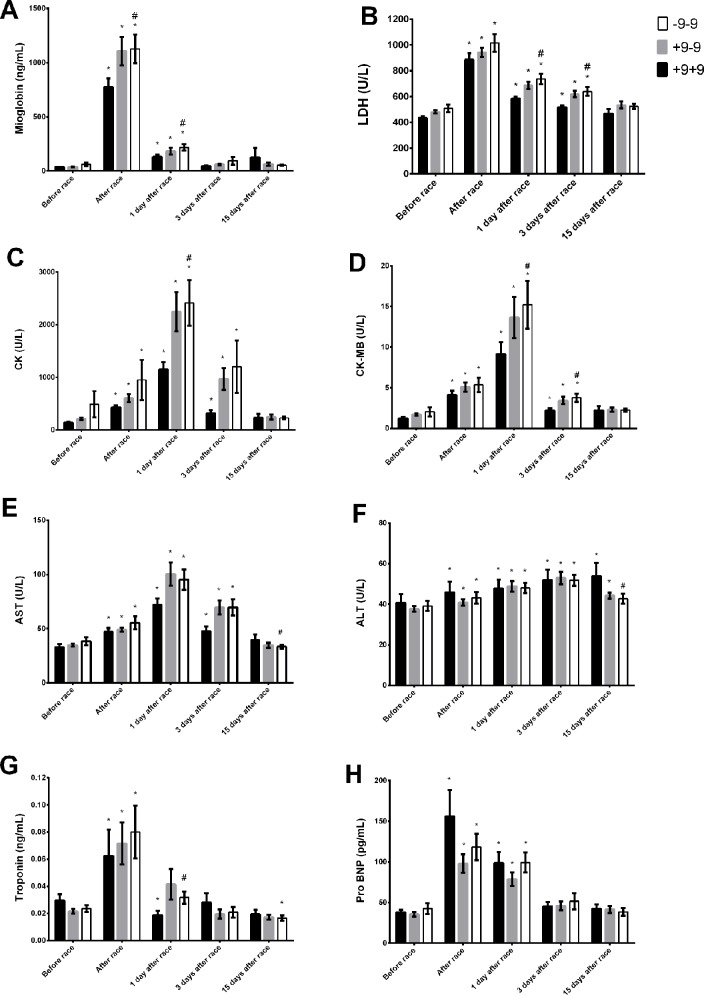
Muscle damage is one of the most important factors that affect muscle fatigue during endurance exercise. Recent evidence suggests that the renin-angiotensin system impacts on skeletal muscle wasting. The aim of this study was to determine association between the Met235Thr, I/D and -9/+9 polymorphisms with inflammation, myocardial and muscle injury induced by endurance exercise. Eighty-one Brazilian male runners participated in this study and completed the International Marathon of Sao Paulo. Muscle and myocardial damage markers (alanine transaminase, ALT, aspartate transaminase, AST, lactic dehydrogenase, LDH, creatine kinase, CK, Troponin, pro BNP, myoglobin, and CK-MB) and inflammatory mediators (IL-6, IL-8, IL-10, IL12p70, IL1β, and TNF-α) were determined one day before, immediately after, one day after, and three days after the event. Muscle damage was also determined fifteen days after race and angiotensinogen () Met235Thr, angiotensin-converting enzyme () I/D, and Bradykinin B2 receptor () -9/+9 polymorphisms were determined. Marathon race participation induced an increase in all muscle damage and inflammatory markers evaluated (p < 0.0001). The muscle damage markers, troponin and pro BNP, CK and LDH and inflammatory markers, IL-6, IL-8, IL-1β and IL-10 were also higher in II genotype immediately after race, compared to DD genotype. The percentage of runners higher responders (>500U/I) to CK levels was higher for II genotypes (69%) compared to DD and ID genotypes (38% and 40%, respectively) immediately after. Troponin, pro BNP and IL-1β, IL-8 levels were also elevated in MM genotype compared to TT genotype athletes after and/or one day after race. -9/-9 had pronounced response to LDH, CK, CK-MB and ALT and AST activities, myoglobin, troponin, IL-6, IL-8 levels immediately, one day and/or three days after race. The percentage of runners higher responders (>500U/I) to CK levels was greater for -9-9 and -9+9 genotypes (46 and 48%, respectively) compared to +9+9 genotypes (31%) immediately after. II, MM, and -9-9 genotypes may increase the susceptibility to inflammation, muscle injury after endurance exercise and could be used to predict the development of clinical conditions associated with muscle damage and myocardial injury.
肌肉损伤是耐力运动期间影响肌肉疲劳的最重要因素之一。最近的证据表明,肾素-血管紧张素系统对骨骼肌萎缩有影响。本研究的目的是确定Met235Thr、I/D和-9/+9基因多态性与耐力运动诱导的炎症、心肌和肌肉损伤之间的关联。81名巴西男性跑步者参与了本研究,并完成了圣保罗国际马拉松赛。在赛事前一天、结束后即刻、结束后一天和结束后三天测定肌肉和心肌损伤标志物(丙氨酸转氨酶、ALT、天冬氨酸转氨酶、AST、乳酸脱氢酶、LDH、肌酸激酶、CK、肌钙蛋白、脑钠肽前体、肌红蛋白和CK-MB)以及炎症介质(IL-6、IL-8、IL-10、IL12p70、IL1β和TNF-α)。在赛后15天也测定了肌肉损伤情况,并测定了血管紧张素原()Met235Thr、血管紧张素转换酶()I/D和缓激肽B2受体()-9/+9基因多态性。参加马拉松比赛导致所有评估的肌肉损伤和炎症标志物增加(p < 0.0001)。与DD基因型相比,在赛后即刻,II基因型的肌肉损伤标志物肌钙蛋白和脑钠肽前体、CK和LDH以及炎症标志物IL-6、IL-8、IL-1β和IL-10也更高。与DD和ID基因型(分别为38%和40%)相比,II基因型的跑步者中对CK水平反应较高(>500U/I)的百分比在赛后即刻更高(69%)。在赛后和/或赛后一天,与TT基因型运动员相比,MM基因型的肌钙蛋白、脑钠肽前体和IL-1β、IL-8水平也升高。-9/-9基因型在赛后即刻、一天和/或三天对LDH、CK、CK-MB以及ALT和AST活性、肌红蛋白、肌钙蛋白、IL-6、IL-8水平有明显反应。与+9+9基因型(31%)相比,-9-9和-9+9基因型的跑步者中对CK水平反应较高(>500U/I)的百分比在赛后即刻更高(分别为46%和48%)。II、MM和-9-9基因型可能会增加耐力运动后对炎症、肌肉损伤的易感性,并可用于预测与肌肉损伤和心肌损伤相关的临床状况的发展。