Liu Chuanyang, Min Lu, Kuang Jingyu, Zhu Chushu, Qiu Xin-Yuan, Zhu Lingyun
Department of Biology and Chemistry, College of Liberal Arts and Sciences, National University of Defense Technology, Changsha, China.
Front Oncol. 2019 Oct 23;9:1114. doi: 10.3389/fonc.2019.01114. eCollection 2019.
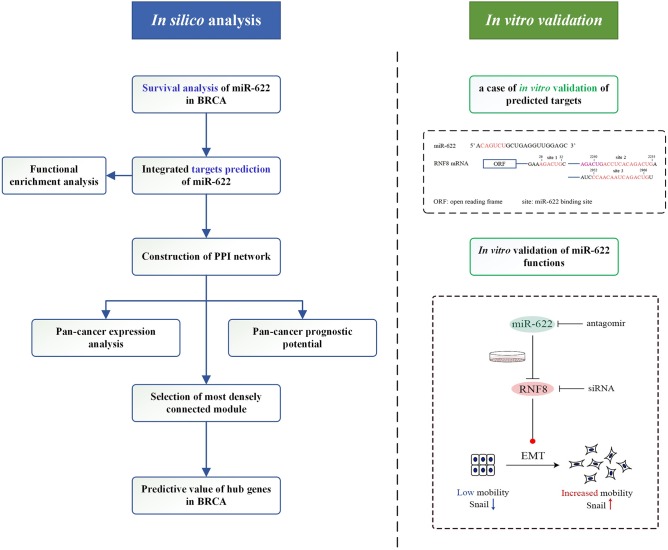
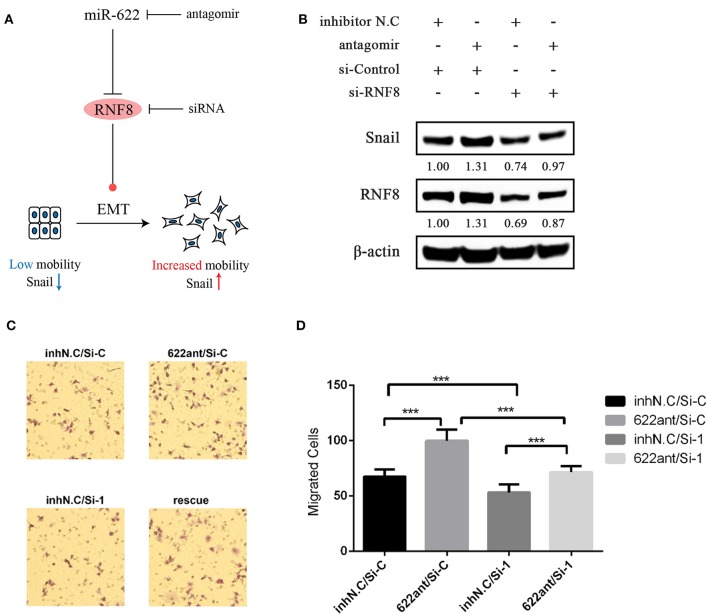
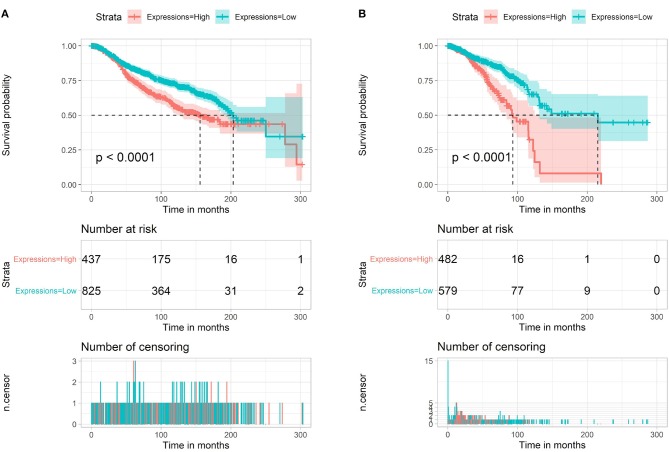
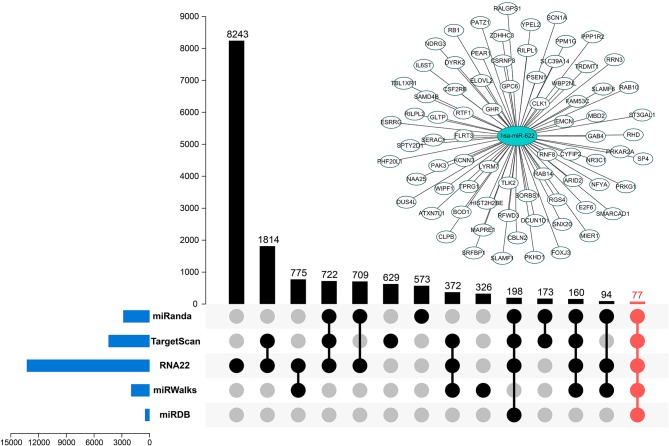
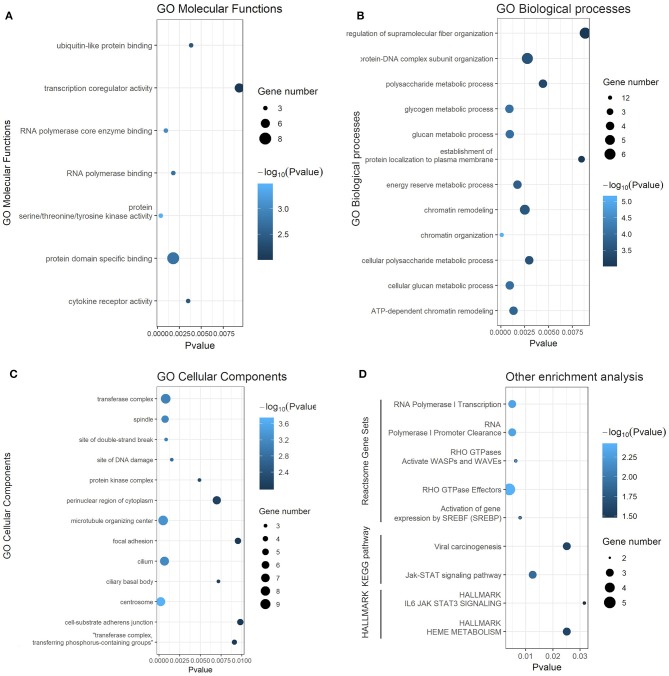
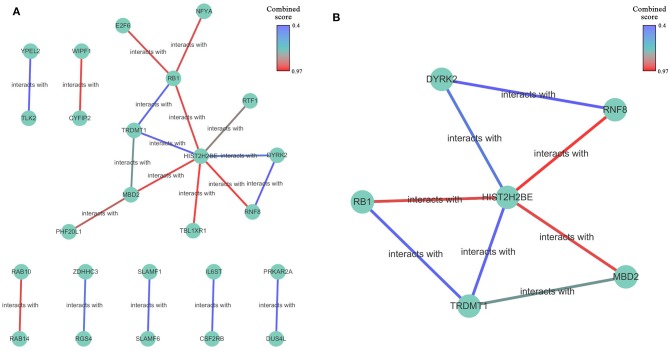
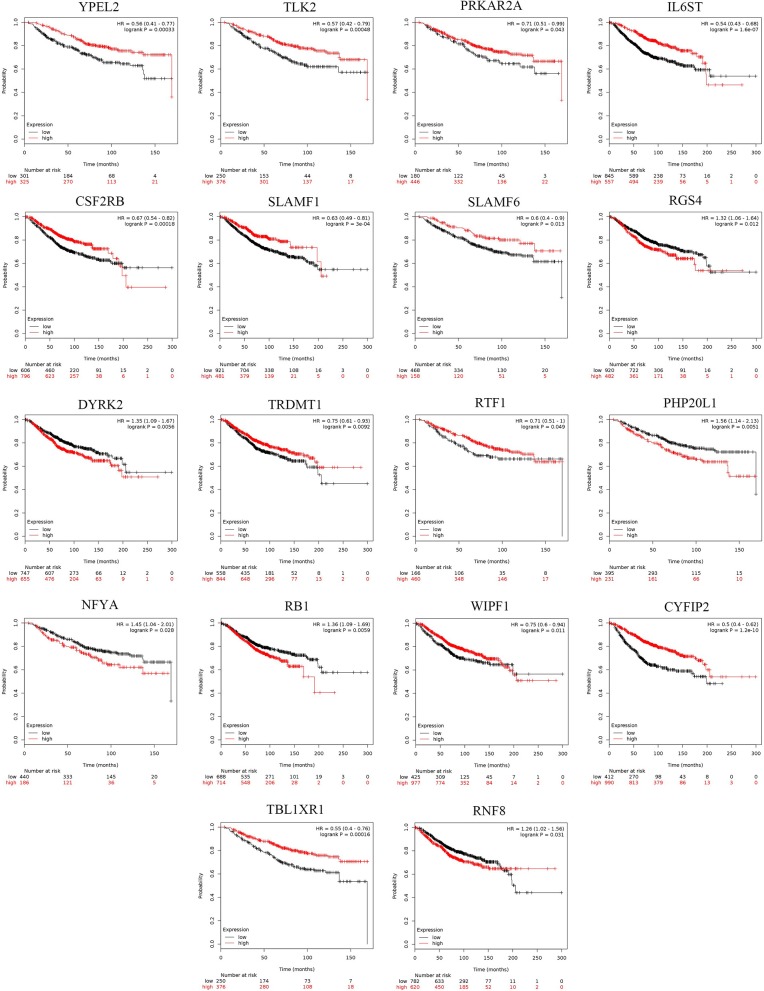
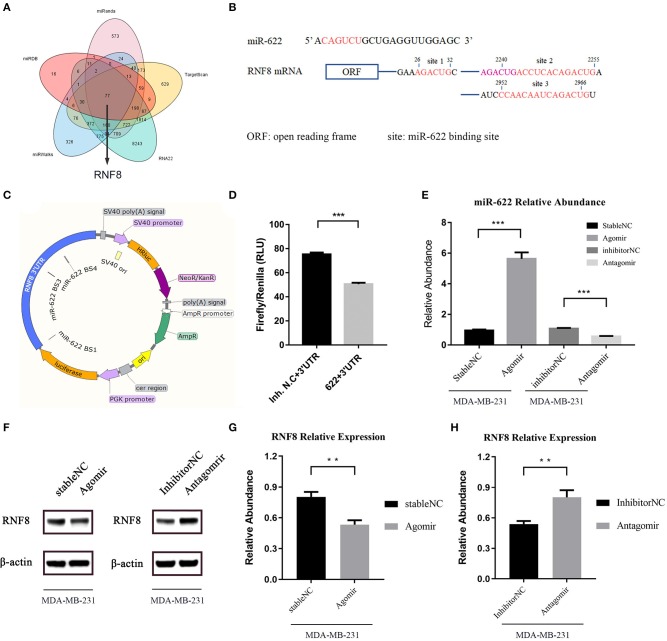
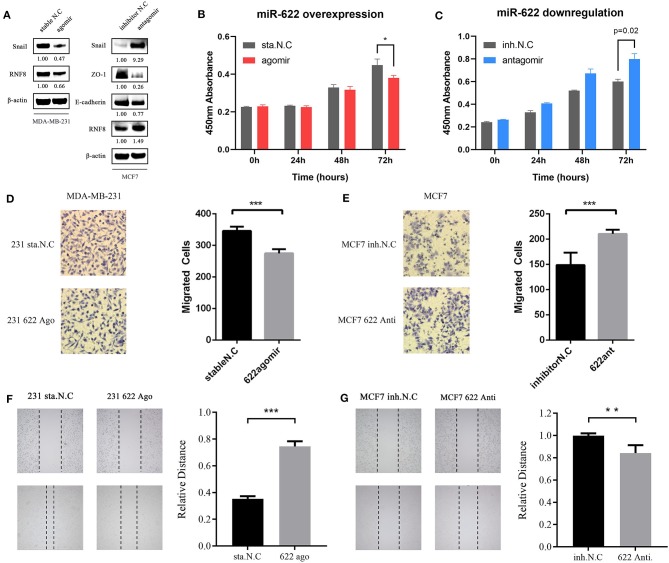
Breast cancer is the leading cause of cancer-associated deaths among females. In recent decades, microRNAs (miRNAs), a type of short non-coding RNA that regulates gene expression at the post-transcription level, have been reported to participate in the regulation of many hub genes associated with tumorigenesis, tumor progression, and metastasis. However, the precise mechanism by which miRNAs regulate breast cancer metastasis remains poorly discussed, which limits the opportunity for the development of novel, effective therapeutic targets. Here, we aimed to determine the miR-622-related principal regulatory mechanism in cancer. First, we found that miR-622 was significantly related to a poor prognosis in various cancers. By utilizing an integrated miRNA prediction process, we identified 77 promising targets and constructed a protein-protein interaction network. Furthermore, enrichment analyses, including GO and KEGG pathway analyses, were performed to determine the potential function of miR-622, which revealed regulation networks and potential functions of miR-622. Then, we identified a key cluster comprised of six hub genes in the protein-protein interaction network. These genes were further chosen for pan-cancer expression, prognostic and predictive marker analyses based on the TCGA and GEO datasets to mine the potential clinical values of these hub genes. To further validate our bioinformatic results, the regulatory axis of miR-622 and RNF8, one of the hub genes recently reported to promote breast cancer cell EMT process and breast cancer metastasis, was selected as proof of concept. , we demonstrated the direct regulation of RNF8 by miR-622 and found that the predicted miR-622-RNF8 axis could regulate RNF8-induced epithelial-mesenchymal transition, cell migration, and cell viability. These results were further demonstrated with rescue experiments. We established a closed-loop miRNA-target-phenotype research model that integrated the bioinformatic analysis of the miRNA target genes and experimental validation of the identified key miRNA-target-phenotype axis. We not only identified the hub target genes of miR-622 but also revealed the regulatory mechanism of miR-622 in breast cancer cell EMT process, viability, and migration for the first time.
乳腺癌是女性癌症相关死亡的主要原因。近几十年来,微小RNA(miRNA),一种在转录后水平调节基因表达的短链非编码RNA,已被报道参与许多与肿瘤发生、肿瘤进展和转移相关的枢纽基因的调控。然而,miRNA调节乳腺癌转移的确切机制仍鲜有讨论,这限制了开发新型有效治疗靶点的机会。在此,我们旨在确定癌症中与miR-622相关的主要调控机制。首先,我们发现miR-622与多种癌症的不良预后显著相关。通过利用综合的miRNA预测流程,我们鉴定出77个有潜力的靶点并构建了一个蛋白质-蛋白质相互作用网络。此外,进行了包括基因本体(GO)和京都基因与基因组百科全书(KEGG)通路分析在内的富集分析,以确定miR-622的潜在功能,揭示了miR-622的调控网络和潜在功能。然后,我们在蛋白质-蛋白质相互作用网络中鉴定出一个由六个枢纽基因组成的关键簇。基于癌症基因组图谱(TCGA)和基因表达综合数据库(GEO)数据集,进一步选择这些基因进行泛癌表达、预后和预测标志物分析,以挖掘这些枢纽基因的潜在临床价值。为了进一步验证我们的生物信息学结果,选择miR-622与RNF8(最近报道其促进乳腺癌细胞上皮-间质转化过程和乳腺癌转移的枢纽基因之一)的调控轴作为概念验证。我们证明了miR-622对RNF8的直接调控,并发现预测的miR-622-RNF8轴可调节RNF8诱导的上皮-间质转化、细胞迁移和细胞活力。这些结果通过挽救实验进一步得到证实。我们建立了一个闭环的miRNA-靶点-表型研究模型,该模型整合了miRNA靶基因的生物信息学分析和已鉴定的关键miRNA-靶点-表型轴的实验验证。我们不仅鉴定出了miR-622的枢纽靶基因,还首次揭示了miR-622在乳腺癌细胞上皮-间质转化过程以及活力和迁移中的调控机制。