Oswald Nicola K, Halle-Smith James, Mehdi Rana, Nightingale Peter, Naidu Babu, Turner Alice M
Institute of Inflammation and Ageing, University of Birmingham, Edgbaston, Birmingham B15 2TT, United Kingdom of Great Britain and Northern Ireland.
College of Medical and Dental Sciences, University of Birmingham, Edgbaston, Birmingham B15 2TT, United Kingdom of Great Britain and Northern Ireland.
EClinicalMedicine. 2019 Sep 10;15:7-13. doi: 10.1016/j.eclinm.2019.08.015. eCollection 2019 Oct.
Lung resection remains the gold standard treatment for early stage lung cancer; prediction of postoperative lung function is a key selection criterion for surgery with the aim of determining risk of postoperative dyspnoea. We aimed to identify the different prediction techniques used, and compare their accuracy.
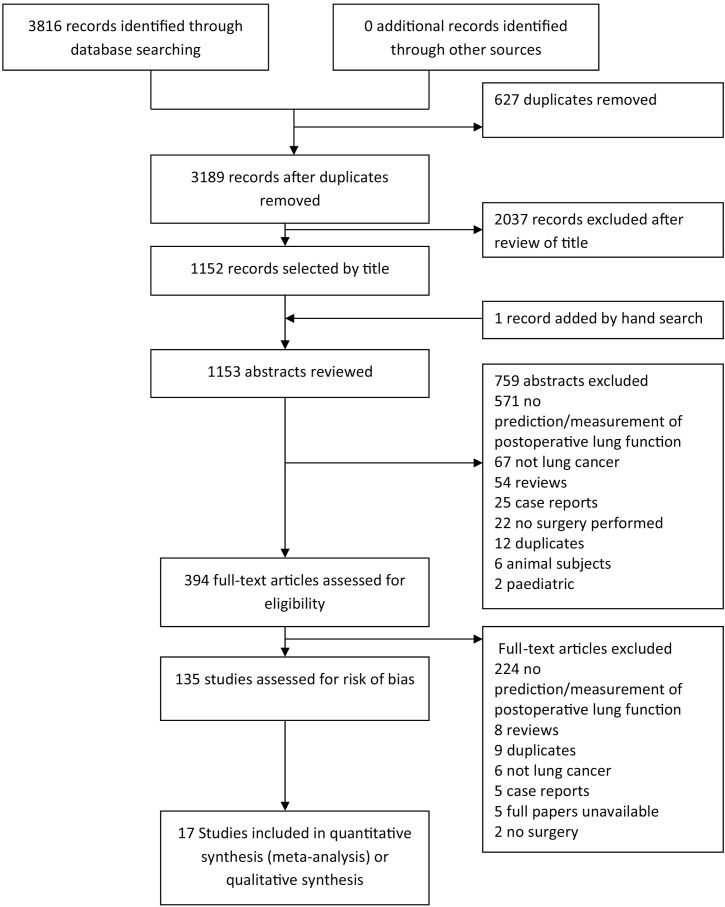
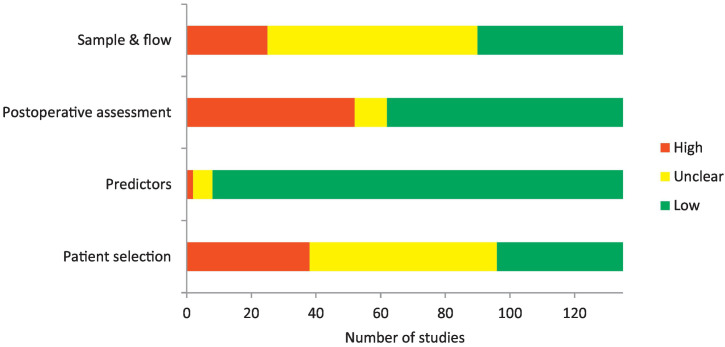
A systematic review and meta-analysis sought to synthesise studies conducted that assess prediction of postoperative lung function up to 18/02/2018 (n = 135). PROBAST was used to assess risk of bias in studies, 17 studies were judged to be at low risk of bias.
Meta-analysis revealed CT volume and density measurement to be the most accurate (mean difference 71 ml) and precise (standard deviation 207 ml) of the reported techniques used for predicting FEV1; evidence for predicting gas transfer was lacking.
The evidence suggests using CT volume and density is the preferred technique in the prediction of postoperative FEV1. Further studies are required to ensure that the methods and thresholds we propose are linked to patient reported outcomes.
Salary support for NKO, RM, PN, BN, and AMT was provided by University Hospitals Birmingham NHS Foundation Trust.
肺切除术仍然是早期肺癌的金标准治疗方法;预测术后肺功能是手术的关键选择标准,目的是确定术后呼吸困难的风险。我们旨在确定所使用的不同预测技术,并比较它们的准确性。
一项系统评价和荟萃分析旨在综合截至2018年2月18日评估术后肺功能预测的研究(n = 135)。使用PROBAST评估研究中的偏倚风险,17项研究被判定为低偏倚风险。
荟萃分析显示,CT容积和密度测量是预测第一秒用力呼气容积(FEV1)的报告技术中最准确(平均差异71毫升)和最精确(标准差207毫升)的;缺乏预测气体交换的证据。
证据表明,使用CT容积和密度是预测术后FEV1的首选技术。需要进一步研究以确保我们提出的方法和阈值与患者报告的结果相关联。
英国国民保健服务体系伯明翰大学医院信托基金为NKO、RM、PN、BN和AMT提供了薪资支持。