DiSTAS-Department for Sustainable Food Process, Università Cattolica del Sacro Cuore, 29122 Piacenza, Italy.
Nutrients. 2019 Nov 9;11(11):2719. doi: 10.3390/nu11112719.
While there has been an increasing interest in the health properties of chocolate, limited research has looked into the changes of antioxidants occurring in the time span from production to the best before date, which was a period of 18 months in this study.
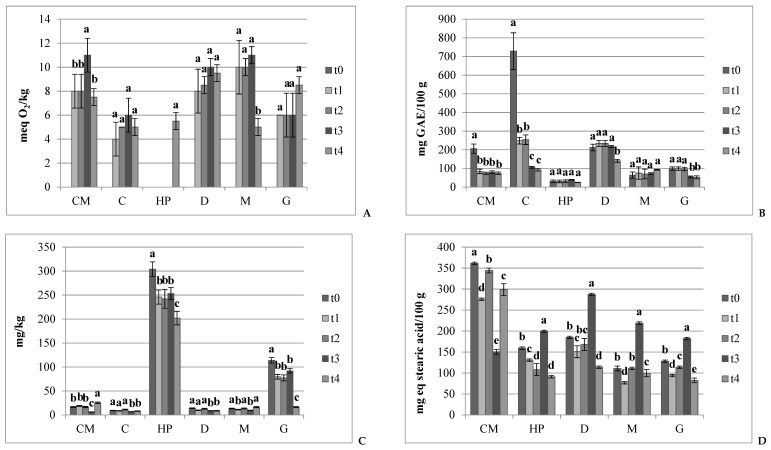
Humidity, ash, pH, acidity, fiber, carotenoids, retinols, tocopherols, sugars, proteins, theobromine, caffeine, polyphenols, fats, the peroxide value, organic acids, and volatile compounds, along with the sensory profile, were monitored at 18-week intervals for 18 months under conditions simulating a factory warehouse or a point of sale.
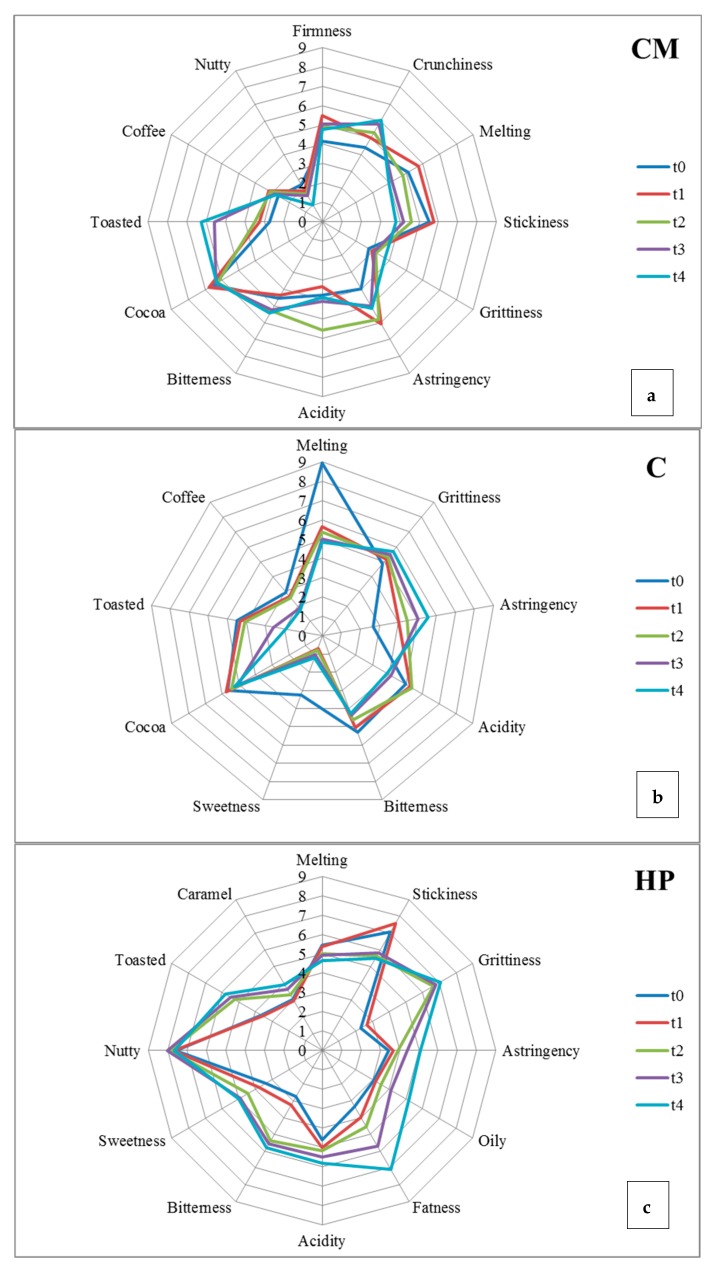
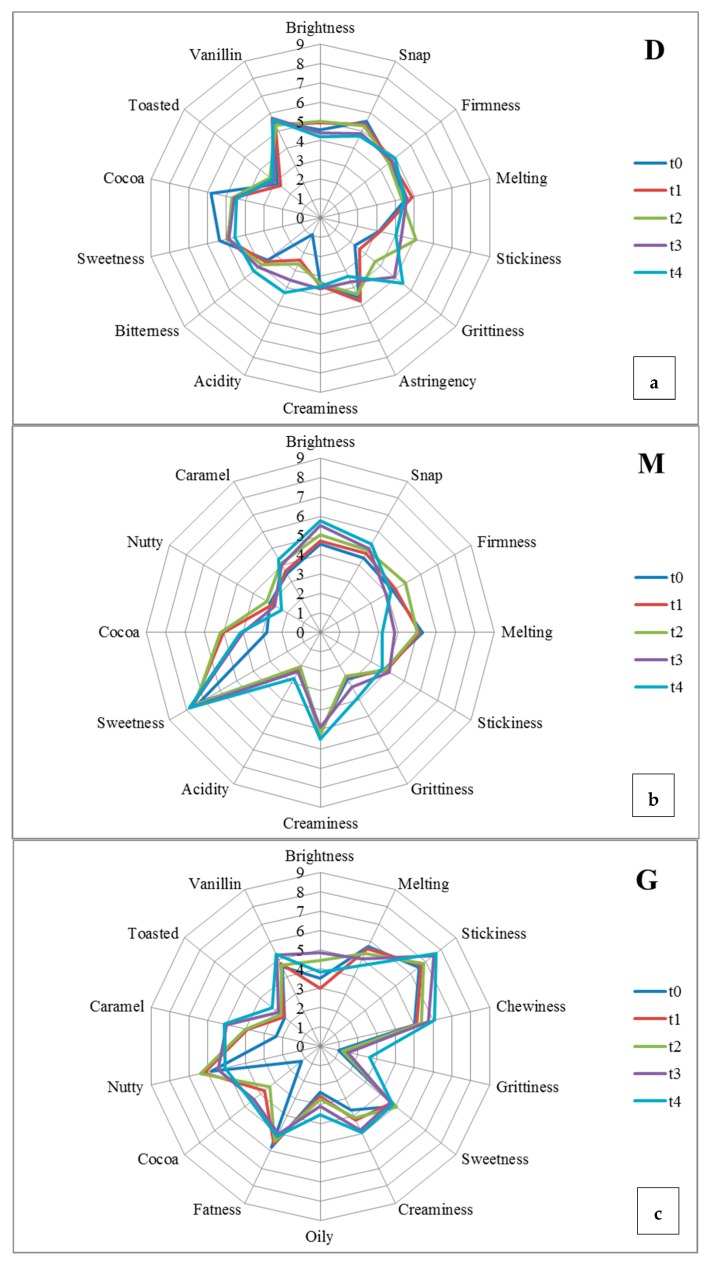
At the end of the storage period, more polyphenols were lost (64% and 87%) than vitamin E (5% and 14%) in cocoa mass and cocoa powder, respectively. Conversely, a greater loss in vitamin E (34% and 86%) than in polyphenols (19% and 47%) was shown in the hazelnut paste and gianduja chocolate, respectively. The sensory profiling of cocoa mass, cocoa powder, and hazelnut paste revealed increases in grittiness and astringency, as well as decreases in melting, bitterness, and toasted aroma. Moreover, in the hazelnut paste and gianduja chocolate, oiliness increased with a toasted and caramel aroma. Furthermore, dark chocolate was more gritty, acidic, and bitter. Milk chocolate lost its nutty aroma but maintained its sweetness and creaminess.
These results should contribute an important reference for companies and consumers, in order to preserve the antioxidants and understand how antioxidants and sensory properties change from the date of production until the best before date.
虽然人们对巧克力的健康特性越来越感兴趣,但有限的研究仅关注了从生产到最佳保质期(本研究为 18 个月)期间抗氧化剂的变化。
在模拟工厂仓库或销售点的条件下,18 个月内每 18 周监测湿度、灰分、pH 值、酸度、纤维、类胡萝卜素、视黄醇、生育酚、糖、蛋白质、可可碱、咖啡因、多酚、脂肪、过氧化物值、有机酸和挥发性化合物以及感官特征。
在储存期结束时,与维生素 E(可可粉和可可块分别损失 5%和 14%)相比,多酚损失更多(可可粉和可可块分别损失 64%和 87%)。相反,维生素 E(榛果酱和果仁糖巧克力分别损失 34%和 86%)比多酚(榛果酱和果仁糖巧克力分别损失 19%和 47%)损失更大。可可粉、可可块和榛果酱的感官特征表明,粗砂感和收敛感增加,而融化性、苦味和烤香味降低。此外,榛果酱和果仁糖巧克力的油性增加,带有烤焦和焦糖的香气。此外,黑巧克力更粗糙、更酸、更苦。牛奶巧克力失去了坚果的香气,但保持了甜味和奶油味。
这些结果应为公司和消费者提供重要参考,以保存抗氧化剂并了解抗氧化剂和感官特性从生产日期到最佳保质期的变化。