Diaconeasa Zoriţa, Iuhas Cristian I, Ayvaz Huseyin, Rugină Dumitriţa, Stanilă Andreea, Dulf Francisc, Bunea Andrea, Socaci Sonia Ancuța, Socaciu Carmen, Pintea Adela
Faculty of Food Science and Technology, University of Agricultural Science and Veterinary Medicine Cluj-Napoca, Calea Mănăştur 3-5, 400372 Cluj-Napoca, Romania.
Faculty of Medicine, Iuliu Hatieganu University of Medicine and Pharmacy, 400372 Cluj-Napoca, Romania.
Antioxidants (Basel). 2019 Nov 10;8(11):540. doi: 10.3390/antiox8110540.
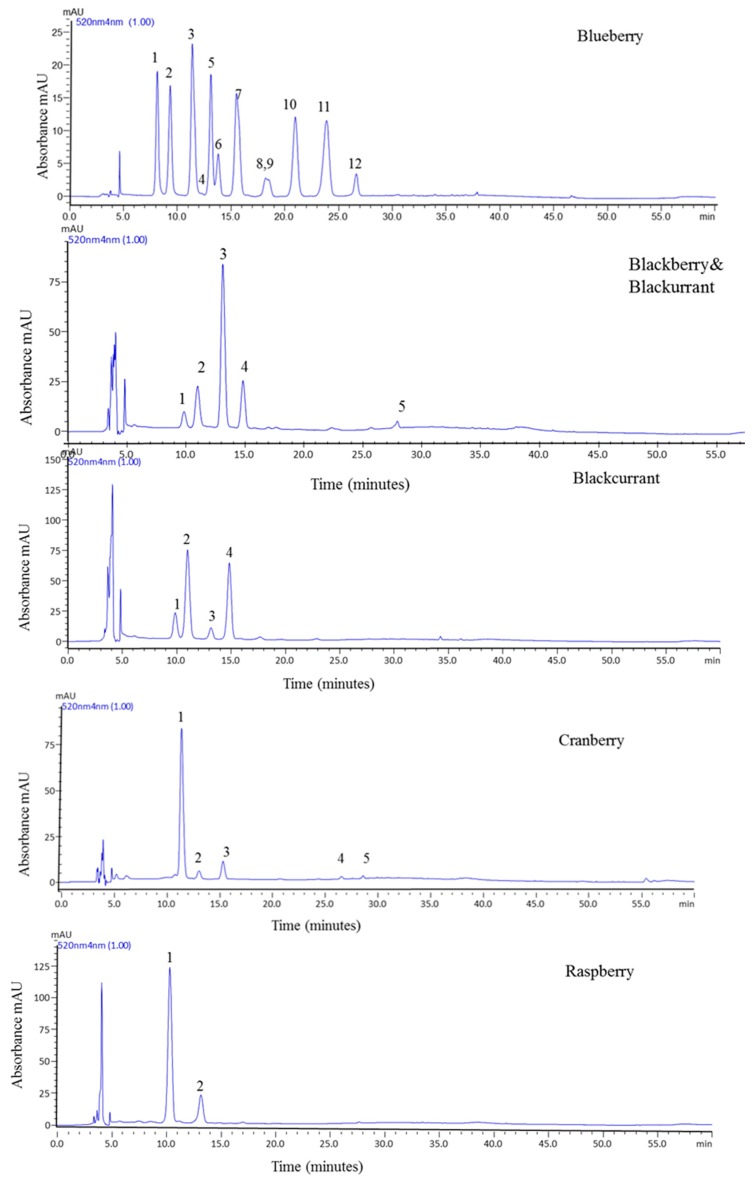
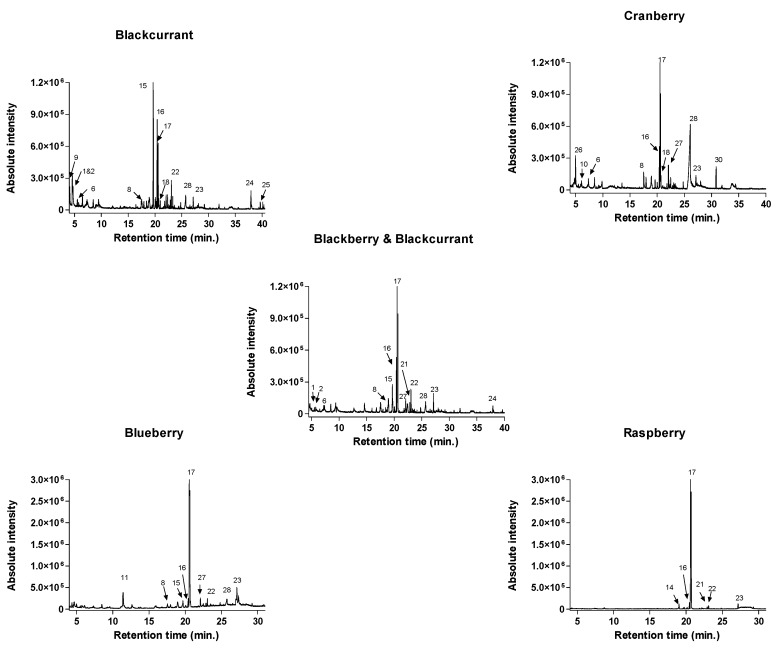
Being delicious and containing strong disease-fighting agents, berries represent an increasing proportion of fruits consumed nowadays in our diet. However, berries are highly perishable as fresh and, therefore, they are usually processed into various products to extend their shelf-life and availability throughout the year. Among the fruit-containing products, jam is one of the most common due to its nourishing properties, its low production costs, and its accessibility for a lengthy period. Rather than home preparation, consumers nowadays increasingly prefer to purchase commercial jams from markets due to its convenience. Although fresh berries have been extensively studied for their phenolic compounds, a limited number of studies investigating commercially manufactured jams have been conducted so far. Considering this, the objective of this study was to assess the total phenolic, flavonoid, and anthocyanin content and the antioxidant activity of five commonly consumed commercial berry jams (blueberry (), blackberry () and blackcurrant () mixture, blackcurrant (), cranberry () and raspberry )) collected from the market. Even though a possible loss of phenolics, anthocyanins, and a decrease of radical scavenging activity may occur during jam processing and subsequent storage, our data indicated that the selected commercial jams remained good sources of nutritive molecules with antioxidant properties based on the high levels of total phenolics, flavonoids, anthocyanins, and elevated antioxidant activities determined in this study. Additionally, the samples were characterized by GC-MS for their volatile profiles, and terpenes were found to be the dominating class covering more than 74% of volatile compounds in the jams.
浆果味道鲜美且含有强大的抗病成分,在我们如今的饮食中,其在水果消费中所占比例日益增加。然而,新鲜浆果极易腐烂,因此,它们通常被加工成各种产品,以延长其保质期并实现全年供应。在含水果的产品中,果酱因其营养特性、低成本以及长时间的可获取性而成为最常见的产品之一。如今,消费者不再倾向于在家自制果酱,而是由于其便利性,越来越多地从市场购买商业果酱。尽管新鲜浆果因其酚类化合物已得到广泛研究,但迄今为止,对商业生产的果酱进行研究的数量有限。考虑到这一点,本研究的目的是评估从市场收集的五种常见消费商业浆果果酱(蓝莓()、黑莓()和黑加仑()混合物、黑加仑()、蔓越莓()和覆盆子())的总酚、黄酮和花青素含量以及抗氧化活性。尽管在果酱加工及后续储存过程中可能会出现酚类、花青素的损失以及自由基清除活性的降低,但我们的数据表明,基于本研究中测定的高水平总酚、黄酮、花青素以及较高的抗氧化活性,所选商业果酱仍是具有抗氧化特性的营养分子的良好来源。此外,通过气相色谱 - 质谱联用仪(GC - MS)对样品的挥发性成分进行了表征,发现萜类是主要类别,占果酱中挥发性化合物的74%以上。