Department of Microbiology and Immunology, Renaissance School of Medicine, Stony Brook University, NY, USA.
FEBS Lett. 2019 Dec;593(24):3484-3495. doi: 10.1002/1873-3468.13680. Epub 2019 Nov 26.
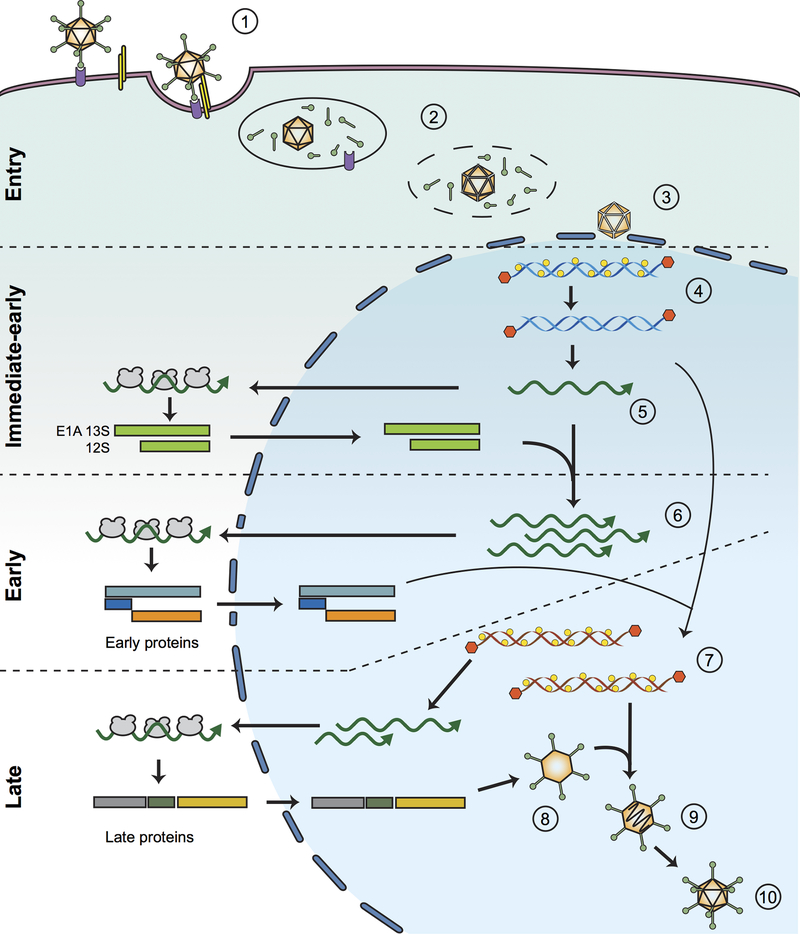
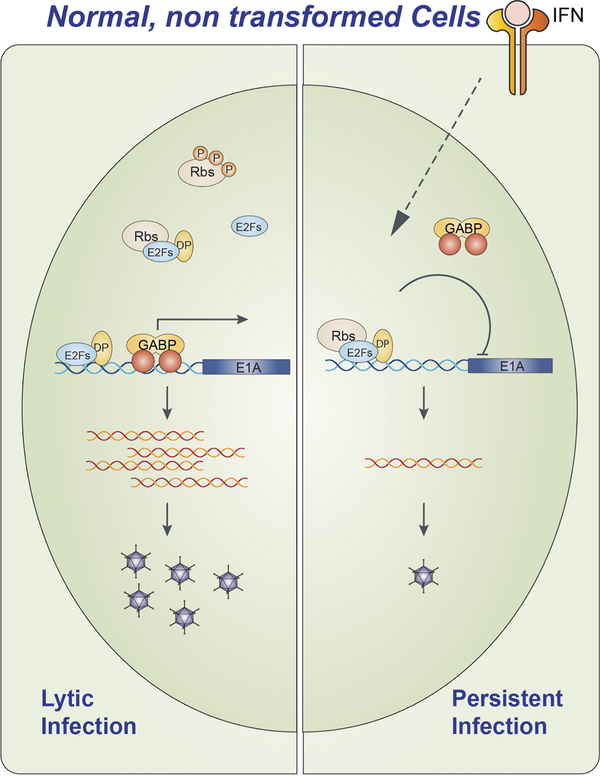
Viruses alter host cell processes to optimize their replication cycle. Human adenoviruses (Ad) encode proteins that promote viral macromolecular synthesis and counteract innate and adaptive responses to infection. The focus of this review is on how Ad evades innate cellular responses to infection, including an interferon (IFN) response and a DNA damage response (DDR). Ad blocks the IFN response by inhibiting cytoplasmic signaling pathways and the activation of IFN-stimulated genes (ISGs), as well as the functions of ISG products, such as PML. Ad also inhibits DDR sensors, for instance, the Mre11-Rad50-Nbs1 complex, and DDR effectors like DNA ligase IV. These innate cellular responses impact many different viruses, and studies on Ad have provided broad insight into these areas.
病毒改变宿主细胞的过程以优化其复制周期。人类腺病毒(Ad)编码的蛋白可促进病毒大分子的合成,并对抗感染引起的固有和适应性反应。本综述的重点是 Ad 如何逃避感染引起的固有细胞反应,包括干扰素(IFN)反应和 DNA 损伤反应(DDR)。Ad 通过抑制细胞质信号通路和 IFN 刺激基因(ISGs)的激活,以及 ISG 产物(如 PML)的功能,来阻断 IFN 反应。Ad 还抑制 DDR 传感器,例如 Mre11-Rad50-Nbs1 复合物,以及 DDR 效应物,如 DNA 连接酶 IV。这些固有细胞反应会影响许多不同的病毒,而对 Ad 的研究为这些领域提供了广泛的认识。