Julius Wolff Institut, Charité - Universitätsmedizin Berlin, Augustenburger Platz 1, 13353, Berlin, Germany.
Berlin-Brandenburg Center for Regenerative Therapies, Charité - Universitätsmedizin Berlin, Augustenburger Platz 1, 13353, Berlin, Germany.
Sci Rep. 2019 Nov 13;9(1):16692. doi: 10.1038/s41598-019-53094-5.
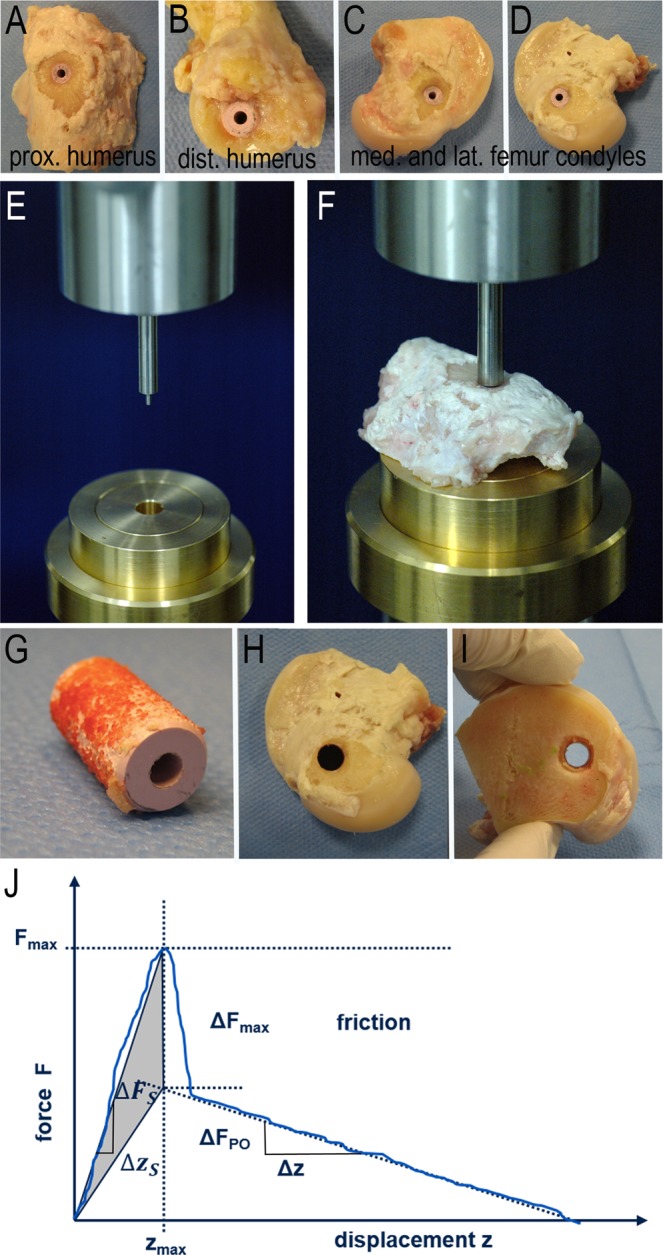
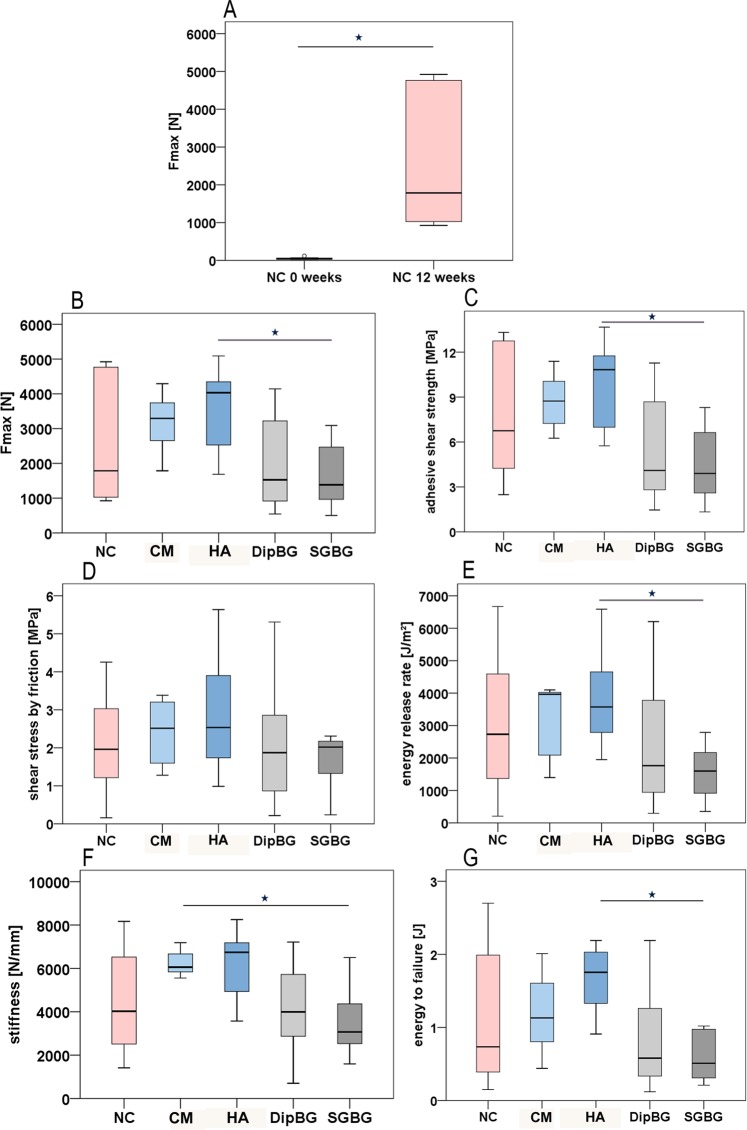
Bioactive coatings have the potential to improve the bony integration of mechanically loaded orthopedic ceramic implants. Using the concept of mimicking the natural bone surface, four different coatings of varying thickness on a zirconia toughened alumina (ZTA) ceramic implant were investigated regarding their osseointegration in a drill-hole model in sheep. The hypothesis that a bioactive coating of ZTA ceramics would facilitate cancellous bone integration was investigated. The bioactive coatings consisted of either a layer of covalently bound multi phosphonate molecules (chemical modification = CM), a nano hydoxyapatite coating (HA), or two different bioactive glass (BG) coatings in micrometer thickness, forming a hydroxyl-carbonate apatite layer on the implant surface in vivo (dip-coated 45S5 = DipBG; sol-gel 70S30C = SGBG). Coated surfaces were characterized by scanning electron microscopy and X-ray photoelectron spectroscopy. After 12 weeks, osseointegration was evaluated via mechanical push-out testing and histology. HA enhanced the maximum push-out force (HA: mean 3573.85 ± 1119.91 N; SGBG: mean 1691.57 ± 986.76 N; p = 0.046), adhesive shear strength (HA: mean 9.82 ± 2.89 MPA; SGBG: mean 4.57 ± 2.65 MPA; p = 0.025), and energy release rate (HA: mean 3821.95 ± 1474.13 J/mm; SGBG: mean 1558.47 ± 923.47 J/mm; p = 0.032) compared to SGBG. The implant-bone interfacial stiffness increased by CM compared to SGBG coating (CM: mean 6258.06 ± 603.80 N/mm; SGBG: mean 3565.57 ± 1705.31 n/mm; p = 0.038). Reduced mechanical osseointegration of SGBG coated implants could be explained histologically by a foreign body reaction surrounding the implants.
生物活性涂层具有改善机械加载骨科陶瓷植入物骨整合的潜力。本研究通过模仿天然骨表面的概念,在羊的钻孔模型中研究了 ZTA 陶瓷植入物上不同厚度的四种不同涂层的骨整合情况。假设 ZTA 陶瓷的生物活性涂层将促进松质骨整合。生物活性涂层包括共价结合的多膦酸盐分子层(化学修饰=CM)、纳米羟基磷灰石涂层(HA)或两种不同的微米厚度的生物活性玻璃(BG)涂层,在体内形成植入物表面的羟基碳酸磷灰石层(浸涂 45S5=DipBG;溶胶-凝胶 70S30C=SGBG)。通过扫描电子显微镜和 X 射线光电子能谱对涂层表面进行了表征。12 周后,通过机械推出试验和组织学评估骨整合情况。HA 提高了最大推出力(HA:平均 3573.85±1119.91N;SGBG:平均 1691.57±986.76N;p=0.046)、黏附剪切强度(HA:平均 9.82±2.89MPa;SGBG:平均 4.57±2.65MPa;p=0.025)和能量释放率(HA:平均 3821.95±1474.13J/mm;SGBG:平均 1558.47±923.47J/mm;p=0.032),与 SGBG 相比。与 SGBG 涂层相比,CM 使植入物-骨界面的刚度增加(CM:平均 6258.06±603.80N/mm;SGBG:平均 3565.57±1705.31N/mm;p=0.038)。SGBG 涂层植入物的机械骨整合减少可以通过组织学上观察到的植入物周围的异物反应来解释。