Evolutionary Genomics Section, Globe Institute, University of Copenhagen, Copenhagen, Denmark.
Institute of Evolutionary Biology (UPF-CSIC), University Pompeu Fabra, Barcelona, Spain.
Nature. 2019 Dec;576(7786):262-265. doi: 10.1038/s41586-019-1728-8. Epub 2019 Nov 13.
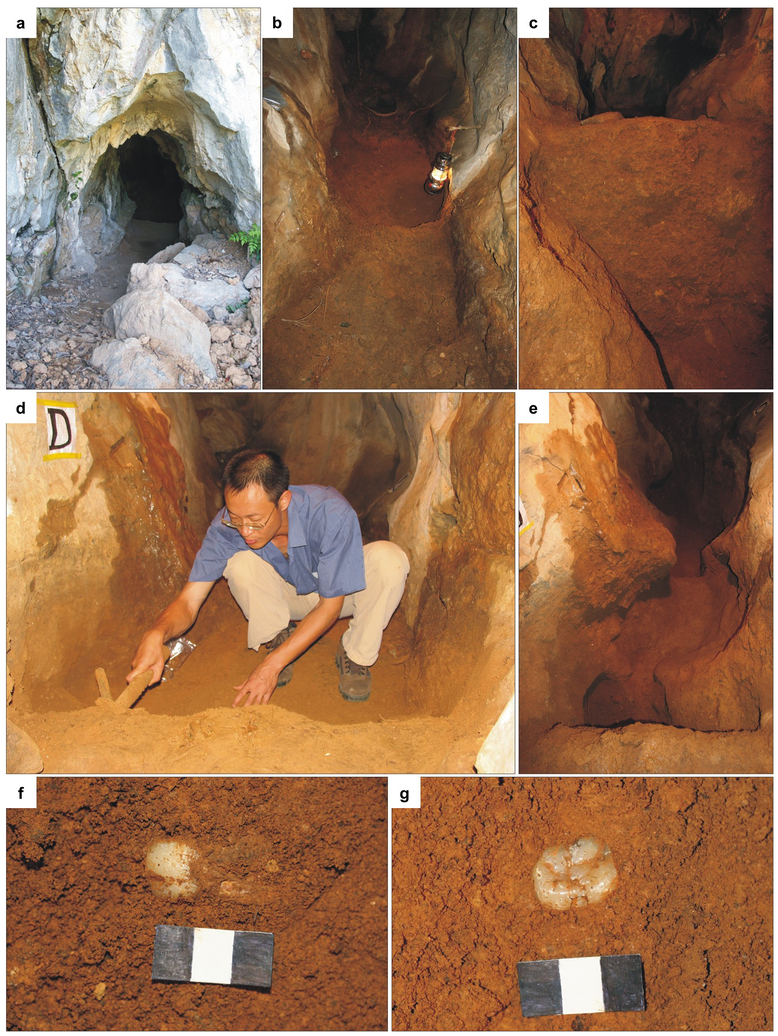
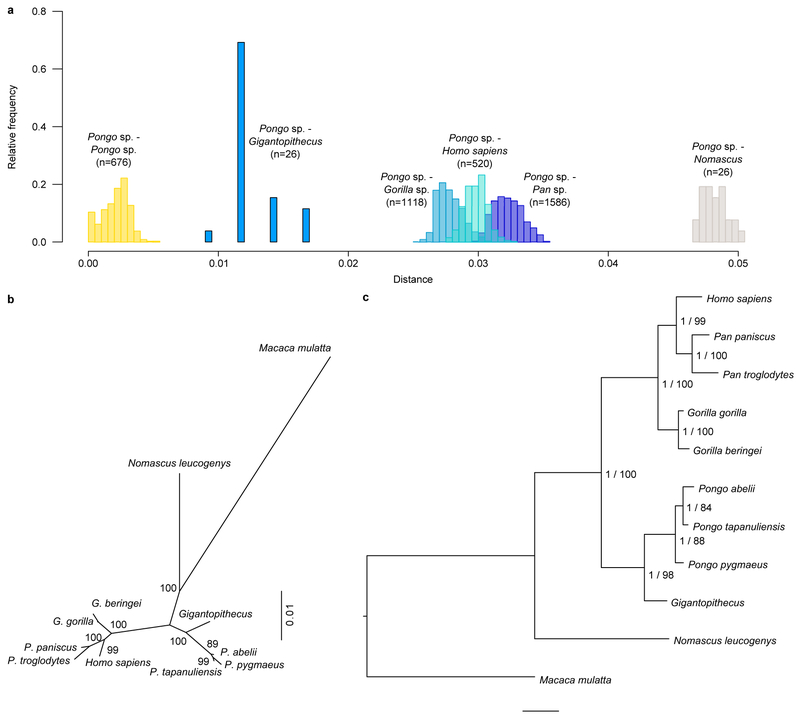
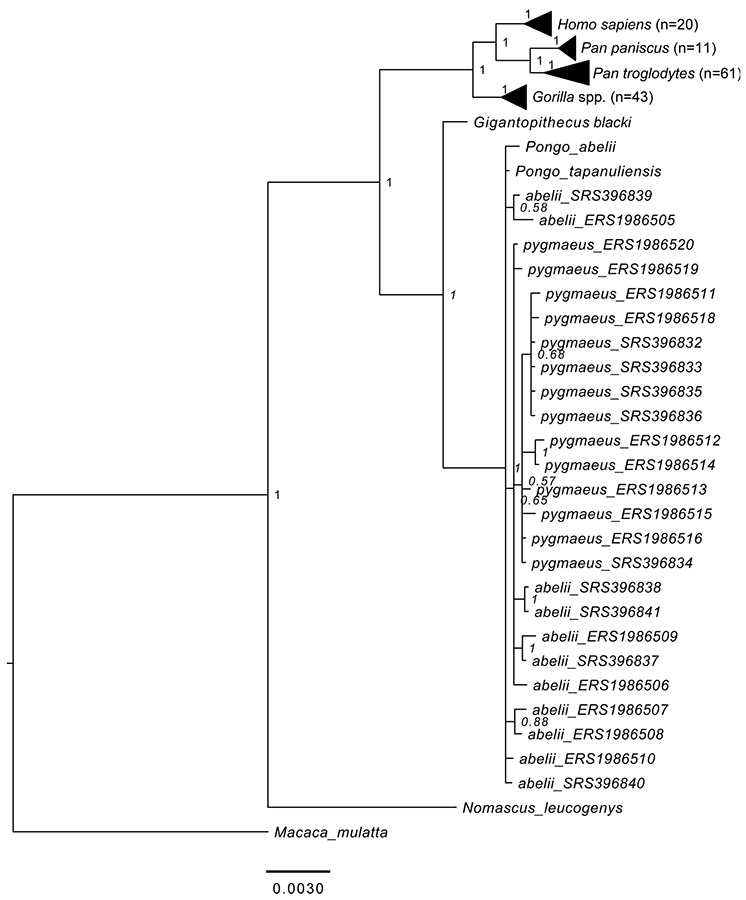
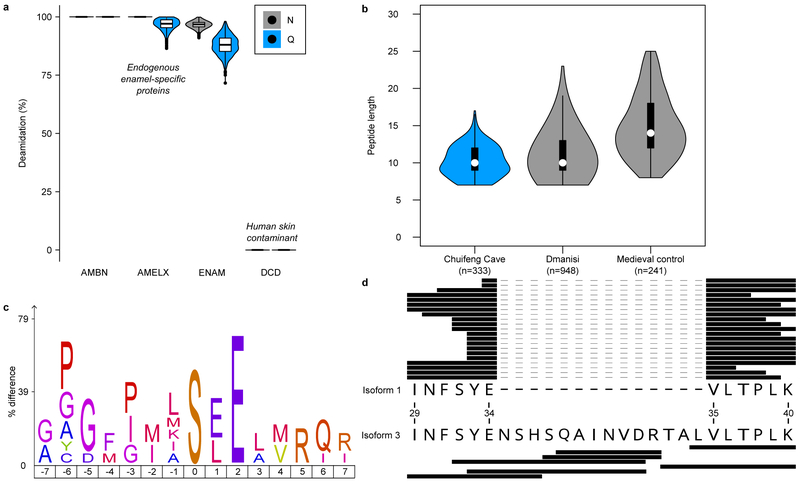
Gigantopithecus blacki was a giant hominid that inhabited densely forested environments of Southeast Asia during the Pleistocene epoch. Its evolutionary relationships to other great ape species, and the divergence of these species during the Middle and Late Miocene epoch (16-5.3 million years ago), remain unclear. Hypotheses regarding the relationships between Gigantopithecus and extinct and extant hominids are wide ranging but difficult to substantiate because of its highly derived dentognathic morphology, the absence of cranial and post-cranial remains, and the lack of independent molecular validation. We retrieved dental enamel proteome sequences from a 1.9-million-year-old G. blacki molar found in Chuifeng Cave, China. The thermal age of these protein sequences is approximately five times greater than that of any previously published mammalian proteome or genome. We demonstrate that Gigantopithecus is a sister clade to orangutans (genus Pongo) with a common ancestor about 12-10 million years ago, implying that the divergence of Gigantopithecus from Pongo forms part of the Miocene radiation of great apes. In addition, we hypothesize that the expression of alpha-2-HS-glycoprotein, which has not been previously observed in enamel proteomes, had a role in the biomineralization of the thick enamel crowns that characterize the large molars in Gigantopithecus. The survival of an Early Pleistocene dental enamel proteome in the subtropics further expands the scope of palaeoproteomic analysis into geographical areas and time periods previously considered incompatible with the preservation of substantial amounts of genetic information.
巨猿黑猩猩是一种巨型人科动物,生活在更新世时期东南亚茂密的森林环境中。它与其他大型猿类物种的进化关系,以及这些物种在中新世中期和晚期(1600 万至 530 万年前)的分化,仍然不清楚。关于巨猿与已灭绝和现存人类之间关系的假说范围很广,但由于其高度衍生的齿形态、缺乏颅骨和后躯遗骸以及缺乏独立的分子验证,这些假说很难得到证实。我们从中国吹风洞发现的一颗 190 万年前的巨猿黑猩猩臼齿中提取了牙釉质蛋白质组序列。这些蛋白质序列的热年龄比任何以前发表的哺乳动物蛋白质组或基因组都要大五倍左右。我们证明,巨猿与猩猩(属 Pongo)是姐妹群,它们的共同祖先大约在 1200 万至 1000 万年前,这意味着巨猿与猩猩的分化是大型猿类在中新世辐射的一部分。此外,我们假设α-2-HS-糖蛋白的表达,以前在牙釉质蛋白质组中没有观察到,在特征是巨猿大臼齿厚牙釉质冠的生物矿化中起作用。亚热带地区早更新世牙釉质蛋白质组的存活进一步扩大了古蛋白质组分析的范围,进入了以前被认为不适合保存大量遗传信息的地理区域和时间段。