El-Niweiri Mogbel A A, Moritz Robin F A, Lattorff H Michael G
Department of Biology, King Khalid University, Abha, Asir Region 61321, Saudi Arabia.
Institut für Biologie, Molekulare Ökologie, Martin-Luther-Universität Halle-Wittenberg, 06099 Halle (Saale), Germany.
Insects. 2019 Nov 15;10(11):405. doi: 10.3390/insects10110405.
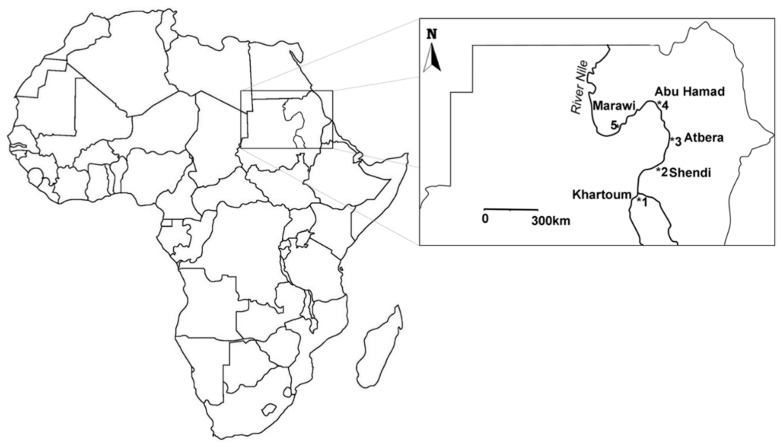
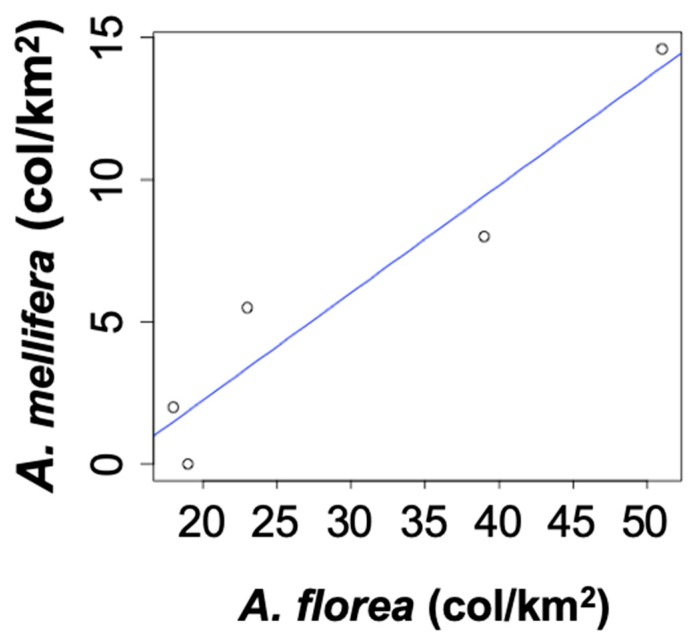
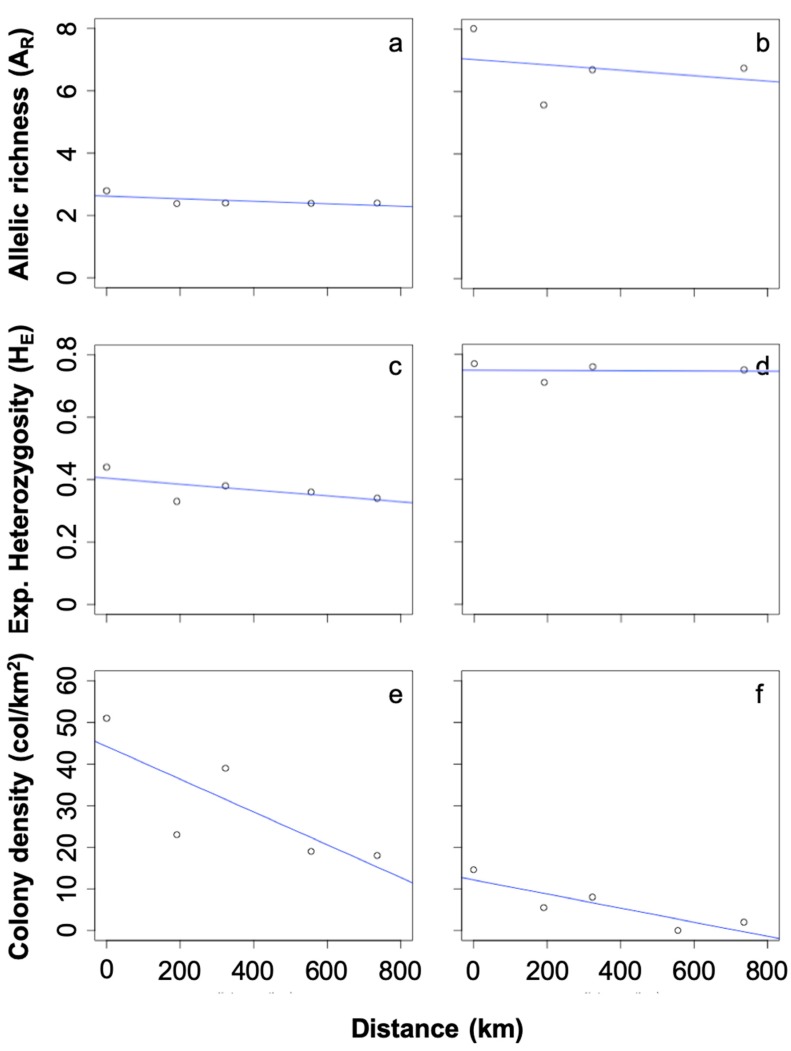
The spread of the dwarf honeybee, , in Sudan along the river Nile in a linear fashion provides a good model for studying the population dynamics and genetic effects of an invasion by a honeybee species. We use microsatellite DNA analyses to assess the population structure of both invasive and native along the river Nile. The invasive had significantly higher population densities than the wild, native . Nevertheless, we found no indication of competitive displacement, suggesting that although had a high invasive potential, it coexisted with the native along the river Nile. The genetic data indicated that the invasion of was established by a single colony.
矮蜜蜂(Apis florea)在苏丹沿尼罗河呈线性扩散,为研究蜜蜂物种入侵的种群动态和遗传效应提供了一个良好的模型。我们使用微卫星DNA分析来评估沿尼罗河入侵的矮蜜蜂(Apis florea)和本地的埃及蜜蜂(Apis mellifera lamarckii)的种群结构。入侵的矮蜜蜂(Apis florea)种群密度显著高于野生的本地埃及蜜蜂(Apis mellifera lamarckii)。然而,我们没有发现竞争取代的迹象,这表明尽管矮蜜蜂(Apis florea)具有很高的入侵潜力,但它与本地的埃及蜜蜂(Apis mellifera lamarckii)在尼罗河沿岸共存。遗传数据表明,矮蜜蜂(Apis florea)的入侵是由一个单一蜂群建立的。