Global Ecology Lab, College of Science and Engineering and ARC Centre of Excellence for Australian Biodiversity and Heritage, Flinders University, GPO Box 2100, Adelaide, South Australia, 5001, Australia.
Department of Oceanography, University of Hawai'i at Mānoa, Honolulu, Hawaii, USA.
Sci Data. 2019 Nov 19;6(1):272. doi: 10.1038/s41597-019-0267-3.
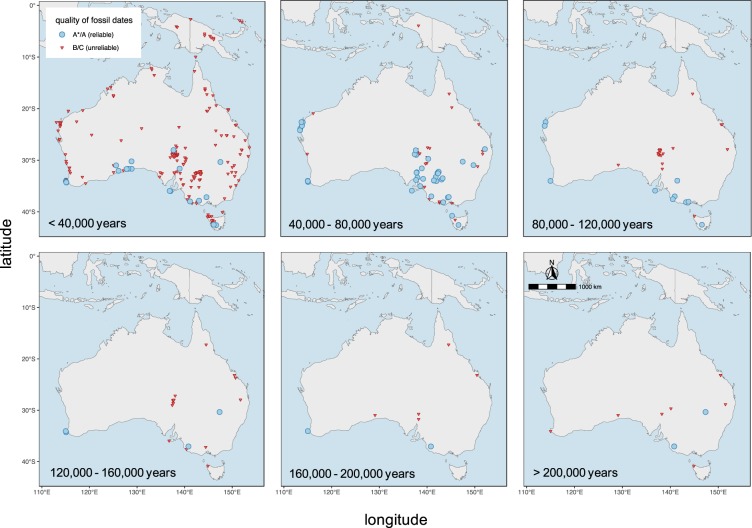
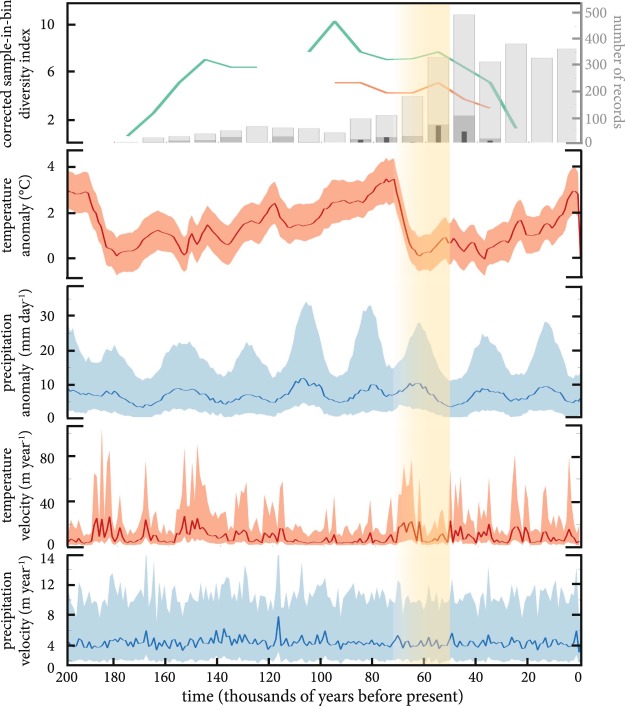
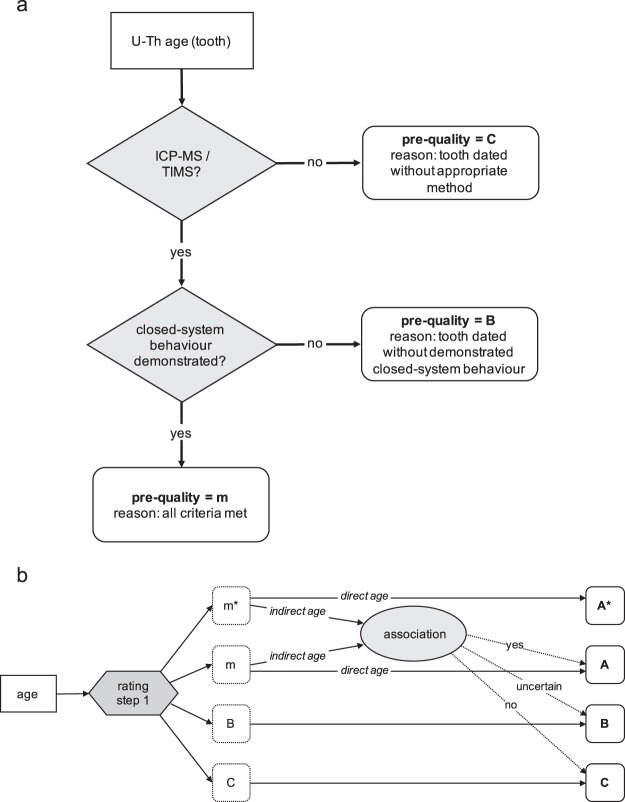
The 2016 version of the FosSahul database compiled non-human vertebrate megafauna fossil ages from Sahul published up to 2013 in a standardized format. Its purpose was to create a publicly available, centralized, and comprehensive database for palaeoecological investigations of the continent. Such databases require regular updates and improvements to reflect recent scientific findings. Here we present an updated FosSahul (2.0) containing 11,871 dated non-human vertebrate fossil records from the Late Quaternary published up to 2018. Furthermore, we have extended the information captured in the database to include methodological details and have developed an algorithm to automate the quality-rating process. The algorithm makes the quality-rating more transparent and easier to reproduce, facilitating future database extensions and dissemination. FosSahul has already enabled several palaeoecological analyses, and its updated version will continue to provide a centralized organisation of Sahul's fossil records. As an example of an application of the database, we present the temporal pattern in megafauna genus richness inferred from available data in relation to palaeoclimate indices over the past 180,000 years.
2016 版的 FosSahul 数据库以标准化格式编译了截至 2013 年在 Sahul 发表的非人类脊椎动物大型动物化石年龄。其目的是创建一个可供公众使用、集中和全面的数据库,用于对该大陆的古生态学研究。此类数据库需要定期更新和改进,以反映最新的科学发现。在这里,我们提出了一个更新的 FosSahul(2.0),其中包含截至 2018 年发表的 11871 条晚第四纪非人类脊椎动物化石记录。此外,我们还扩展了数据库中捕获的信息,包括方法细节,并开发了一种算法来自动执行质量评级过程。该算法使质量评级更加透明且易于复制,从而促进了未来数据库的扩展和传播。FosSahul 已经支持了几项古生态学分析,其更新版本将继续为 Sahul 的化石记录提供集中组织。作为数据库应用的一个例子,我们展示了过去 18 万年中,根据可用数据推断出的大型动物属丰富度与古气候指数之间的时间模式。