Laboratory of Sustainable Animal Environmental Science, Graduate School of Agricultural Science, Tohoku University.
Research Fellow of the Japanese Society for the Promotion of Science (JSPS).
Microbes Environ. 2019 Dec 27;34(4):421-428. doi: 10.1264/jsme2.ME19113. Epub 2019 Nov 19.
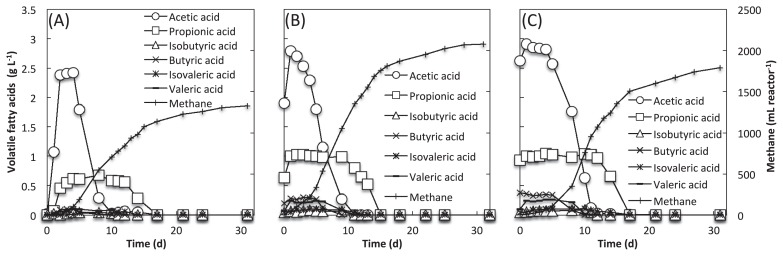
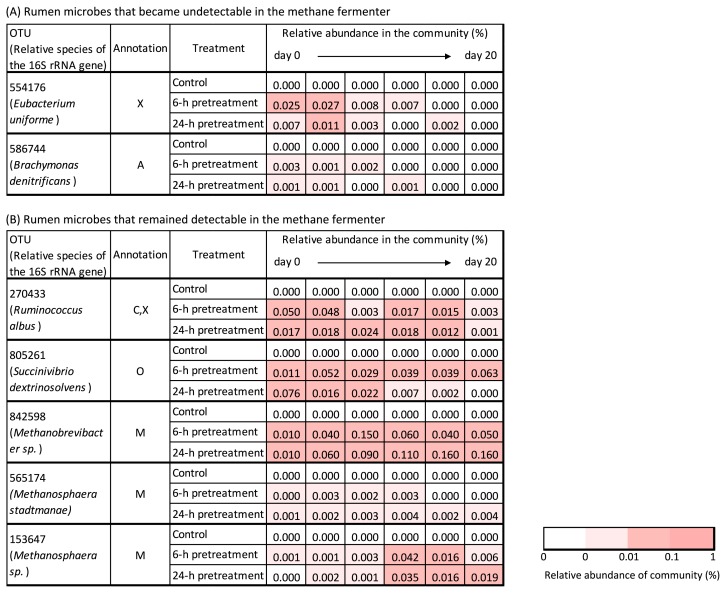
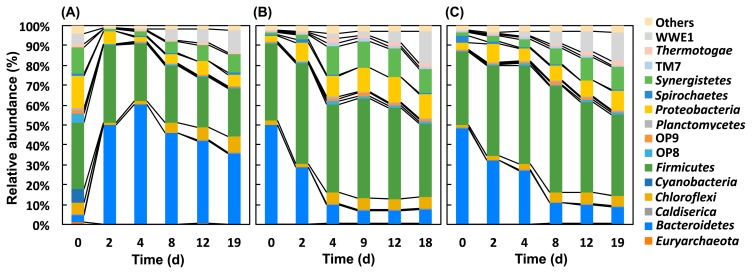
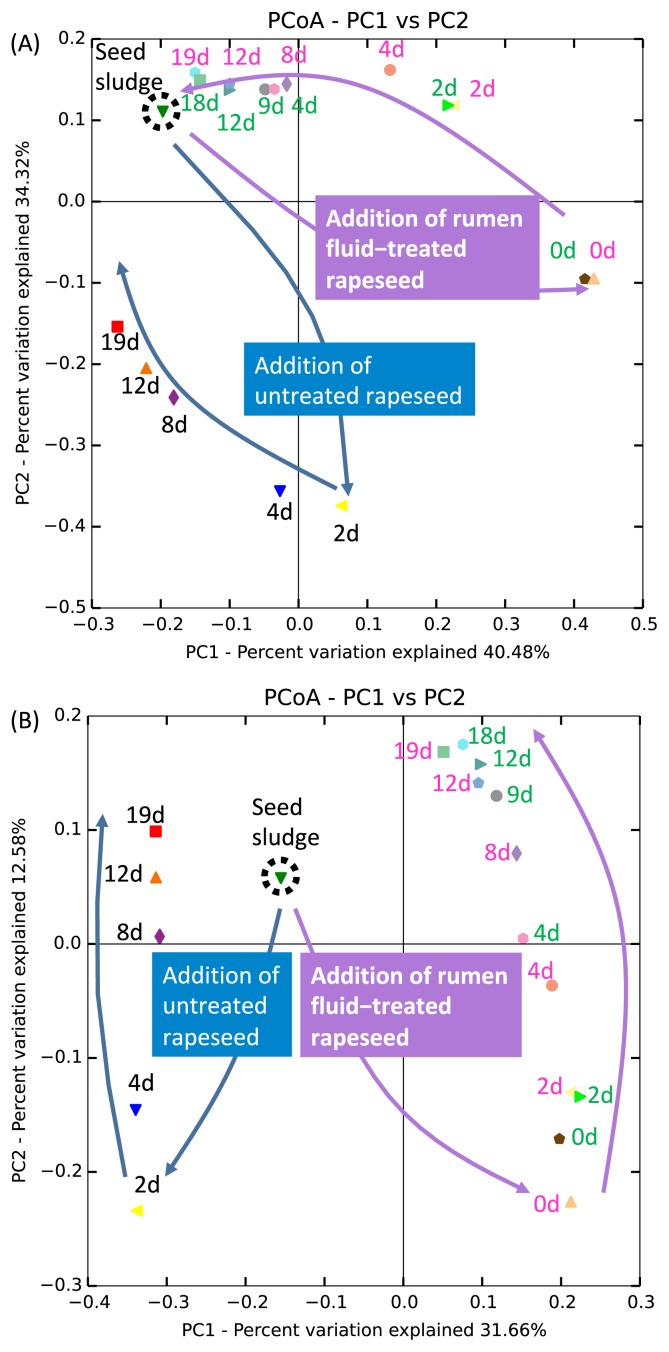
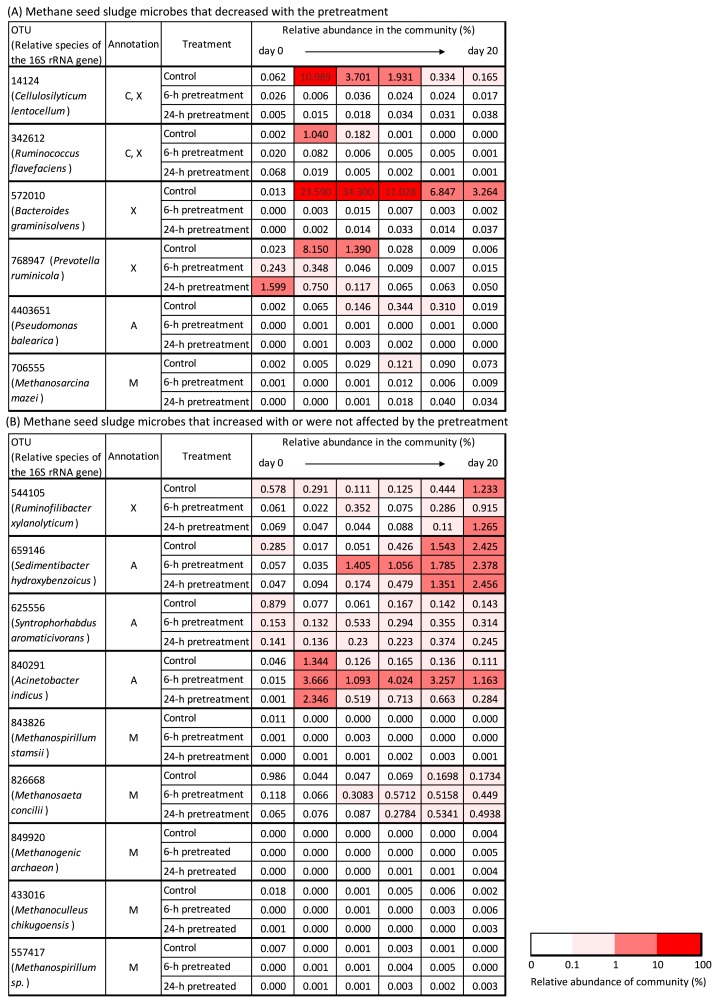
The pretreatment of lignocellulosic substrates with cattle rumen fluid was successfully developed to increase methane production. In the present study, a 16S rRNA gene-targeted amplicon sequencing approach using the MiSeq platform was applied to elucidate the effects of the rumen fluid treatment on the microbial community structure in laboratory-scale batch methane fermenters. Methane production in fermenters fed rumen fluid-treated rapeseed (2,077.3 mL CH reactor for a 6-h treatment) was markedly higher than that in fermenters fed untreated rapeseed (1,325.8 mL CH reactor). Microbial community profiling showed that the relative abundance of known lignocellulose-degrading bacteria corresponded to lignocellulose-degrading enzymatic activities. Some dominant indigenous cellulolytic and hemicellulolytic bacteria in seed sludge (e.g., Cellulosilyticum lentocellum and Ruminococcus flavefaciens) and rumen fluid (e.g., Butyrivibrio fibrisolvens and Prevotella ruminicola) became undetectable or markedly decreased in abundance in the fermenters fed rumen fluid-treated rapeseed, whereas some bacteria derived from seed sludge (e.g., Ruminofilibacter xylanolyticum) and rumen fluid (e.g., R. albus) remained detectable until the completion of methane production. Thus, several lignocellulose-degrading bacteria associated with rumen fluid proliferated in the fermenters, and may play an important role in the degradation of lignocellulosic compounds in the fermenter.
采用牛瘤胃液预处理木质纤维素底物以提高甲烷产量的方法已被成功开发。在本研究中,应用 MiSeq 平台的 16S rRNA 基因靶向扩增子测序方法,阐明了瘤胃液处理对实验室规模批式甲烷发酵器中微生物群落结构的影响。用经瘤胃液处理的油菜籽(经 6 小时处理,2077.3 mL CH 反应器)喂养的发酵器中的甲烷产量明显高于用未经处理的油菜籽喂养的发酵器(1325.8 mL CH 反应器)。微生物群落分析表明,已知木质纤维素降解菌的相对丰度与木质纤维素降解酶活性相对应。种子污泥中一些占主导地位的土著纤维分解菌和半纤维素分解菌(如 Cellulosilyticum lentocellum 和 Ruminococcus flavefaciens)和瘤胃液中的(如 Butyrivibrio fibrisolvens 和 Prevotella ruminicola)在喂食经瘤胃液处理的油菜籽的发酵器中变得不可检测或丰度明显降低,而一些源自种子污泥(如 Ruminofilibacter xylanolyticum)和瘤胃液(如 R. albus)的细菌在甲烷生产完成之前仍可检测到。因此,一些与瘤胃液相关的木质纤维素降解菌在发酵器中大量繁殖,可能在发酵器中木质纤维素化合物的降解中发挥重要作用。