Institute for Experimental Animals, Kobe University Graduate School of Medicine.
J Atheroscler Thromb. 2020 Feb 1;27(2):105-118. doi: 10.5551/jat.RV17038-1. Epub 2019 Nov 21.
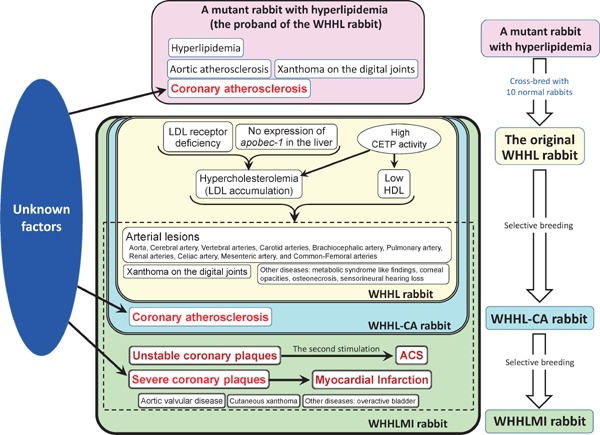
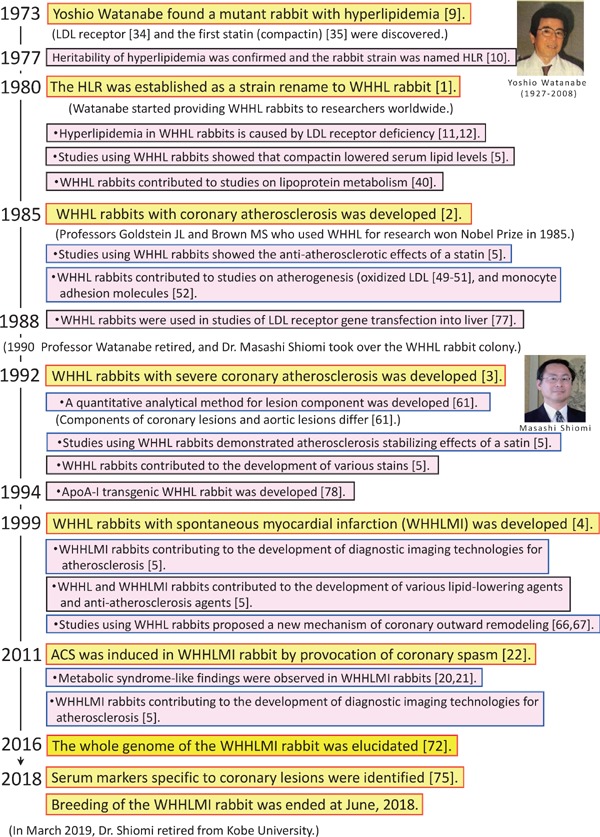
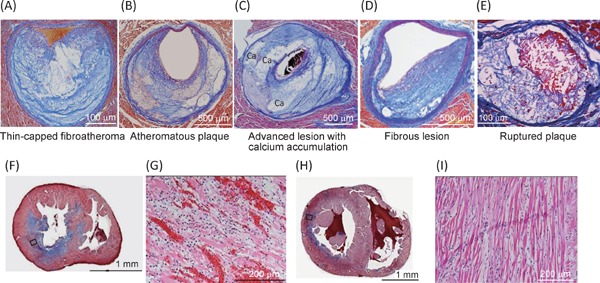
Animal models that closely resemble both human disease findings and their onset mechanism have contributed to the advancement of biomedical science. The Watanabe heritable hyperlipidemic (WHHL) rabbit and its advanced strains (the coronary atherosclerosis-prone and the myocardial infarction-prone WHHL rabbits) developed at Kobe University (Kobe, Japan), an animal model of human familial hypercholesterolemia, have greatly contributed to the elucidation of the pathophysiology of human lipoprotein metabolism, hypercholesterolemia, atherosclerosis, and coronary heart disease, as described below. 1) The main part of human lipoprotein metabolism has been elucidated, and the low-density lipoprotein (LDL) receptor pathway hypothesis derived from studies using fibroblasts was proven in vivo. 2) Oxidized LDL accumulates in the arterial wall, monocyte adhesion molecules are expressed on arterial endothelial cells, and monocyte-derived macrophages infiltrate the arterial intima, resulting in the formation and progression of atherosclerosis. 3) Coronary lesions differ from aortic lesions in lesion composition. 4) Factors involved in the development of atherosclerosis differ between the coronary arteries and aorta. 5) The rupture of coronary lesions requires secondary mechanical forces, such as spasm, in addition to vulnerable plaques. 6) Specific lipid molecules in the blood have been identified as markers of the progression of coronary lesions. At the end of the breeding of the WHHL rabbit family at Kobe University, this review summarizes the history of the development of the WHHL rabbit family and their contribution to biomedical science.
与人类疾病发现及其发病机制非常相似的动物模型推动了生物医学科学的发展。在日本神户大学(神户)培育的 Watanabe 遗传性高脂血症(WHHL)兔及其衍生的高级品系(易发生冠状动脉粥样硬化和心肌梗死的 WHHL 兔)是人类家族性高胆固醇血症的动物模型,对阐明人类脂蛋白代谢、高胆固醇血症、动脉粥样硬化和冠心病的病理生理学做出了重大贡献。1)阐明了人类脂蛋白代谢的主要部分,并在体内证实了使用成纤维细胞进行研究得出的 LDL 受体途径假说。2)氧化型 LDL 在动脉壁中蓄积,单核细胞黏附分子在动脉内皮细胞中表达,单核细胞衍生的巨噬细胞浸润动脉内膜,导致动脉粥样硬化的形成和进展。3)冠状动脉病变的病变成分与主动脉病变不同。4)动脉粥样硬化发展过程中的相关因素在冠状动脉和主动脉之间存在差异。5)除了易损斑块外,冠状动脉病变的破裂还需要二级机械力,如痉挛。6)血液中特定的脂质分子已被确定为冠状动脉病变进展的标志物。在神户大学 WHHL 兔系的培育结束时,本文综述了 WHHL 兔系的发展历史及其对生物医学科学的贡献。