Guo Youming, Li Pengfei, Gao Lin, Zhang Jingmei, Yang Zhirong, Bledsoe Grant, Chang Eugene, Chao Lee, Chao Julie
Department of Biochemistry and Molecular Biology, Medical University of South Carolina, Charleston, South Carolina.
Division of Molecular Biology and Biochemistry, School of Biological Sciences, University of Missouri-Kansas City, Kansas City, Missouri.
Aging Cell. 2017 Aug;16(4):837-846. doi: 10.1111/acel.12615. Epub 2017 May 24.
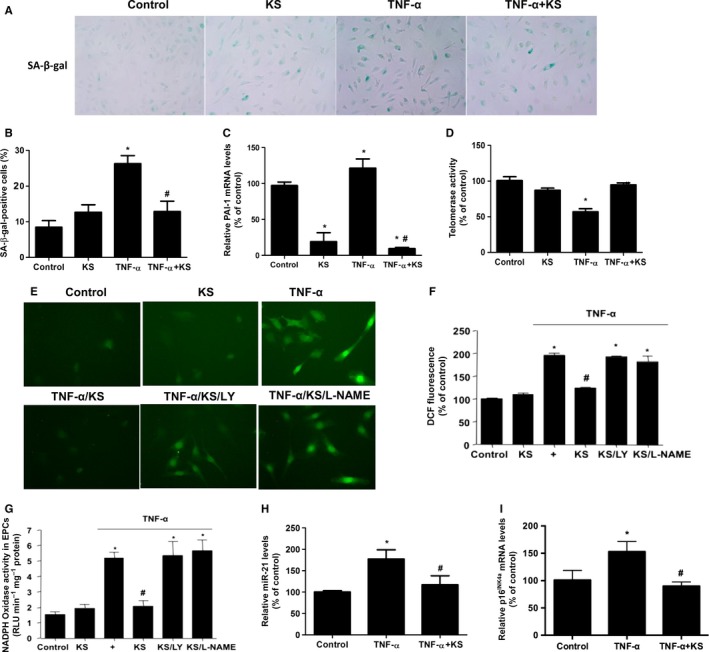
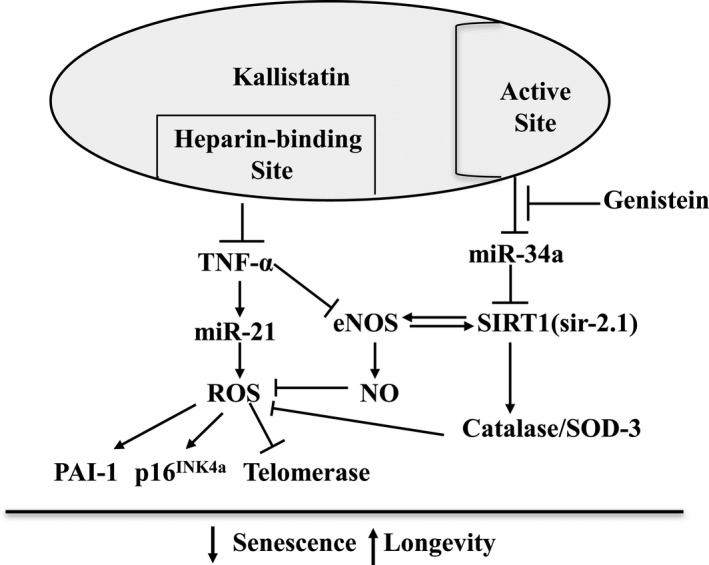
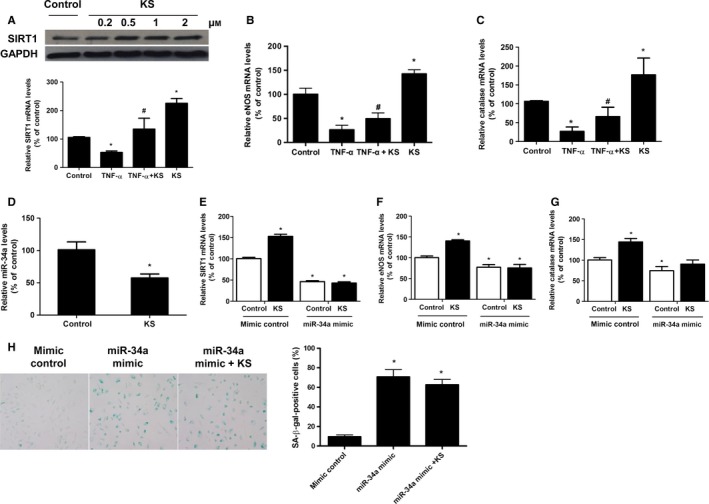
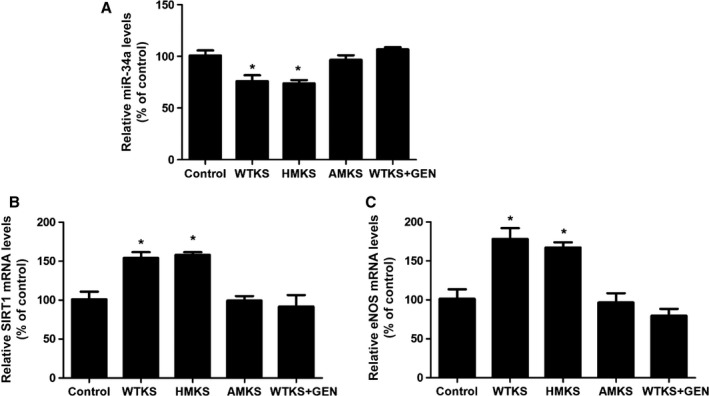
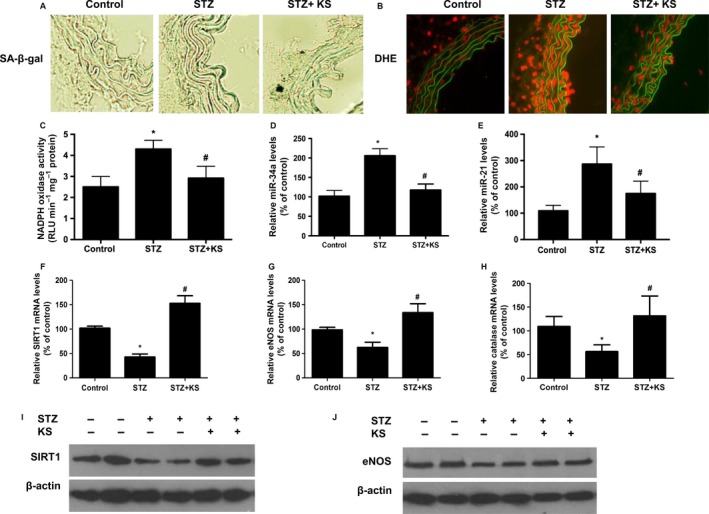
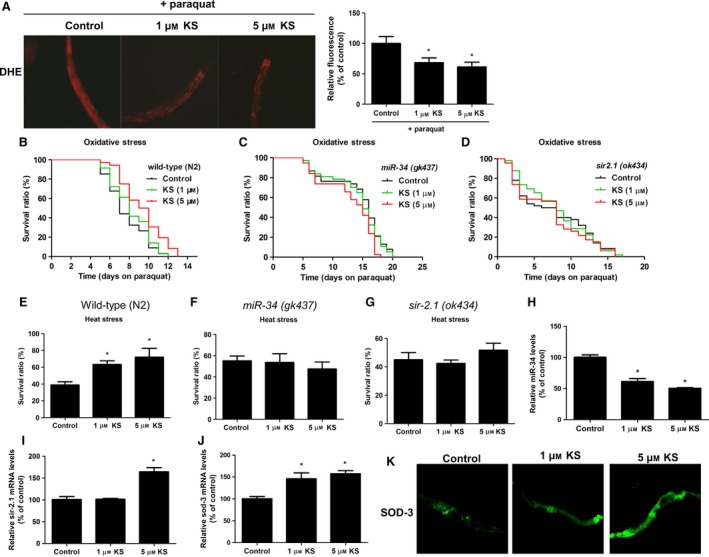
Kallistatin, an endogenous protein, protects against vascular injury by inhibiting oxidative stress and inflammation in hypertensive rats and enhancing the mobility and function of endothelial progenitor cells (EPCs). We aimed to determine the role and mechanism of kallistatin in vascular senescence and aging using cultured EPCs, streptozotocin (STZ)-induced diabetic mice, and Caenorhabditis elegans (C. elegans). Human kallistatin significantly decreased TNF-α-induced cellular senescence in EPCs, as indicated by reduced senescence-associated β-galactosidase activity and plasminogen activator inhibitor-1 expression, and elevated telomerase activity. Kallistatin blocked TNF-α-induced superoxide levels, NADPH oxidase activity, and microRNA-21 (miR-21) and p16 synthesis. Kallistatin prevented TNF-α-mediated inhibition of SIRT1, eNOS, and catalase, and directly stimulated the expression of these antioxidant enzymes. Moreover, kallistatin inhibited miR-34a synthesis, whereas miR-34a overexpression abolished kallistatin-induced antioxidant gene expression and antisenescence activity. Kallistatin via its active site inhibited miR-34a, and stimulated SIRT1 and eNOS synthesis in EPCs, which was abolished by genistein, indicating an event mediated by tyrosine kinase. Moreover, kallistatin administration attenuated STZ-induced aortic senescence, oxidative stress, and miR-34a and miR-21 synthesis, and increased SIRT1, eNOS, and catalase levels in diabetic mice. Furthermore, kallistatin treatment reduced superoxide formation and prolonged wild-type C. elegans lifespan under oxidative or heat stress, although kallistatin's protective effect was abolished in miR-34 or sir-2.1 (SIRT1 homolog) mutant C. elegans. Kallistatin inhibited miR-34, but stimulated sir-2.1 and sod-3 synthesis in C. elegans. These in vitro and in vivo studies provide significant insights into the role and mechanism of kallistatin in vascular senescence and aging by regulating miR-34a-SIRT1 pathway.
内源性蛋白组织激肽释放酶通过抑制氧化应激和炎症反应,增强内皮祖细胞(EPCs)的迁移能力和功能,从而保护高血压大鼠免受血管损伤。我们旨在利用培养的EPCs、链脲佐菌素(STZ)诱导的糖尿病小鼠和秀丽隐杆线虫(C. elegans),确定组织激肽释放酶在血管衰老中的作用和机制。人组织激肽释放酶显著降低了EPCs中TNF-α诱导的细胞衰老,表现为衰老相关β-半乳糖苷酶活性降低、纤溶酶原激活物抑制剂-1表达减少以及端粒酶活性升高。组织激肽释放酶阻断了TNF-α诱导的超氧化物水平、NADPH氧化酶活性以及微小RNA-21(miR-21)和p16的合成。组织激肽释放酶阻止了TNF-α介导的对SIRT1、eNOS和过氧化氢酶的抑制作用,并直接刺激了这些抗氧化酶的表达。此外,组织激肽释放酶抑制了miR-34a的合成,而miR-34a的过表达消除了组织激肽释放酶诱导的抗氧化基因表达和抗衰老活性。组织激肽释放酶通过其活性位点抑制miR-34a,并刺激EPCs中SIRT1和eNOS的合成,而染料木黄酮可消除这种作用,表明这是一个由酪氨酸激酶介导的事件。此外,给予组织激肽释放酶可减轻STZ诱导的糖尿病小鼠主动脉衰老、氧化应激以及miR-34a和miR-21的合成,并增加SIRT1、eNOS和过氧化氢酶的水平。此外,组织激肽释放酶处理可减少超氧化物的形成,并延长氧化或热应激条件下野生型秀丽隐杆线虫的寿命,尽管在miR-34或sir-2.1(SIRT1同源物)突变的秀丽隐杆线虫中,组织激肽释放酶的保护作用被消除。组织激肽释放酶抑制了秀丽隐杆线虫中miR-34的表达,但刺激了sir-2.1和sod-3的合成。这些体外和体内研究通过调节miR-34a-SIRT1通路,为组织激肽释放酶在血管衰老中的作用和机制提供了重要见解。