University College London, London, England.
McPin Foundation, London, England.
BMC Health Serv Res. 2019 Nov 21;19(1):866. doi: 10.1186/s12913-019-4687-8.
Acute Day Units (ADUs) exist in some English NHS Trusts as an alternative to psychiatric inpatient admission. However, there is a lack of information about the number, configuration, and functioning of such units, and about the extent to which additional units might reduce admissions. This cross-sectional survey and cluster analysis of ADUs aimed to identify, categorise, and describe Acute Day Units (ADUs) in England.
English NHS Mental Health Trusts with ADUs were identified in a mapping exercise, and a questionnaire was distributed to ADU managers. Cluster analysis was used to identify distinct models of service, and descriptive statistics are given to summarise the results of the survey questions.
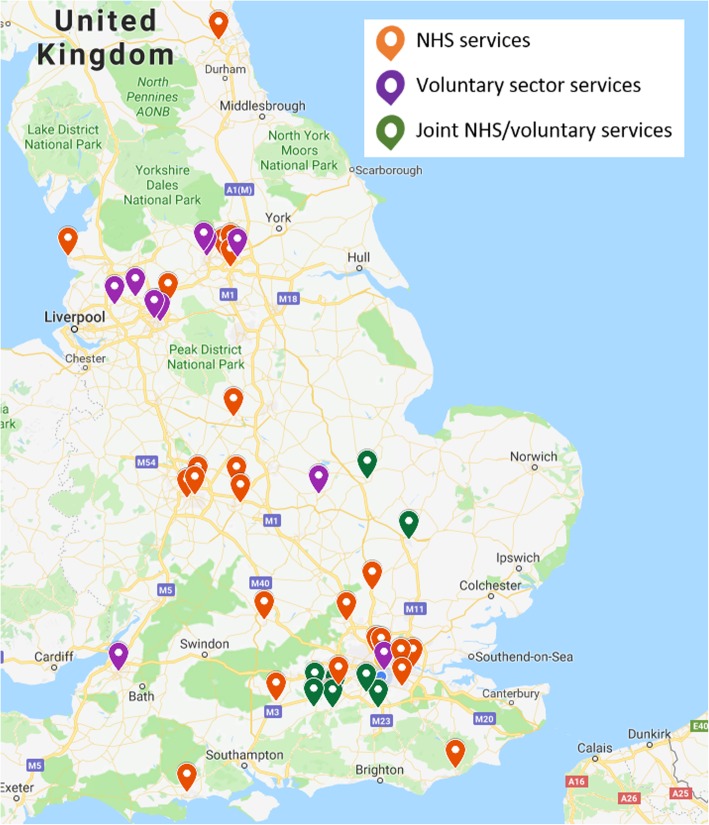
Two types of service were identified by the cluster analysis: NHS (n = 27; and voluntary sector services (n = 18). Under a third of NHS Trusts have access to ADUs. NHS services typically have multi-disciplinary staff teams, operate during office hours, offer a range of interventions (medication, physical checks, psychological interventions, group sessions, peer support), and had a median treatment period of 30 days. Voluntary sector services had mostly non-clinically qualified staff, and typically offered supportive listening on a one-off, drop-in basis. Nearly all services aim to prevent or reduce inpatient admissions. Voluntary sector services had more involvement by service users and carers in management and running of the service than NHS services.
The majority of NHS Trusts do not provide ADUs, despite their potential to reduce inpatient admissions. Further research of ADUs is required to establish their effectiveness and acceptability to service users, carers, and staff.
急性日间病房(ADUs)在一些英国国民保健服务信托中作为精神病住院治疗的替代方案存在。然而,关于这些病房的数量、配置和功能,以及增加更多病房是否可以减少住院治疗的相关信息还很缺乏。本横断面调查和 ADU 聚类分析旨在确定、分类和描述英格兰的急性日间病房(ADUs)。
通过映射研究确定了有 ADU 的英国国民保健服务心理健康信托,并向 ADU 经理分发了一份问卷。使用聚类分析来识别不同的服务模式,并给出描述性统计数据来总结调查问题的结果。
聚类分析确定了两种类型的服务:NHS(n=27)和志愿部门服务(n=18)。只有不到三分之一的 NHS 信托机构可以使用 ADU。NHS 服务通常拥有多学科的工作人员团队,在办公时间内运作,提供一系列干预措施(药物治疗、身体检查、心理干预、小组会议、同伴支持),并具有 30 天的中位数治疗期。志愿部门服务的工作人员大多没有临床资格,通常以一次性、即到即走的方式提供支持性倾听服务。几乎所有的服务都旨在预防或减少住院治疗。志愿部门服务比 NHS 服务更多地让服务使用者和照顾者参与服务的管理和运作。
尽管急性日间病房有可能减少住院治疗,但大多数 NHS 信托机构并未提供 ADU。需要进一步研究 ADU,以确定其对服务使用者、照顾者和工作人员的有效性和可接受性。