Xiangya School of Nursing, Central South University, Changsha, Hunan, China.
Xiangya School of Nursing, Central South University, Changsha, Hunan, China
BMJ Open. 2019 Nov 21;9(11):e032356. doi: 10.1136/bmjopen-2019-032356.
As the discipline of nursing has advanced, research capacity in nursing has become increasingly important to the discipline's development. However, research capacity in nursing is still commonly used as a buzzword, without a consistent and clear definition. The purpose of this study is to clarify the concept of research capacity in nursing by identifying its conceptual components in the relevant nursing literature using the Pragmatic Utility method.
A Pragmatic Utility concept analysis based on a scoping review.
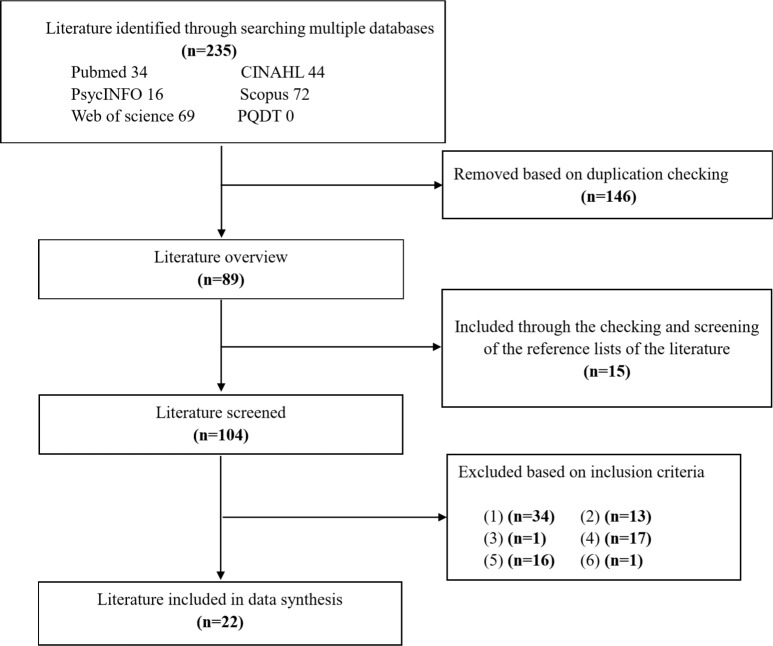
Academic literature retrieved from PubMed, Cumulative Index to Nursing and Allied Health Literature (CINAHL), PsycINFO, Scopus, Web of Science and ProQuest Dissertations and Theses (PQDT).
Qualitative studies, quantitative studies, mixed method studies or literature reviews focusing on research capacity in nursing published in English between 2009 and 2019.
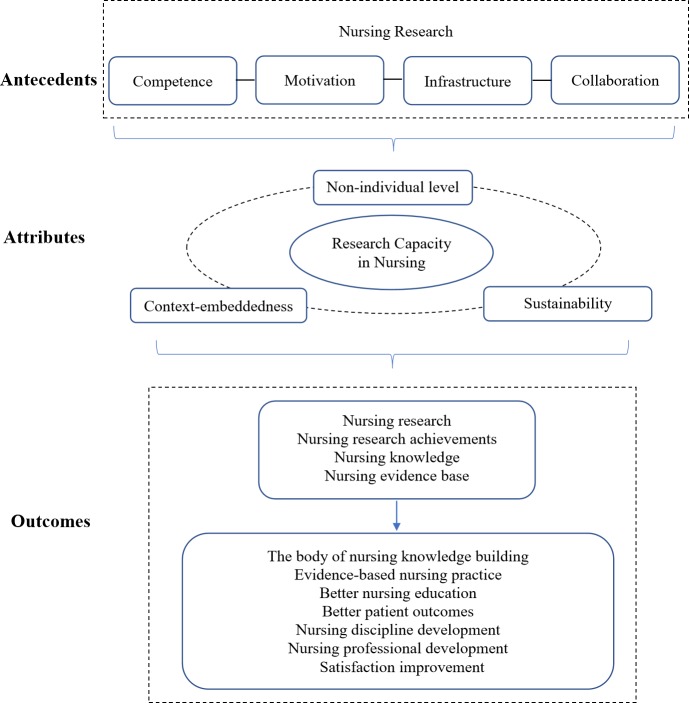
Competence, motivation, infrastructure and collaboration for nursing research are the antecedents of research capacity in nursing. The attributes of research capacity in nursing are 'non-individual level', 'context-embeddedness' and 'sustainability'. The direct outcome of research capacity in nursing is nursing research. The allied concepts identified are nursing research competency, nursing research capability and evidence-based practice capacity in nursing.
Research capacity in nursing is the ability to conduct nursing research activities in a sustainable manner in a specific context, and it is normally used at a non-individual level. Research capacity in nursing is critical for the development of the nursing discipline, and for positive nurse, patient and healthcare system outcomes. More studies are needed to further explore the allied concepts of research capacity in nursing, and to better understand relationships among these allied concepts.
随着护理学学科的发展,护理研究能力对学科发展变得越来越重要。然而,护理研究能力仍常被当作一个流行词使用,缺乏一致和明确的定义。本研究旨在通过使用实用主义效用方法在相关护理文献中确定其概念组成部分,阐明护理研究能力的概念。
基于范围综述的实用主义效用概念分析。
从 PubMed、 Cumulative Index to Nursing and Allied Health Literature(CINAHL)、PsycINFO、Scopus、Web of Science 和 ProQuest Dissertations and Theses(PQDT)检索学术文献。
聚焦于 2009 年至 2019 年期间发表的护理研究能力的护理定性研究、定量研究、混合方法研究或文献综述,研究语言为英语。
护理研究的能力、动机、基础设施和合作是护理研究能力的前提。护理研究能力的属性为“非个体水平”、“嵌入语境”和“可持续性”。护理研究能力的直接结果是护理研究。确定的相关概念为护理研究能力、护理研究能力和护理循证实践能力。
护理研究能力是在特定环境中以可持续方式开展护理研究活动的能力,通常在非个体水平上使用。护理研究能力对护理学科的发展以及对积极的护士、患者和医疗保健系统结果至关重要。需要进一步研究来探索护理研究能力的相关概念,以更好地理解这些相关概念之间的关系。