Department of Molecular and Comparative Pathobiology, Johns Hopkins University School of Medicine, Baltimore, Maryland.
Division of Pediatric Surgery, Department of Surgery, Johns Hopkins University School of Medicine, Baltimore, Maryland.
Cell Mol Gastroenterol Hepatol. 2020;9(3):403-423. doi: 10.1016/j.jcmgh.2019.11.002. Epub 2019 Nov 19.
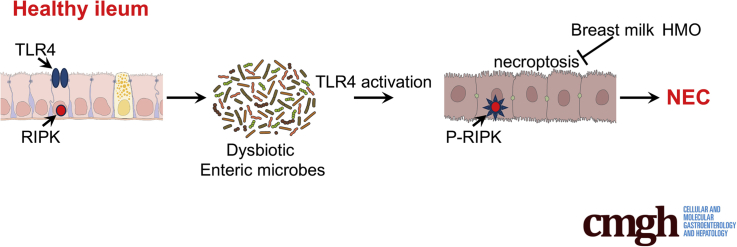
BACKGROUND & AIMS: Necrotizing enterocolitis (NEC) is a devastating disease of premature infants characterized by Toll-like receptor 4 (TLR4)-dependent intestinal inflammation and enterocyte death. Given that necroptosis is a proinflammatory cell death process that is linked to bacterial signaling, we investigated its potential role in NEC, and the mechanisms involved.
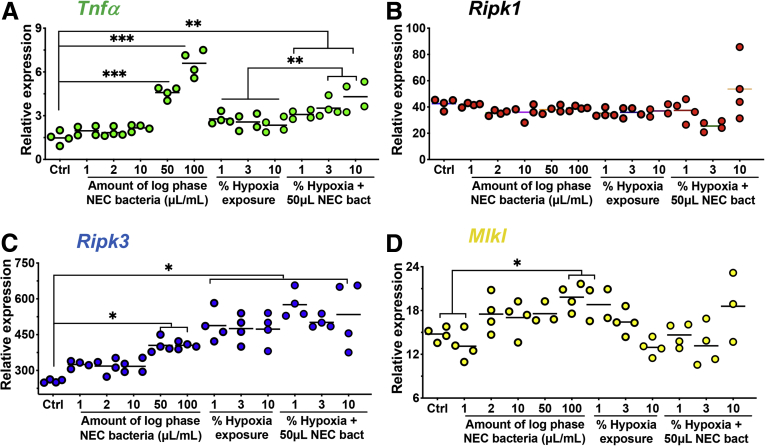
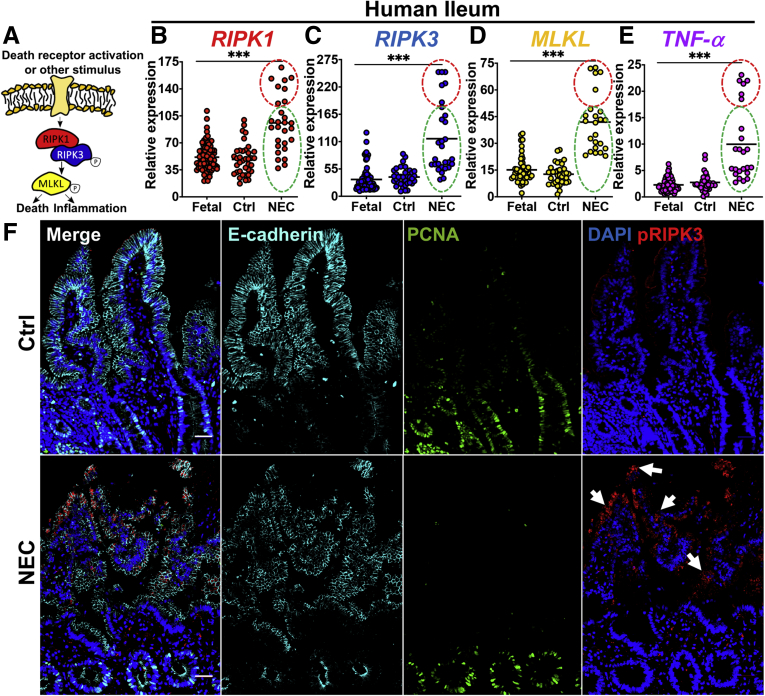
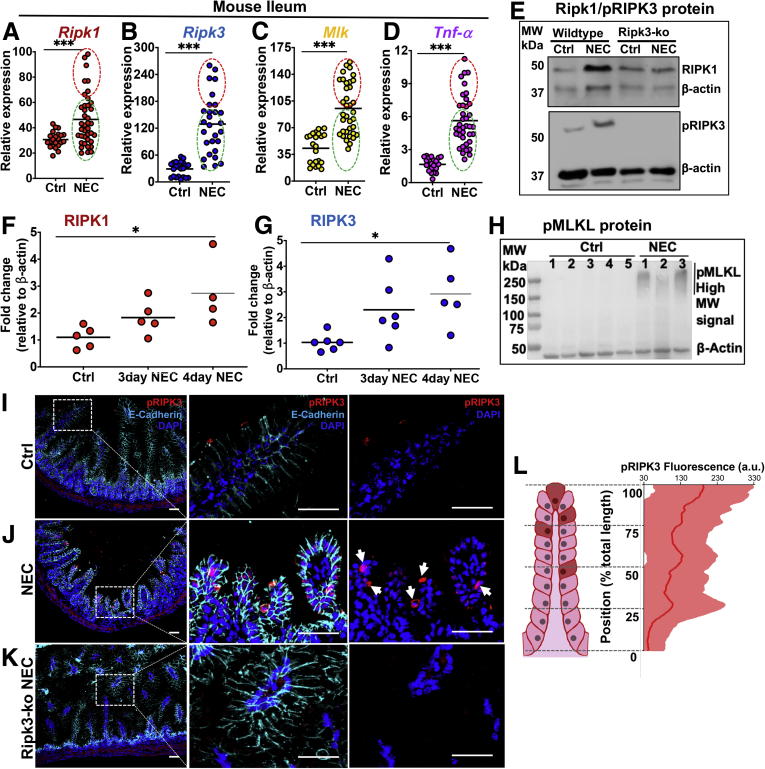
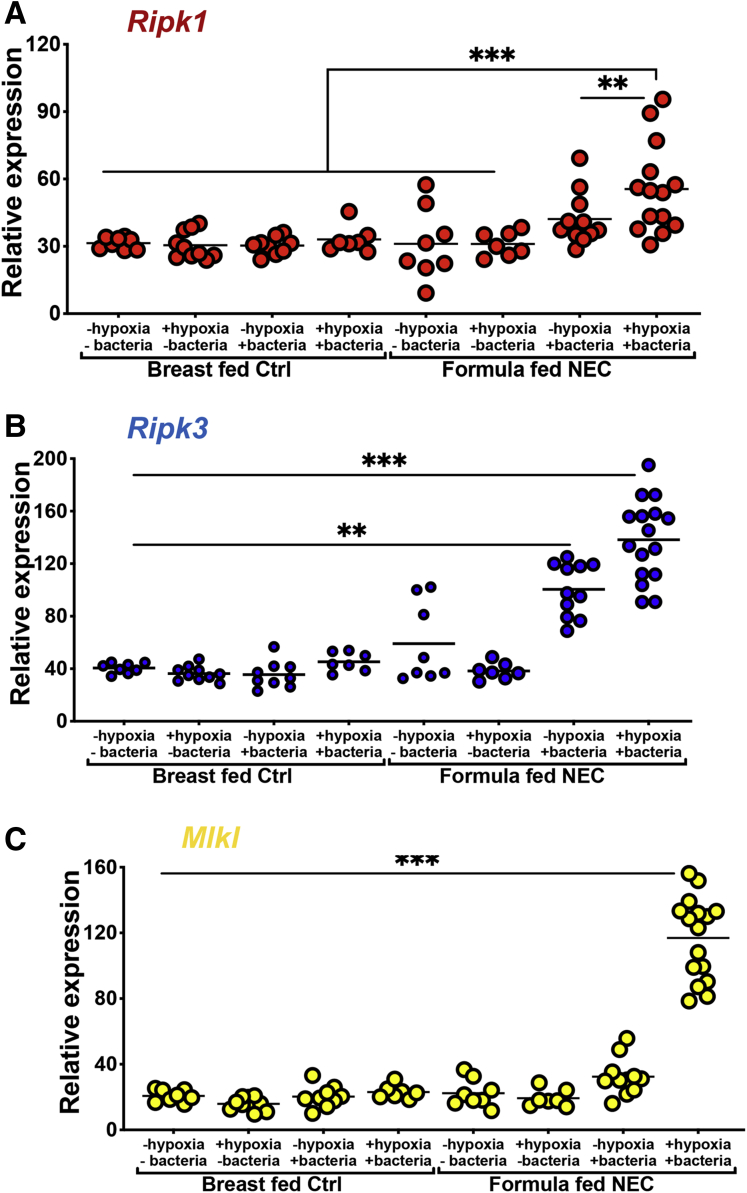
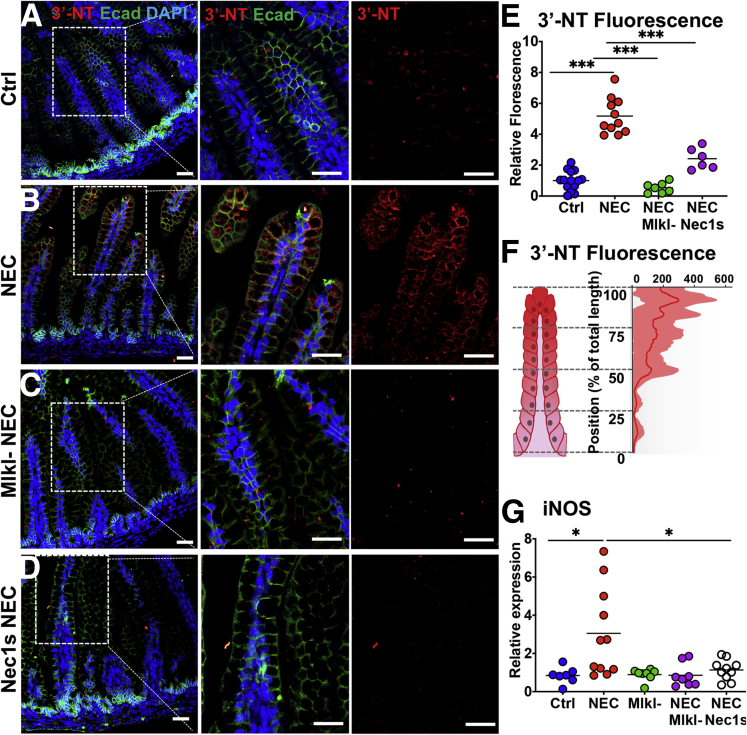
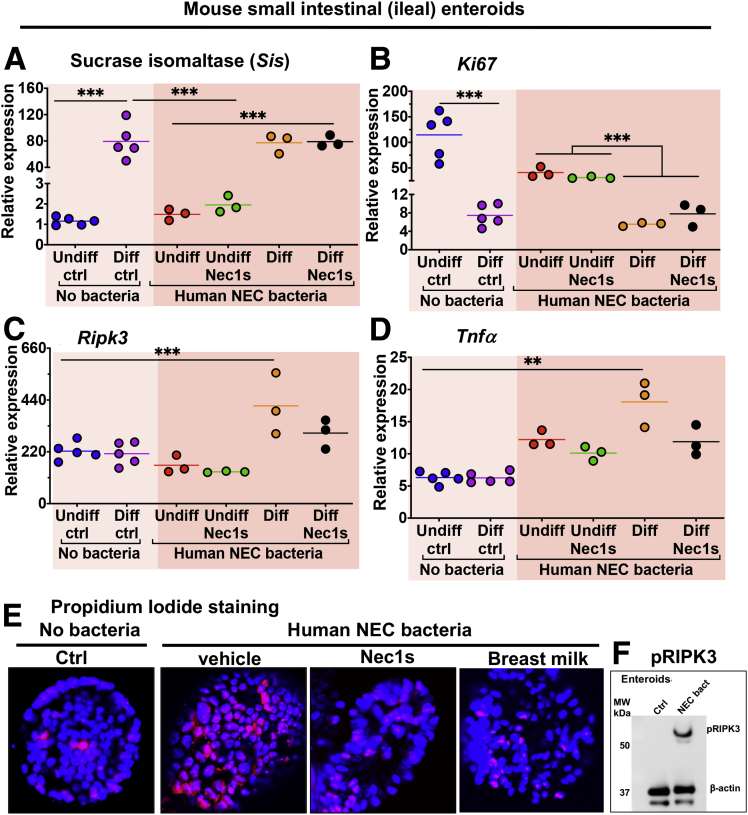
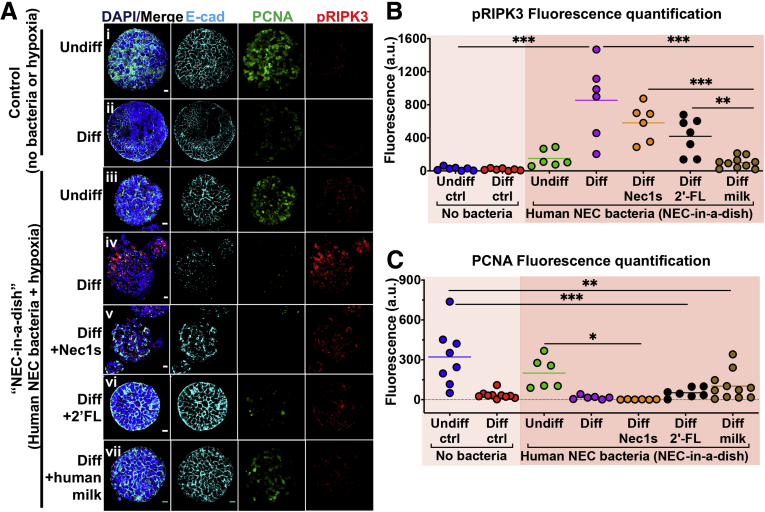
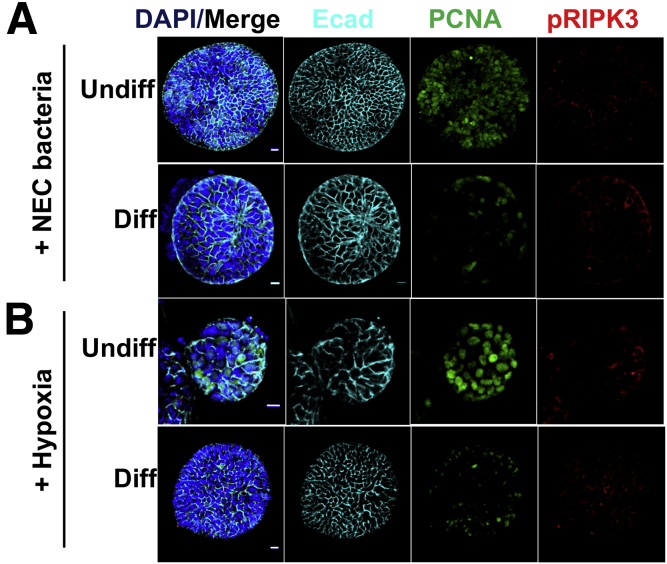
Human and mouse NEC intestine were analyzed for necroptosis gene expression (ie, RIPK1, RIPK3, and MLKL), and protein activation (phosphorylated RIPK3). To evaluate a potential role for necroptosis in NEC, the effects of genetic (ie, Ripk3 knockout or Mlkl knockout) or pharmacologic (ie, Nec1s) inhibition of intestinal inflammation were assessed in a mouse NEC model, and a possible upstream role of TLR4 was assessed in Tlr4-deficient mice. The NEC-protective effects of human breast milk and its constituent milk oligosaccharides on necroptosis were assessed in a NEC-in-a-dish model, in which mouse intestinal organoids were cultured as either undifferentiated or differentiated epithelium in the presence of NEC bacteria and hypoxia.
Necroptosis was activated in the intestines of human and mouse NEC in a TLR4-dependent manner, and was up-regulated specifically in differentiated epithelium of the immature ileum. Inhibition of necroptosis genetically and pharmacologically reduced intestinal-epithelial cell death and mucosal inflammation in experimental NEC, and ex vivo in the NEC-in-a-dish system. Strikingly, the addition of human breast milk, or the human milk oligosaccharide 2 fucosyllactose in the ex vivo system, reduced necroptosis and inflammation.
Necroptosis is activated in the intestinal epithelium upon TLR4 signaling and is required for NEC development, and explains in part the protective effects of breast milk.
坏死性小肠结肠炎(NEC)是一种严重的早产儿疾病,其特征为 Toll 样受体 4(TLR4)依赖性肠道炎症和肠上皮细胞死亡。鉴于坏死性凋亡是一种与细菌信号相关的促炎细胞死亡过程,我们研究了其在 NEC 中的潜在作用及其相关机制。
分析人及鼠 NEC 肠组织中坏死性凋亡基因表达(即 RIPK1、RIPK3 和 MLKL)及蛋白激活(磷酸化 RIPK3)情况。为评估坏死性凋亡在 NEC 中的潜在作用,我们在鼠 NEC 模型中评估了遗传(即 Ripk3 敲除或 Mlkl 敲除)或药物(即 Nec1s)抑制肠道炎症的作用,并在 TLR4 缺陷型鼠中评估了 TLR4 的潜在上游作用。我们还在 NEC 类器官模型中评估了人乳及其成分乳寡糖对坏死性凋亡的保护作用,在该模型中,我们将鼠肠类器官在存在 NEC 细菌和缺氧的情况下培养为未分化或分化的上皮细胞。
TLR4 依赖性方式激活人及鼠 NEC 肠组织中的坏死性凋亡,且在不成熟回肠的分化上皮细胞中特异性上调。遗传和药物抑制坏死性凋亡可减少实验性 NEC 及体外 NEC 类器官模型中的肠道上皮细胞死亡和黏膜炎症。引人注目的是,人乳或体外系统中的人乳寡糖 2-岩藻糖乳糖的添加可减少坏死性凋亡和炎症。
TLR4 信号激活肠上皮细胞中的坏死性凋亡,且其对于 NEC 的发展是必需的,这部分解释了人乳的保护作用。