McGill University & Douglas Mental Health University Institute, Montreal, Canada.
Nat Commun. 2019 Nov 22;10(1):5322. doi: 10.1038/s41467-019-13260-9.
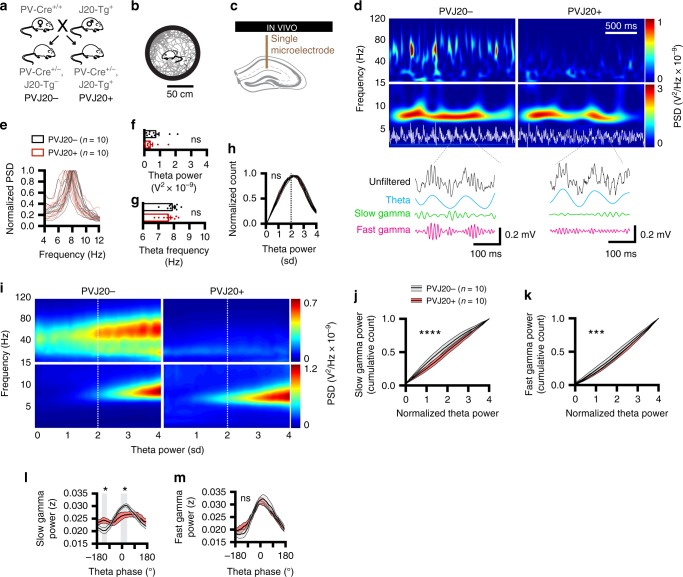
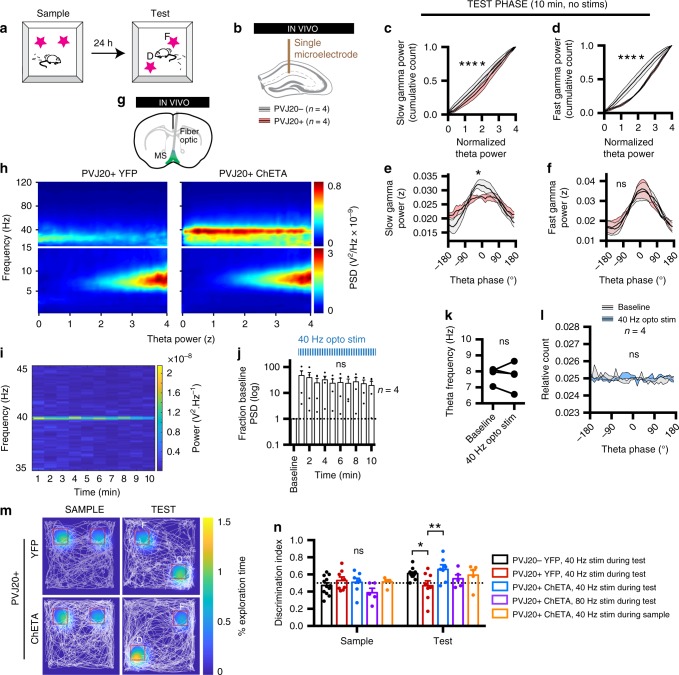
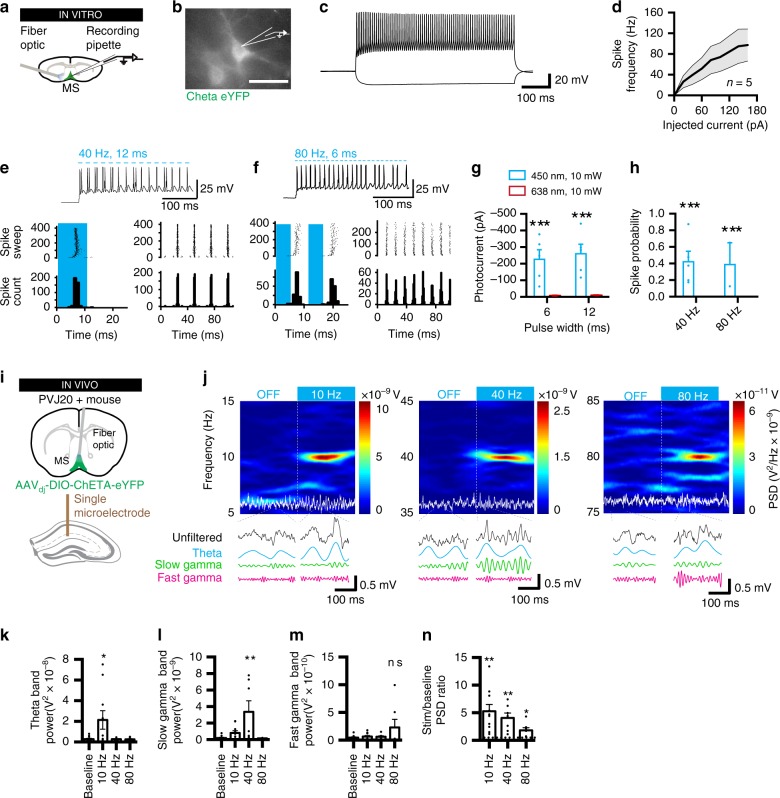
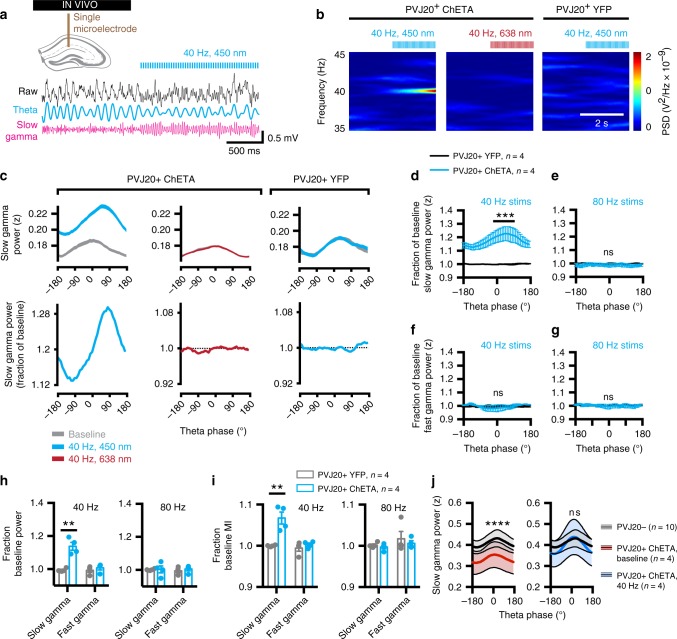
Slow gamma oscillations (30-60 Hz) correlate with retrieval of spatial memory. Altered slow gamma oscillations have been observed in Alzheimer's disease. Here, we use the J20-APP AD mouse model that displays spatial memory loss as well as reduced slow gamma amplitude and phase-amplitude coupling to theta oscillations phase. To restore gamma oscillations in the hippocampus, we used optogenetics to activate medial septal parvalbumin neurons at different frequencies. We show that optogenetic stimulation of parvalbumin neurons at 40 Hz (but not 80 Hz) restores hippocampal slow gamma oscillations amplitude, and phase-amplitude coupling of the J20 AD mouse model. Restoration of slow gamma oscillations during retrieval rescued spatial memory in mice despite significant plaque deposition. These results support the role of slow gamma oscillations in memory and suggest that optogenetic stimulation of medial septal parvalbumin neurons at 40 Hz could provide a novel strategy for treating memory deficits in AD.
慢伽马振荡(30-60Hz)与空间记忆的检索相关。在阿尔茨海默病中观察到慢伽马振荡的改变。在这里,我们使用 J20-APP AD 小鼠模型,该模型显示空间记忆丧失以及慢伽马幅度和相位-幅度耦合到 theta 振荡相位的降低。为了恢复海马体中的伽马振荡,我们使用光遗传学以不同频率激活中隔核 parvalbumin 神经元。我们表明,光遗传学刺激 parvalbumin 神经元在 40Hz(而不是 80Hz)时恢复 J20 AD 小鼠模型的海马慢伽马振荡幅度和相位-幅度耦合。尽管有明显的斑块沉积,但在检索过程中恢复慢伽马振荡可挽救小鼠的空间记忆。这些结果支持慢伽马振荡在记忆中的作用,并表明中隔核 parvalbumin 神经元以 40Hz 的光遗传学刺激可能为 AD 的记忆缺陷提供一种新的治疗策略。