Department of Orthopaedics, West China Hospital, Sichuan University, Chengdu, China.
Orthop Surg. 2019 Dec;11(6):943-953. doi: 10.1111/os.12547. Epub 2019 Nov 25.
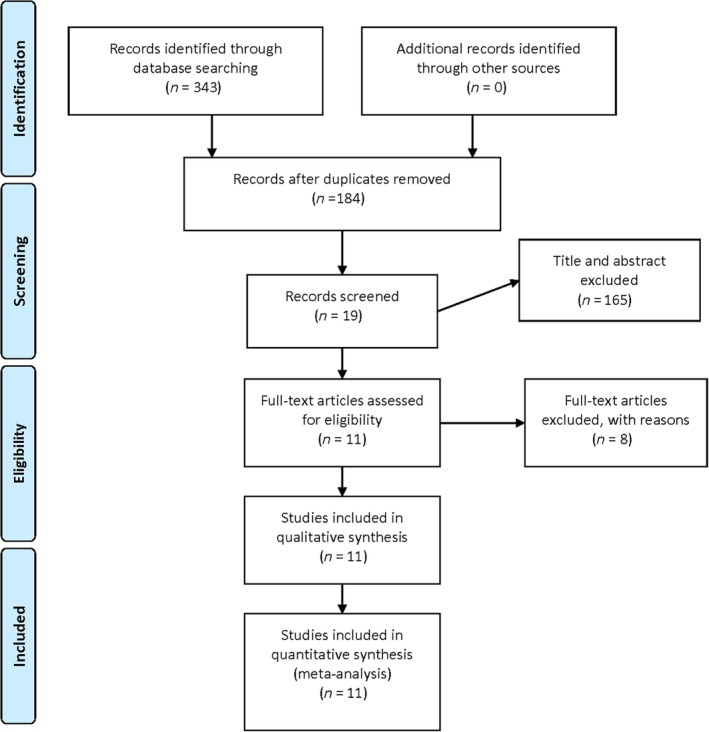
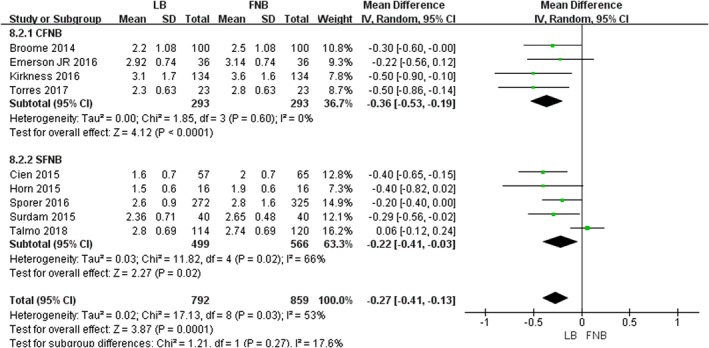
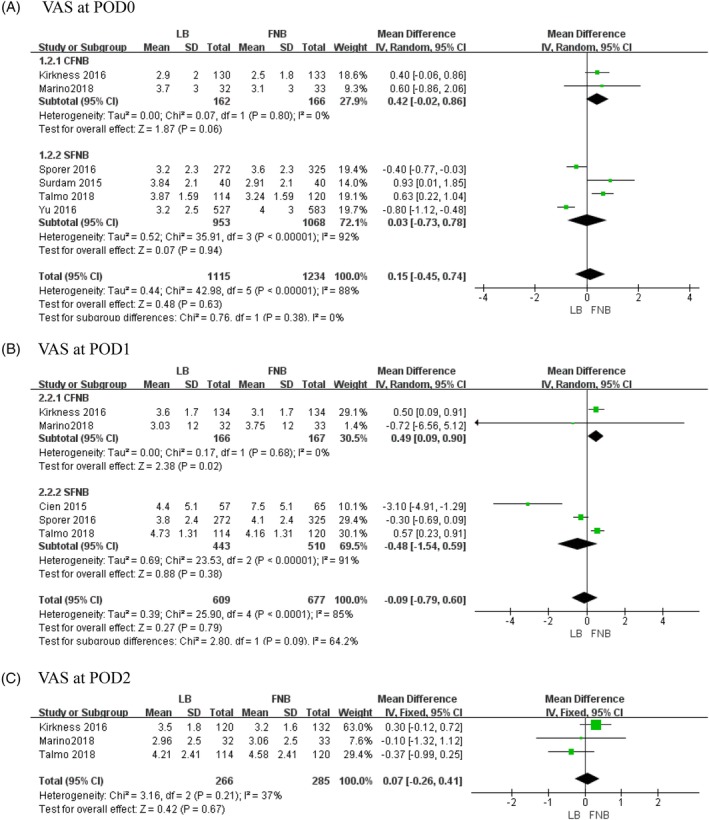
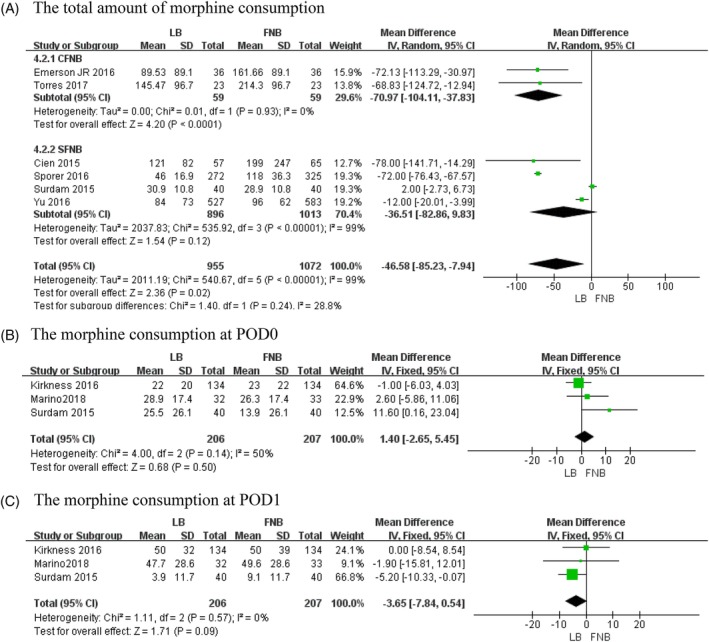
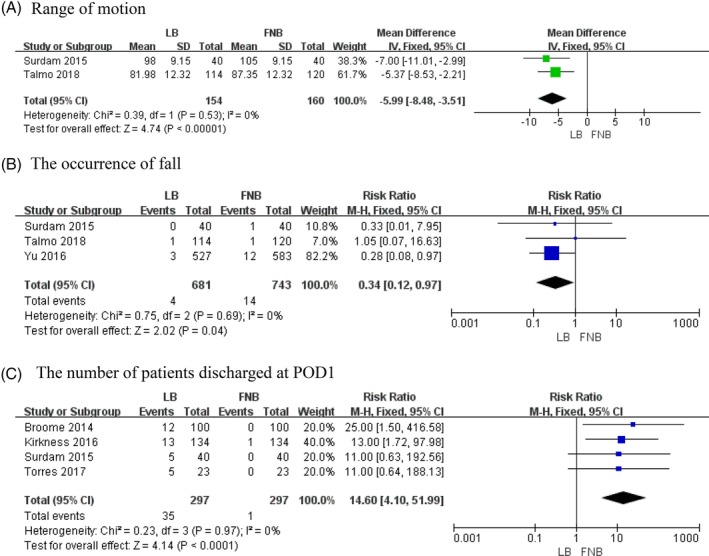
To compare the efficacy of liposomal bupivacaine (LB) and femoral nerve block following total knee arthroplasty, we conducted this systematic review and meta-analysis. 11 trials with 2,908 patients were included in this study. The pooled data demonstrated that total morphine consumption equivalents during the hospital stay was significantly increased in FNB group. In addition, LB has significantly better outcome in view of the postoperative functional recovery, such as the odds of fall, the incidences of straight leg rise (SLR), the number of patients who can walk independently in the day of surgery,the ambulation distance at POD1, the number of patients discharged at POD1. Consistent with the faster functional recovery, liposomal bupivacaine shortens the length of hospital stay. However, there was no significant difference between LB and FNB in terms of Visual Analogue Score (VAS) during the hospital stay. All in all, liposomal bupivacaine has significantly better outcome in view of the postoperative functional recovery and the length of hospital stay compared with femoral nerve block following the total knee arthroplasty.
为了比较膝关节置换术后脂质体布比卡因(LB)和股神经阻滞的疗效,我们进行了这项系统评价和荟萃分析。本研究共纳入了 11 项试验,共 2908 例患者。汇总数据显示,股神经阻滞组患者在院期间的总吗啡消耗量等效物明显增加。此外,LB 在术后功能恢复方面具有显著更好的效果,如跌倒的可能性、直腿抬高(SLR)的发生率、术后当天能够独立行走的患者比例、术后第 1 天的步行距离、术后第 1 天出院的患者比例。与更快的功能恢复一致,脂质体布比卡因缩短了住院时间。然而,在住院期间的视觉模拟评分(VAS)方面,LB 和股神经阻滞之间没有显著差异。总之,与股神经阻滞相比,脂质体布比卡因在膝关节置换术后的功能恢复和住院时间方面具有显著更好的效果。