Jiang Wenqiang, Yang Lei, He Yiqin, Zhang Haotian, Li Wei, Chen Huaigu, Ma Dongfang, Yin Junliang
Engineering Research Center of Ecology and Agricultural Use of Wetland, Ministry of Education/Hubei Collaborative Innovation Center for Grain Industry/College of Agriculture, Yangtze University, Jingzhou, Hubei, China.
Institute of Plant Protection and Soil Science, Hubei Academy of Agricultural Sciences, Wuhan, Hubei, China.
PeerJ. 2019 Nov 19;7:e8062. doi: 10.7717/peerj.8062. eCollection 2019.
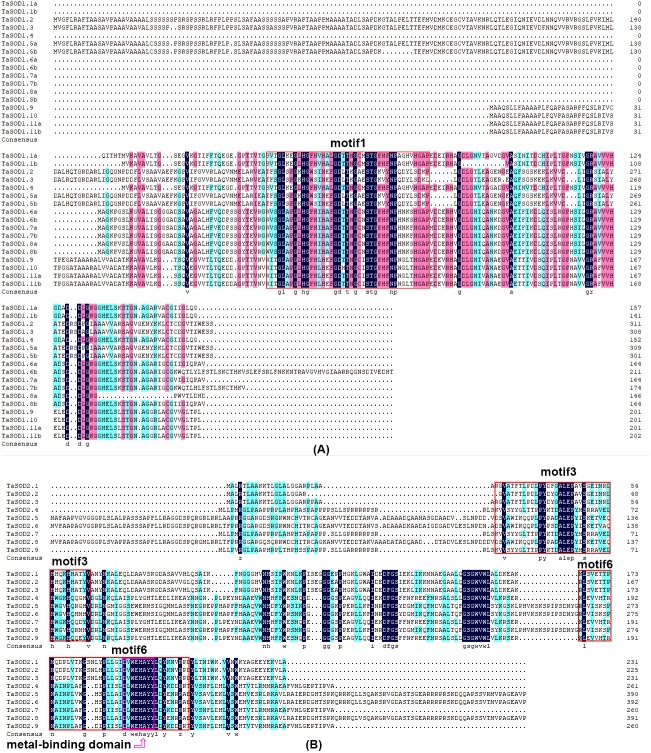
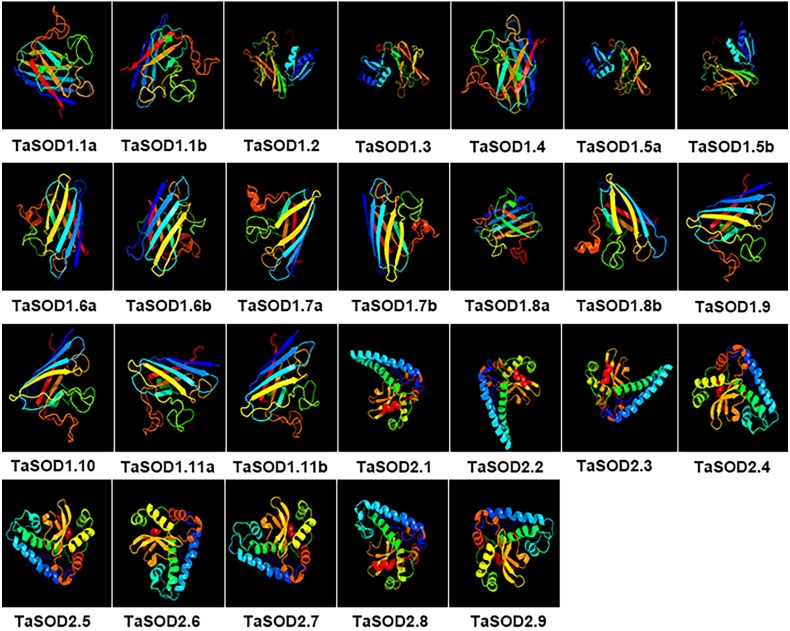
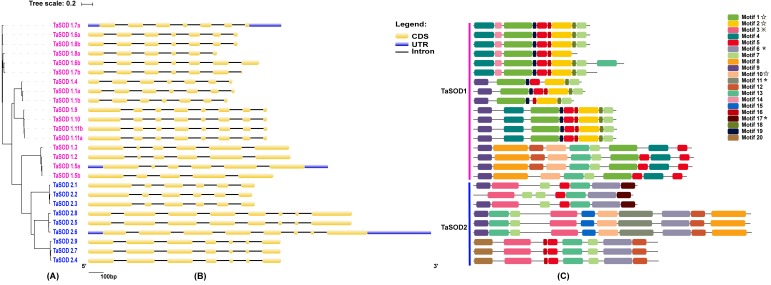
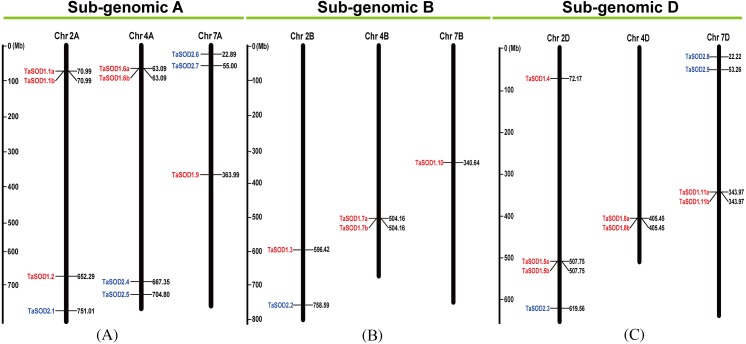
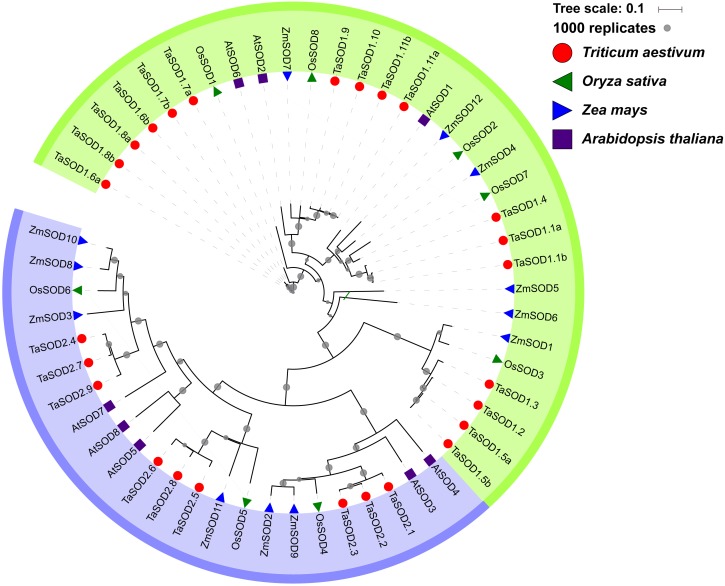
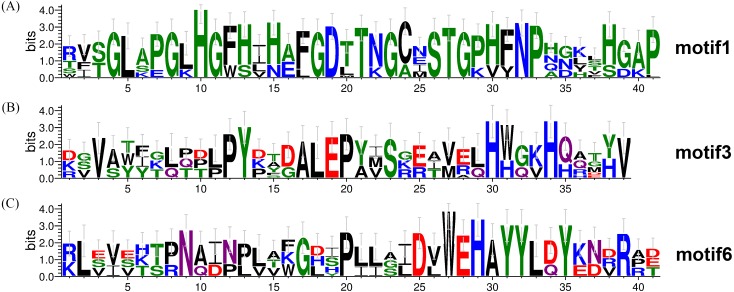
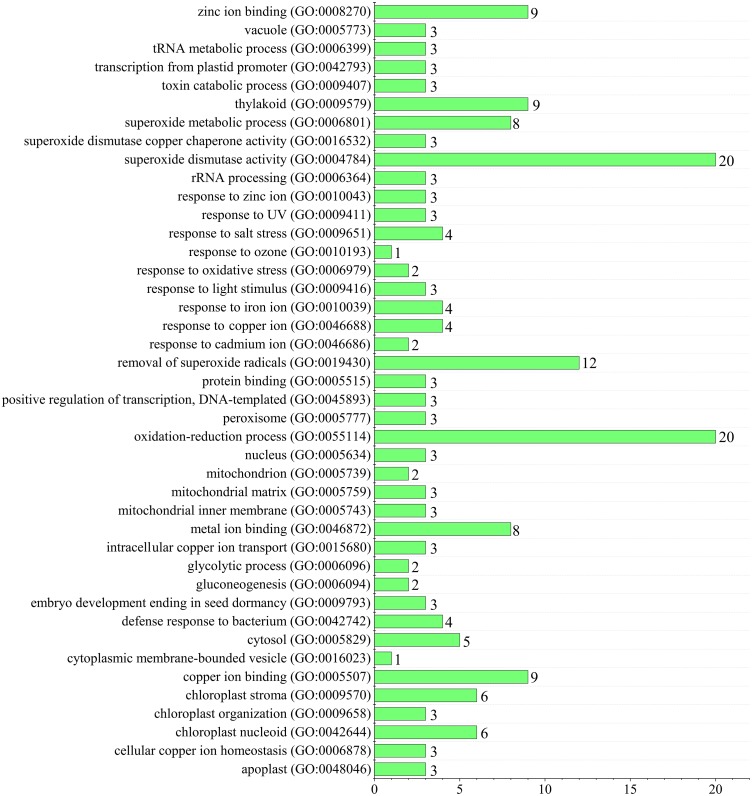
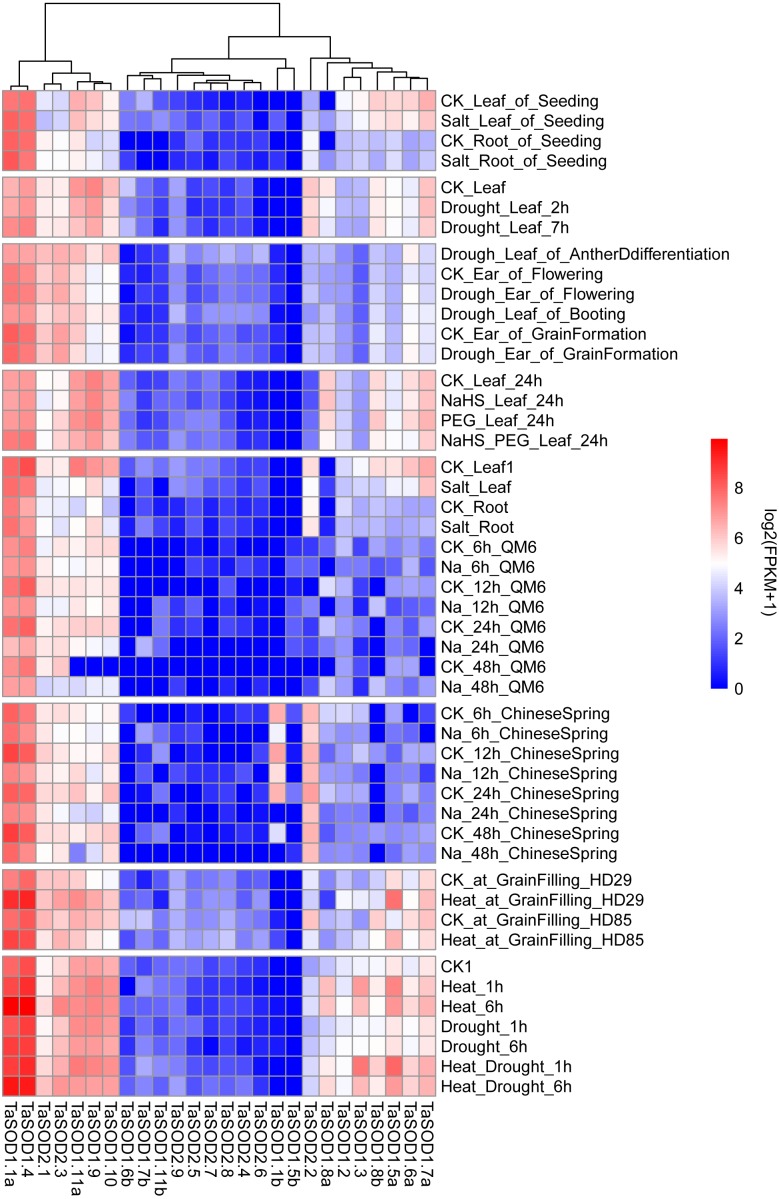
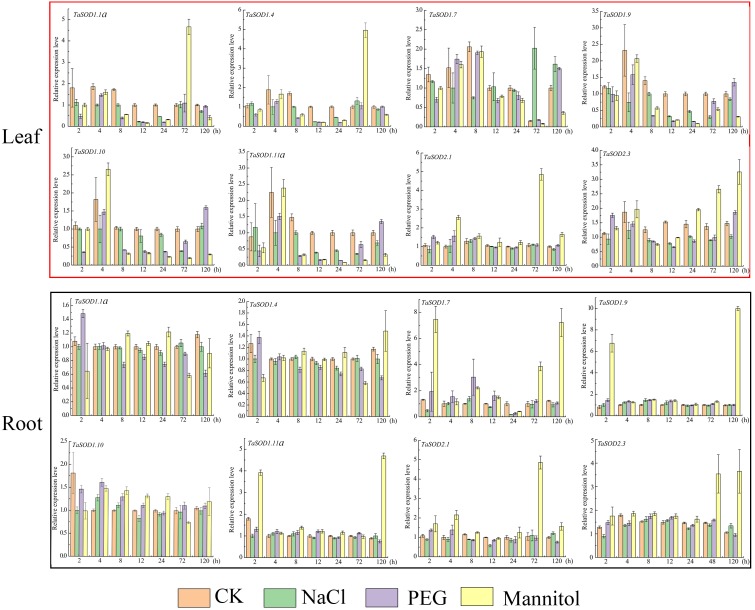
Superoxide dismutases (SODs) are a family of key antioxidant enzymes that play a crucial role in plant growth and development. Previously, this gene family has been investigated in and rice. In the present study, a genome-wide analysis of the SOD gene family in wheat were performed. Twenty-six SOD genes were identified from the whole genome of wheat, including 17 Cu/Zn-SODs, six Fe-SODs, and three Mn-SODs. The chromosomal location mapping analysis indicated that these three types of SOD genes were only distributed on 2, 4, and 7 chromosomes, respectively. Phylogenetic analyses of wheat SODs and several other species revealed that these SOD proteins can be assigned to two major categories. SOD1 mainly comprises of Cu/Zn-SODs, and SOD2 mainly comprises of Fe-SODs and Mn-SODs. Gene structure and motif analyses indicated that most of the SOD genes showed a relatively conserved exon/intron arrangement and motif composition. Analyses of transcriptional data indicated that most of the wheat SOD genes were expressed in almost all of the examined tissues and had important functions in abiotic stress resistance. Finally, quantitative real-time polymerase chain reaction (qRT-PCR) analysis was used to reveal the regulating roles of wheat SOD gene family in response to NaCl, mannitol, and polyethylene glycol stresses. qRT-PCR showed that eight randomly selected genes with relatively high expression levels responded to all three stresses based on released transcriptome data. However, their degree of response and response patterns were different. Interestingly, among these genes, and feature research value owing to their remarkable expression-fold change in leaves or roots under different stresses. Overall, our results provide a basis of further functional research on the SOD gene family in wheat and facilitate their potential use for applications in the genetic improvement on wheat in drought and salt stress environments.
超氧化物歧化酶(SODs)是一类关键的抗氧化酶家族,在植物生长发育中起着至关重要的作用。此前,该基因家族已在[具体物种未提及]和水稻中得到研究。在本研究中,对小麦的SOD基因家族进行了全基因组分析。从小麦全基因组中鉴定出26个SOD基因,包括17个铜/锌超氧化物歧化酶(Cu/Zn-SODs)、6个铁超氧化物歧化酶(Fe-SODs)和3个锰超氧化物歧化酶(Mn-SODs)。染色体定位图谱分析表明,这三种类型的SOD基因分别仅分布在2号、4号和7号染色体上。对小麦SODs与其他几个物种的系统发育分析表明,这些SOD蛋白可分为两大类。SOD1主要由铜/锌超氧化物歧化酶组成,SOD2主要由铁超氧化物歧化酶和锰超氧化物歧化酶组成。基因结构和基序分析表明,大多数SOD基因显示出相对保守的外显子/内含子排列和基序组成。转录数据分析表明,大多数小麦SOD基因在几乎所有检测的组织中都有表达,并且在非生物胁迫抗性中具有重要功能。最后,采用定量实时聚合酶链反应(qRT-PCR)分析来揭示小麦SOD基因家族在响应氯化钠、甘露醇和聚乙二醇胁迫时的调控作用。qRT-PCR表明,根据已发布的转录组数据,随机选择的8个表达水平相对较高的基因对所有三种胁迫都有响应。然而,它们的响应程度和响应模式不同。有趣的是,在这些基因中,[具体基因未提及]和[具体基因未提及]因其在不同胁迫下叶片或根中显著的表达倍数变化而具有研究价值。总体而言,我们的结果为进一步研究小麦SOD基因家族的功能提供了基础,并有助于其在干旱和盐胁迫环境下小麦遗传改良中的潜在应用。