Division of Biology and Biological Engineering, California Institute of Technology, Pasadena, CA 91125, USA.
Center for Genomic Medicine and Department of Anesthesia, Critical Care and Pain Medicine, Massachusetts General Hospital, Harvard Medical School, Boston, MA 02114, USA.
Sci Adv. 2019 Nov 13;5(11):eaax4249. doi: 10.1126/sciadv.aax4249. eCollection 2019 Nov.
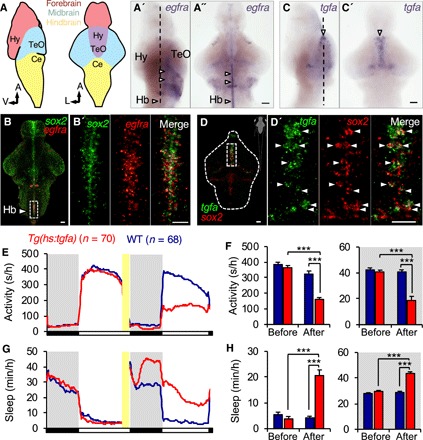
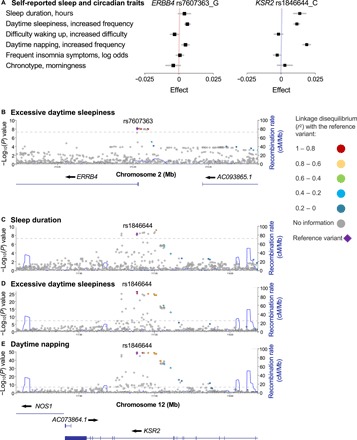
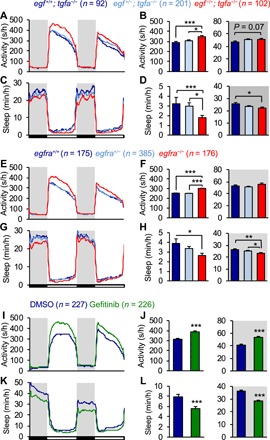
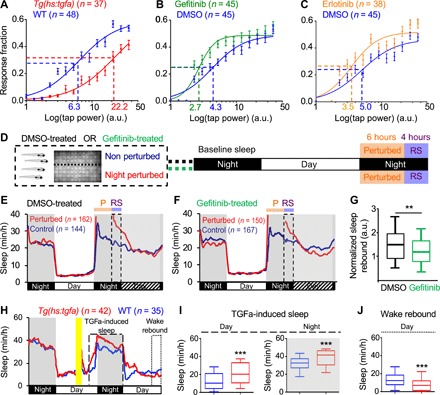
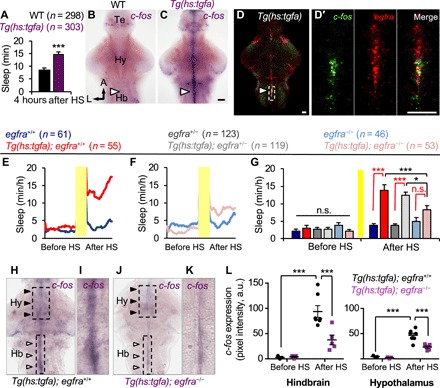
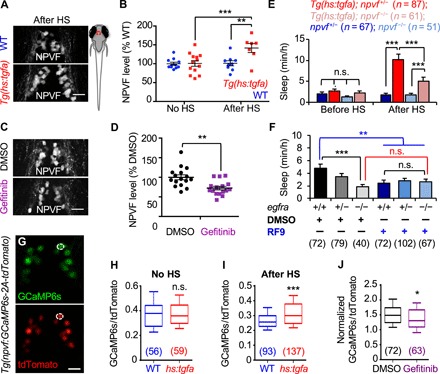
The genetic bases for most human sleep disorders and for variation in human sleep quantity and quality are largely unknown. Using the zebrafish, a diurnal vertebrate, to investigate the genetic regulation of sleep, we found that epidermal growth factor receptor (EGFR) signaling is necessary and sufficient for normal sleep levels and is required for the normal homeostatic response to sleep deprivation. We observed that EGFR signaling promotes sleep via mitogen-activated protein kinase/extracellular signal-regulated kinase and RFamide neuropeptide signaling and that it regulates RFamide neuropeptide expression and neuronal activity. Consistent with these findings, analysis of a large cohort of human genetic data from participants of European ancestry revealed that common variants in genes within the EGFR signaling pathway are associated with variation in human sleep quantity and quality. These results indicate that EGFR signaling and its downstream pathways play a central and ancient role in regulating sleep and provide new therapeutic targets for sleep disorders.
大多数人类睡眠障碍以及人类睡眠时间和质量的变化的遗传基础在很大程度上是未知的。我们利用昼夜活动的斑马鱼来研究睡眠的遗传调控,发现表皮生长因子受体(EGFR)信号对于正常的睡眠水平是必要且充分的,并且对于睡眠剥夺的正常体内平衡反应也是必需的。我们观察到 EGFR 信号通过丝裂原活化蛋白激酶/细胞外信号调节激酶和 RFamide 神经肽信号促进睡眠,并且它调节 RFamide 神经肽表达和神经元活性。这些发现与来自欧洲血统的参与者的大量人类遗传数据的分析结果一致,该分析表明 EGFR 信号通路中的基因的常见变体与人类睡眠量和睡眠质量的变化有关。这些结果表明,EGFR 信号及其下游途径在调节睡眠方面起着核心和古老的作用,并为睡眠障碍提供了新的治疗靶点。