Department of Nuclear Engineering, University of New Mexico, Albuquerque, NM, 87131, USA.
Department of Mechanical and Biomedical Engineering, California Baptist University, Riverside, CA, 92504, USA.
Sci Rep. 2019 Nov 25;9(1):17450. doi: 10.1038/s41598-019-54040-1.
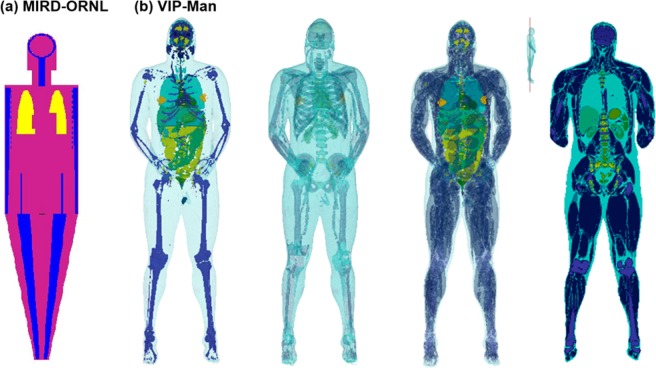
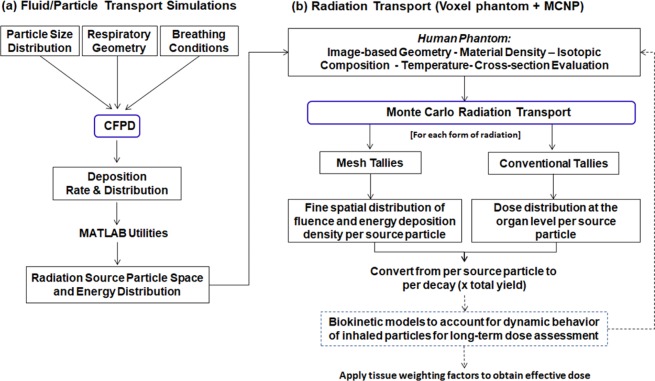
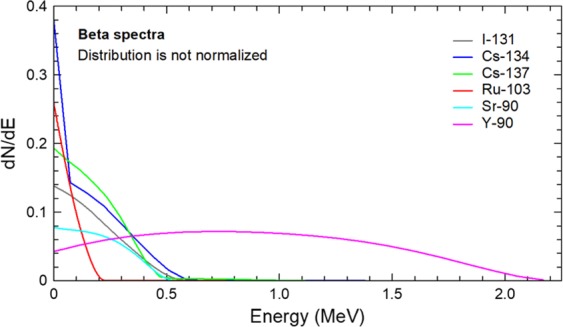
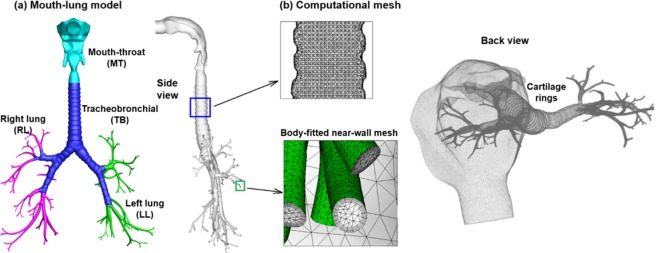
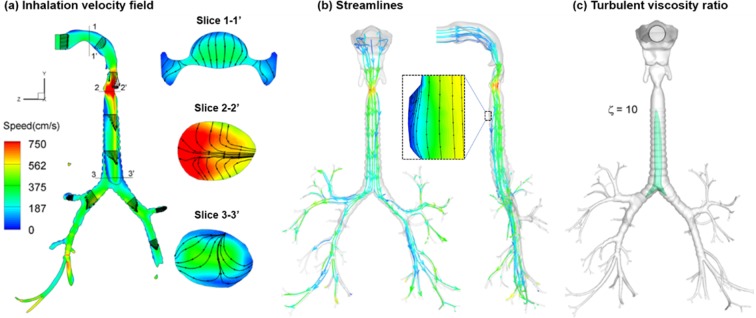
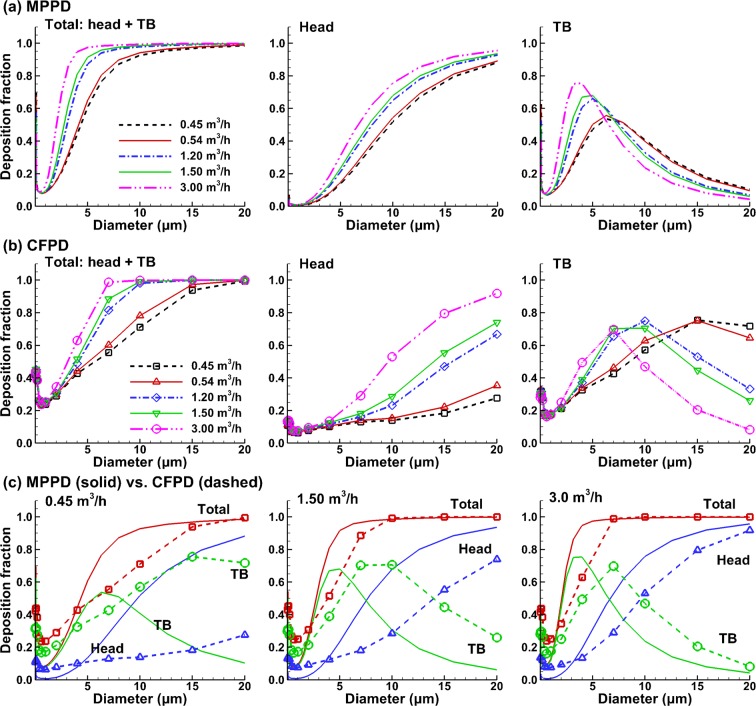
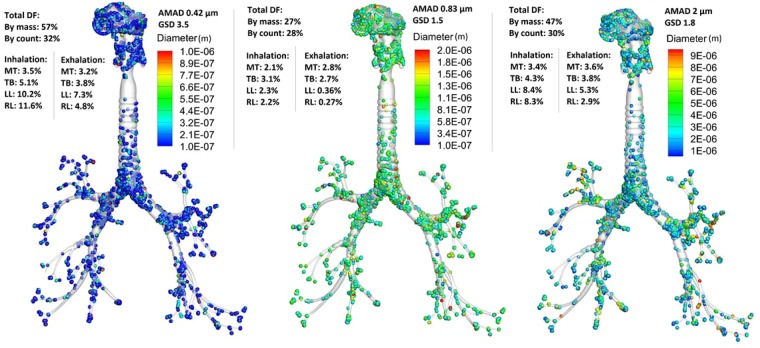
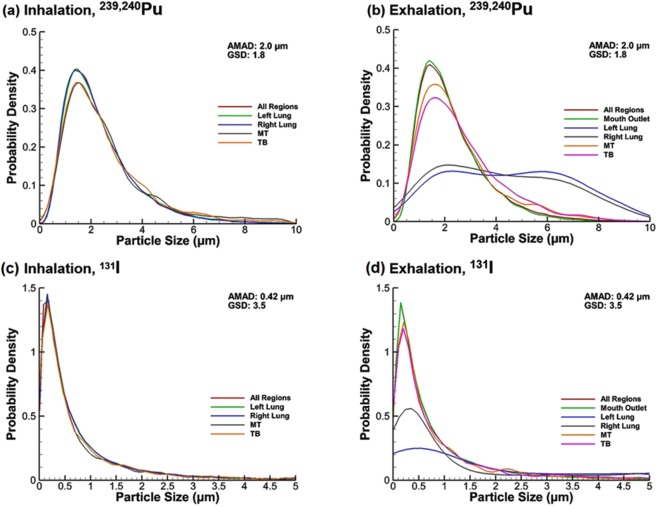
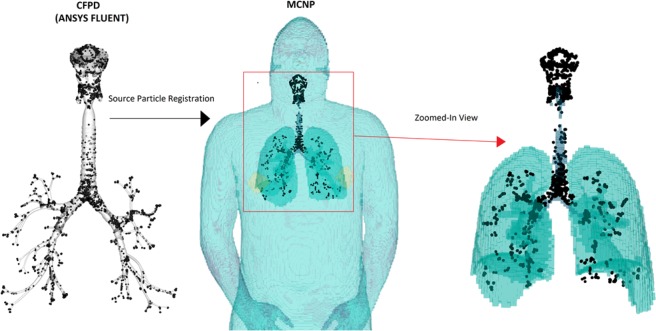
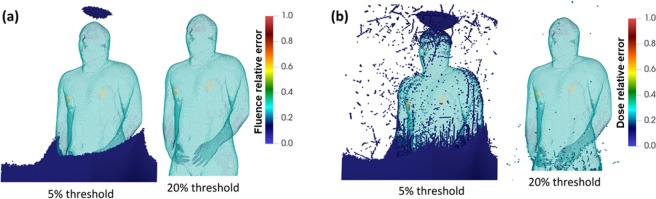
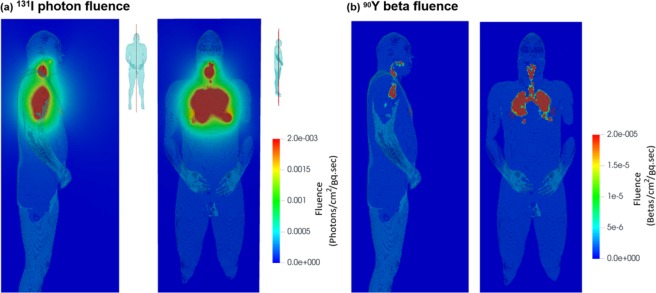
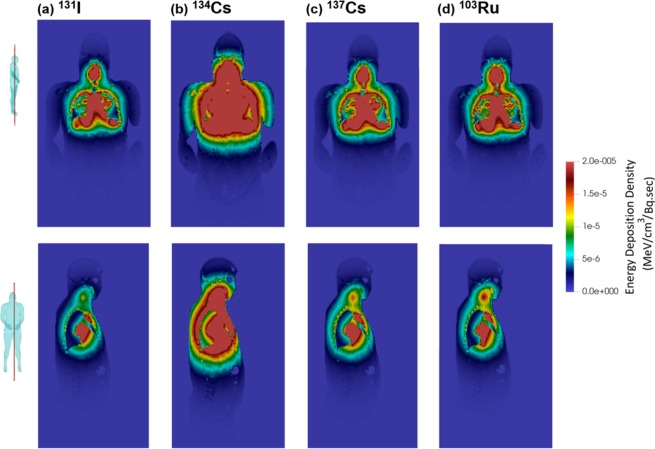
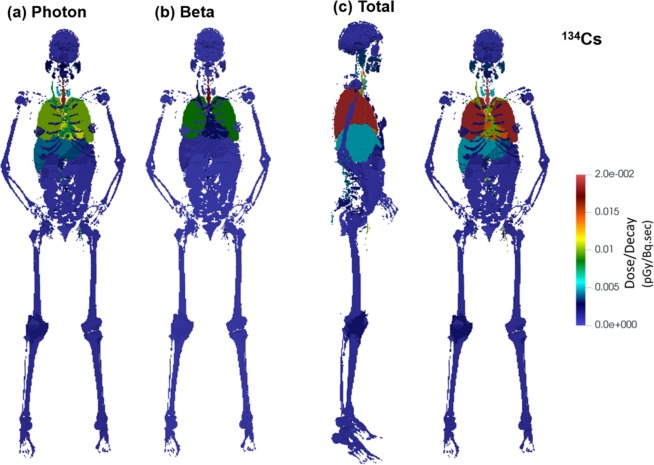
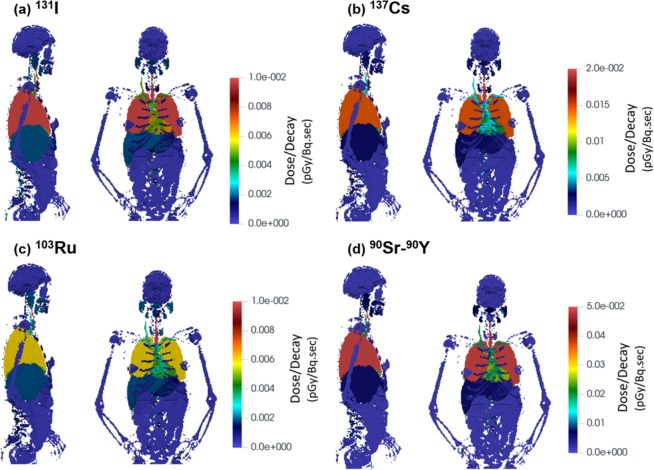
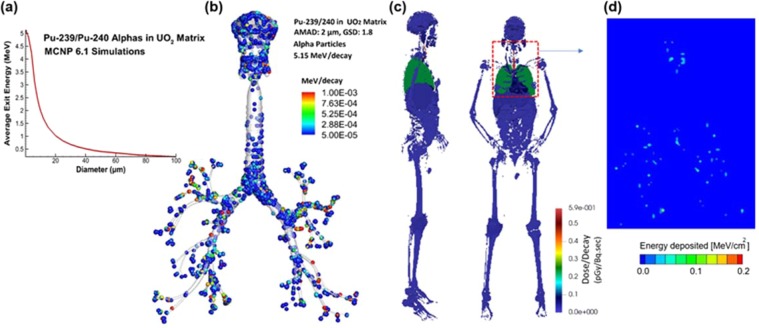
Despite extensive efforts in studying radioactive aerosols, including the transmission of radionuclides in different chemical matrices throughout the body, the internal organ-specific radiation dose due to inhaled radioactive aerosols has largely relied on experimental deposition data and simplified human phantoms. Computational fluid-particle dynamics (CFPD) has proven to be a reliable tool in characterizing aerosol transport in the upper airways, while Monte Carlo based radiation codes allow accurate simulation of radiation transport. The objective of this study is to numerically assess the radiation dosimetry due to particles decaying in the respiratory tract from environmental radioactive exposures by coupling CFPD with Monte Carlo N-Particle code, version 6 (MCNP6). A physiologically realistic mouth-lung model extending to the bifurcation generation G9 was used to simulate airflow and particle transport within the respiratory tract. Polydisperse aerosols with different distributions were considered, and deposition distribution of the inhaled aerosols on the internal airway walls was quantified. The deposition mapping of radioactive aerosols was then registered to the respiratory tract of an image-based whole-body adult male model (VIP-Man) to simulate radiation transport and energy deposition. Computer codes were developed for geometry visualization, spatial normalization, and source card definition in MCNP6. Spatial distributions of internal radiation dosimetry were compared for different radionuclides (I, Cs, Sr-Y, Ru and Pu) in terms of the radiation fluence, energy deposition density, and dose per decay.
尽管人们在研究放射性气溶胶方面付出了巨大努力,包括研究放射性核素在体内不同化学基质中的传输,但由于吸入放射性气溶胶而导致的内部器官特定辐射剂量在很大程度上依赖于实验沉积数据和简化的人体模型。计算流体-颗粒动力学 (CFPD) 已被证明是一种可靠的工具,可用于描述上呼吸道中的气溶胶传输,而基于蒙特卡罗的辐射代码则允许对辐射传输进行精确模拟。本研究的目的是通过将 CFPD 与蒙特卡罗 N-粒子代码版本 6 (MCNP6) 耦合,数值评估因环境放射性暴露而在呼吸道中衰变的粒子引起的辐射剂量。使用延伸到分支生成 G9 的生理上逼真的口-肺模型来模拟呼吸道内的气流和颗粒传输。考虑了具有不同分布的多分散气溶胶,并量化了吸入气溶胶在内部气道壁上的沉积分布。然后,放射性气溶胶的沉积图被注册到基于图像的全身成年男性模型 (VIP-Man) 的呼吸道中,以模拟辐射传输和能量沉积。为 MCNP6 中的几何图形可视化、空间归一化和源卡定义开发了计算机代码。比较了不同放射性核素(I、Cs、Sr-Y、Ru 和 Pu)的内部辐射剂量学的空间分布,包括辐射通量、能量沉积密度和每衰变剂量。