Auerbach Alan J, Charles Kerwin K, Coile Courtney C, Gale William, Goldman Dana, Lee Ronald, Lucas Charles M, Orszag Peter R, Sheiner Louise M, Tysinger Bryan, Weil David N, Wolfers Justin, Wong Rebeca
Department of Economics, 530 Evans Hall, #3880 University of California, Berkeley Berkeley, CA 94720-3880 and NBER,
Harris School of Public Policy, University of Chicago, 1155 East 60th Street, Chicago, IL 60637 and NBER,
Geneva Pap Risk Insur Issues Pract. 2017 Jul;42(3):475-499. doi: 10.1057/s41288-017-0057-0. Epub 2017 Jun 26.
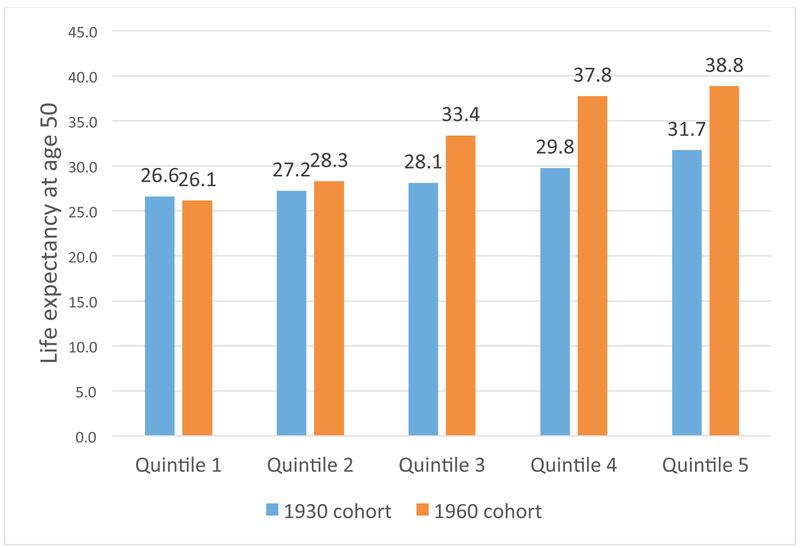
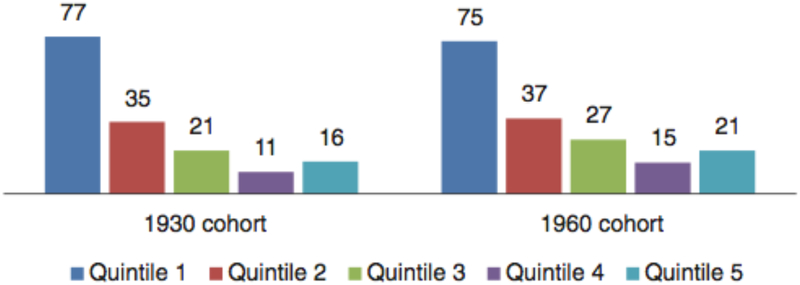
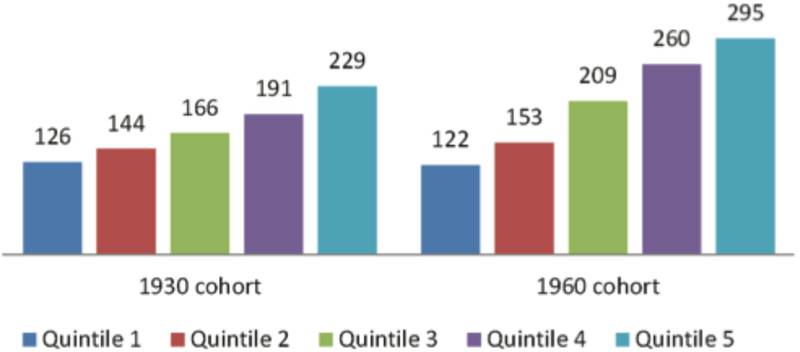
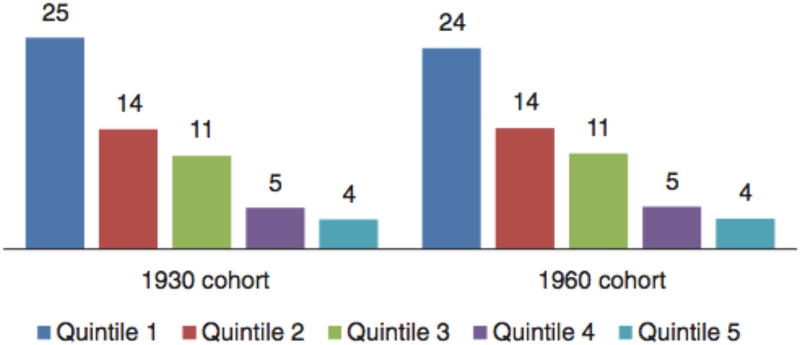
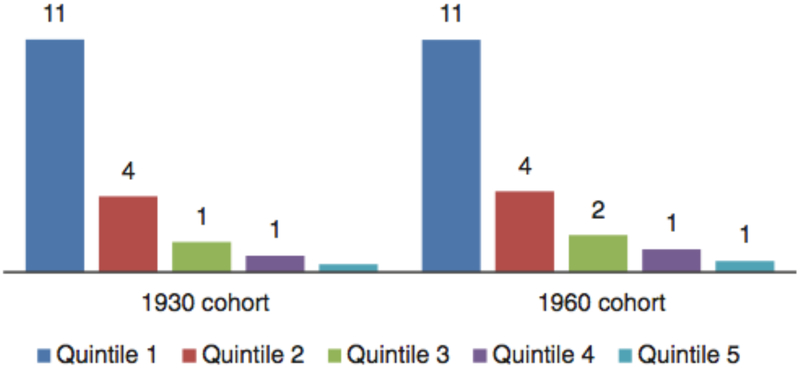
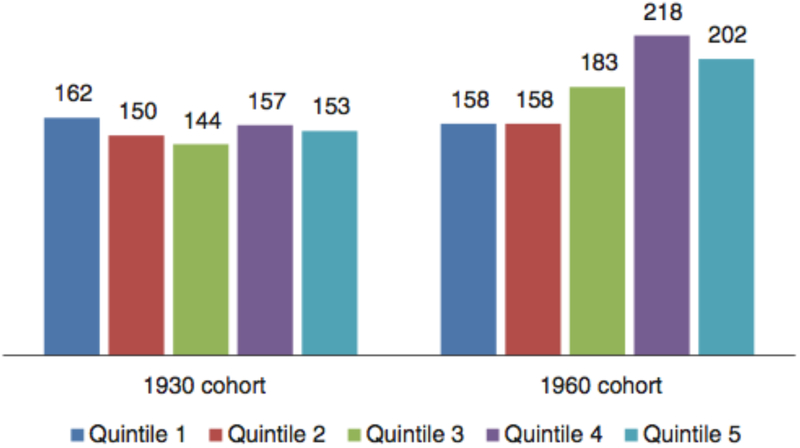
Older Americans have experienced dramatic gains in life expectancy in recent decades, but an emerging literature reveals that these gains are accumulating mostly to those at the top of the income distribution. We explore how growing inequality in life expectancy affects lifetime benefits from Social Security, Medicare, and other programs and how this phenomenon interacts with possible program reforms. We first project that life expectancy at age 50 for males in the two highest income quintiles will rise by 7 to 8 years between the 1930 and 1960 birth cohorts, but that the two lowest income quintiles will experience little to no increase over that time period. This divergence in life expectancy will cause the gap between average lifetime program benefits received by men in the highest and lowest quintiles to widen by $130,000 (in $2009) over this period. Finally we simulate the effect of Social Security reforms such as raising the normal retirement age and changing the benefit formula to see whether they mitigate or enhance the reduced progressivity resulting from the widening gap in life expectancy.
近几十年来,美国老年人的预期寿命有了显著提高,但新出现的文献表明,这些提高主要集中在收入分配顶端的人群。我们探讨预期寿命方面日益加剧的不平等如何影响社会保障、医疗保险和其他项目的终身福利,以及这一现象如何与可能的项目改革相互作用。我们首先预测,在1930年至1960年出生队列中,收入最高的两个五分位数组中50岁男性的预期寿命将增加7至8岁,但收入最低的两个五分位数组在这一时期几乎不会增加或根本不会增加。预期寿命的这种差异将导致在这一时期,收入最高和最低五分位数组男性获得的平均终身项目福利差距扩大13万美元(按2009年美元计算)。最后,我们模拟了社会保障改革的效果,如提高正常退休年龄和改变福利公式,以观察它们是否能缓解或加剧因预期寿命差距扩大而导致的累进性降低。