Department of Chemistry , University of California , Davis , California 95616 , United States.
Department of Chemistry, Department of Molecular and Cell Biology, and California Institute for Quantitative Biosciences , University of California , Berkeley , California 94720 , United States.
Biochemistry. 2019 Dec 24;58(51):5173-5187. doi: 10.1021/acs.biochem.9b00960. Epub 2019 Dec 11.
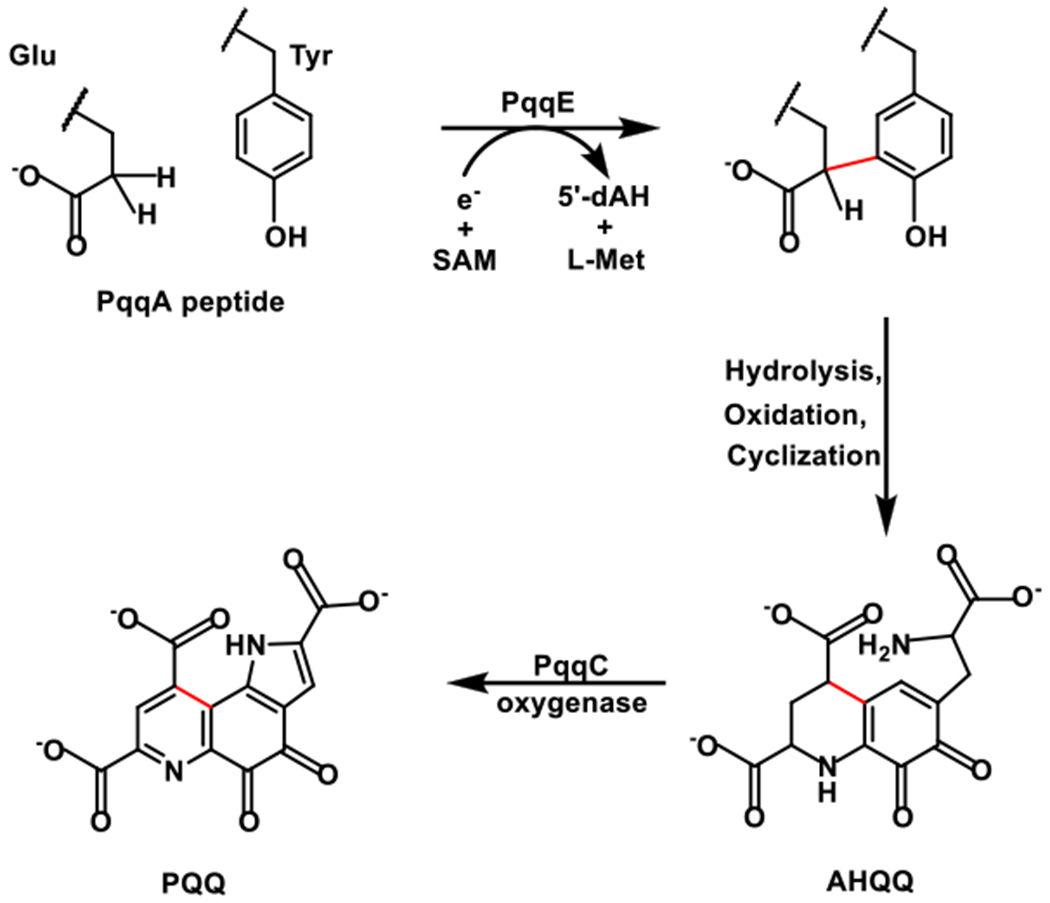
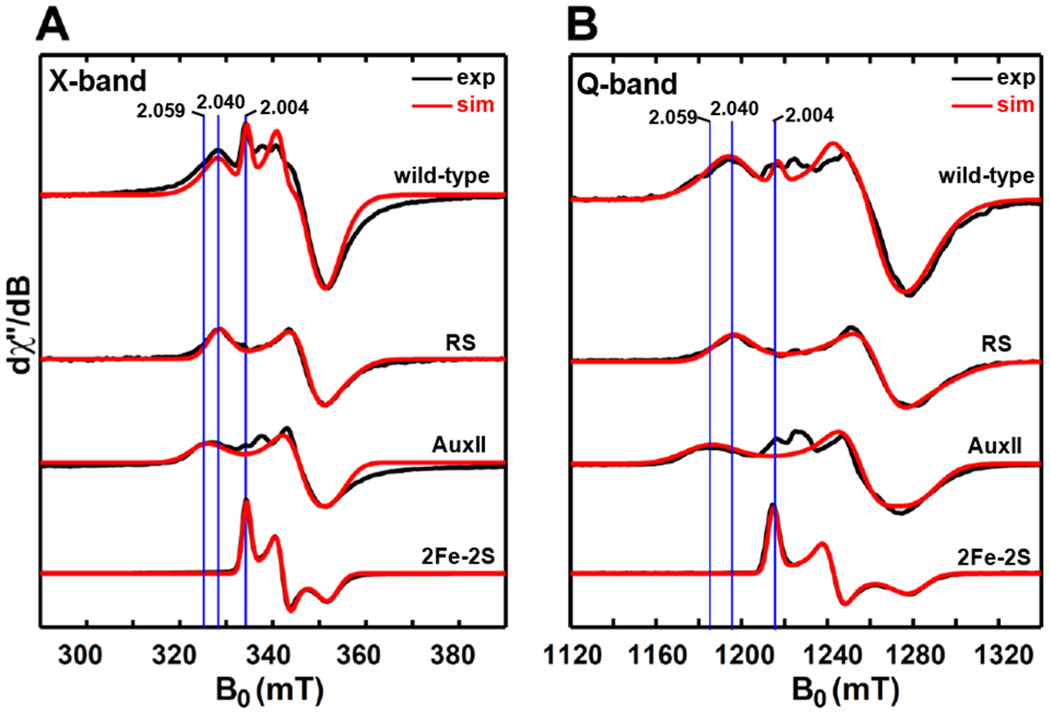
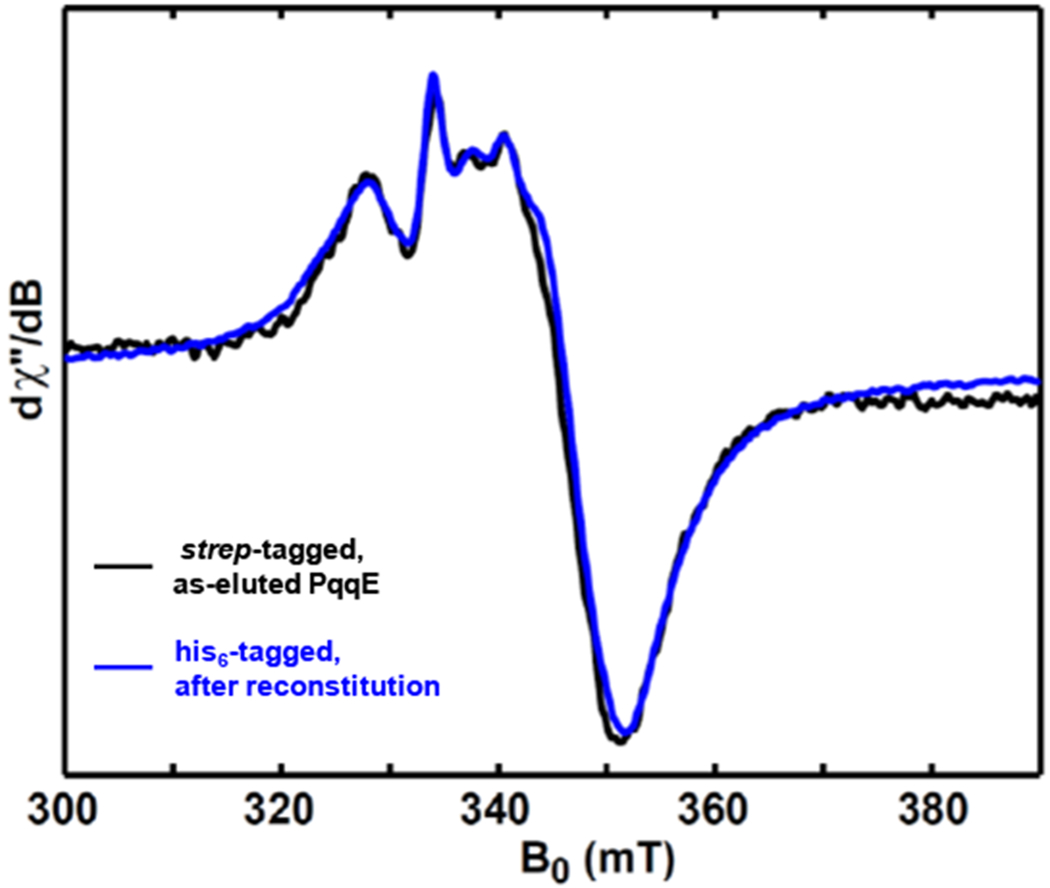
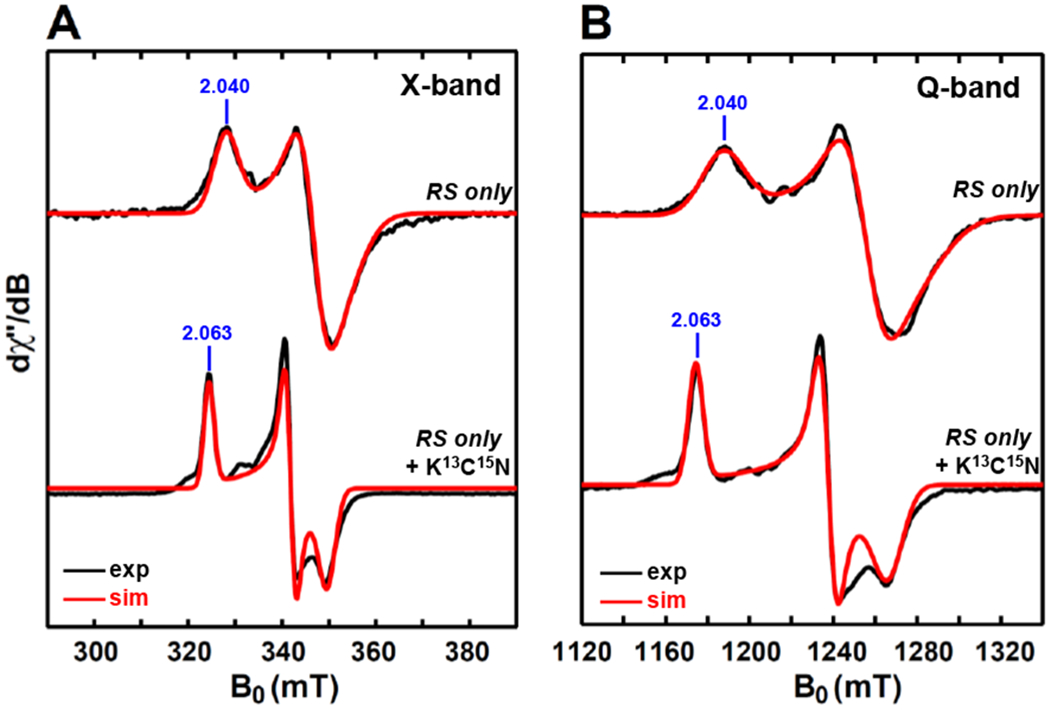
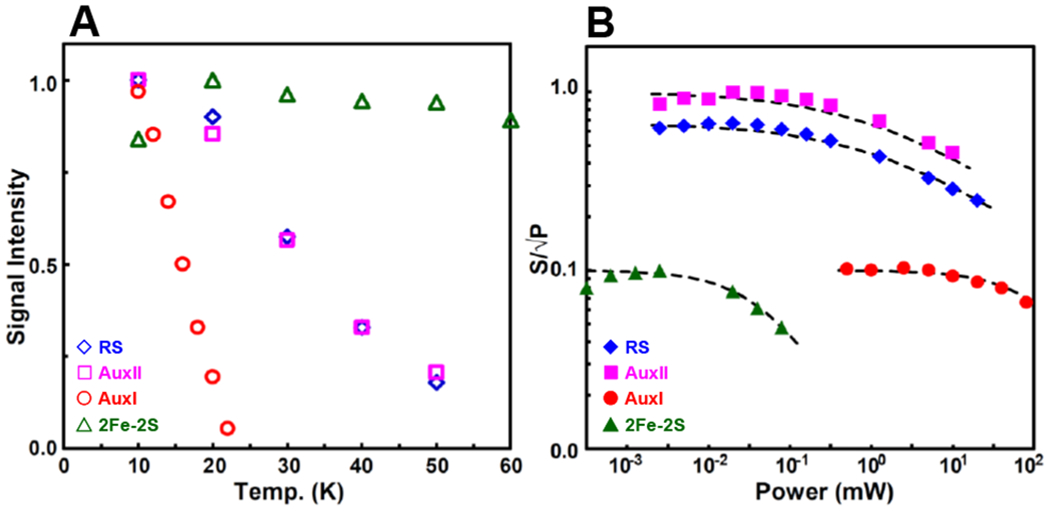
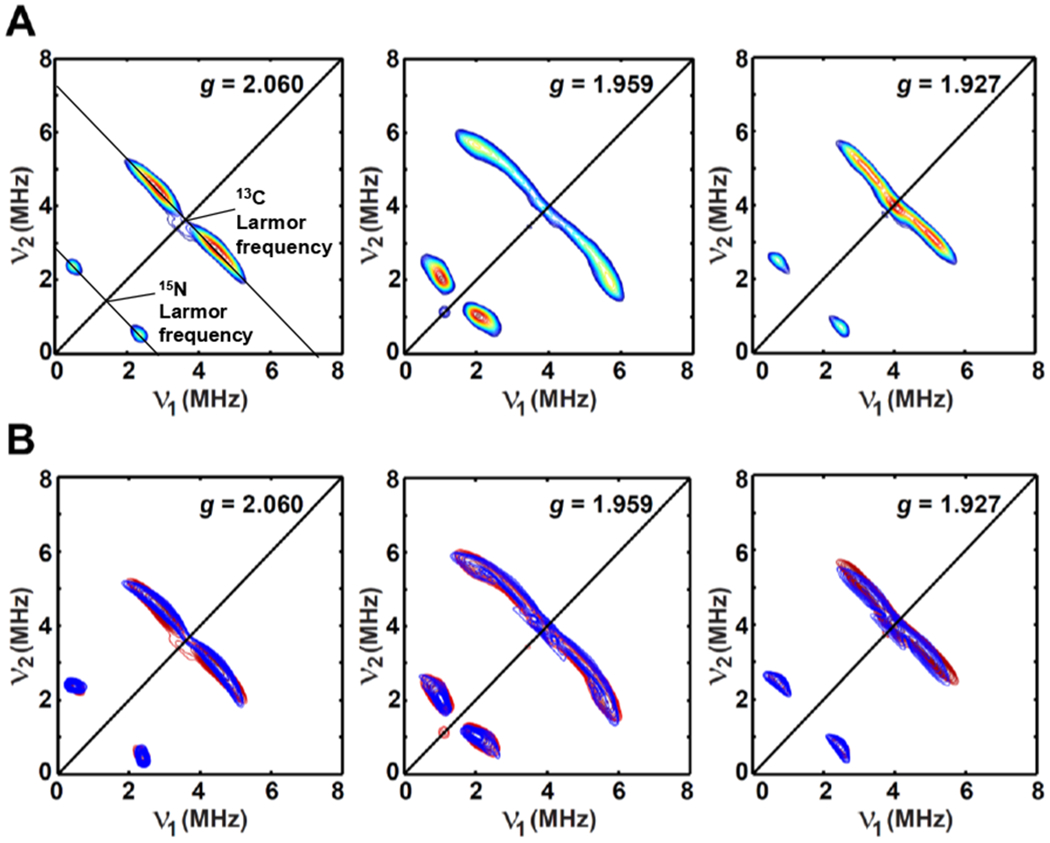
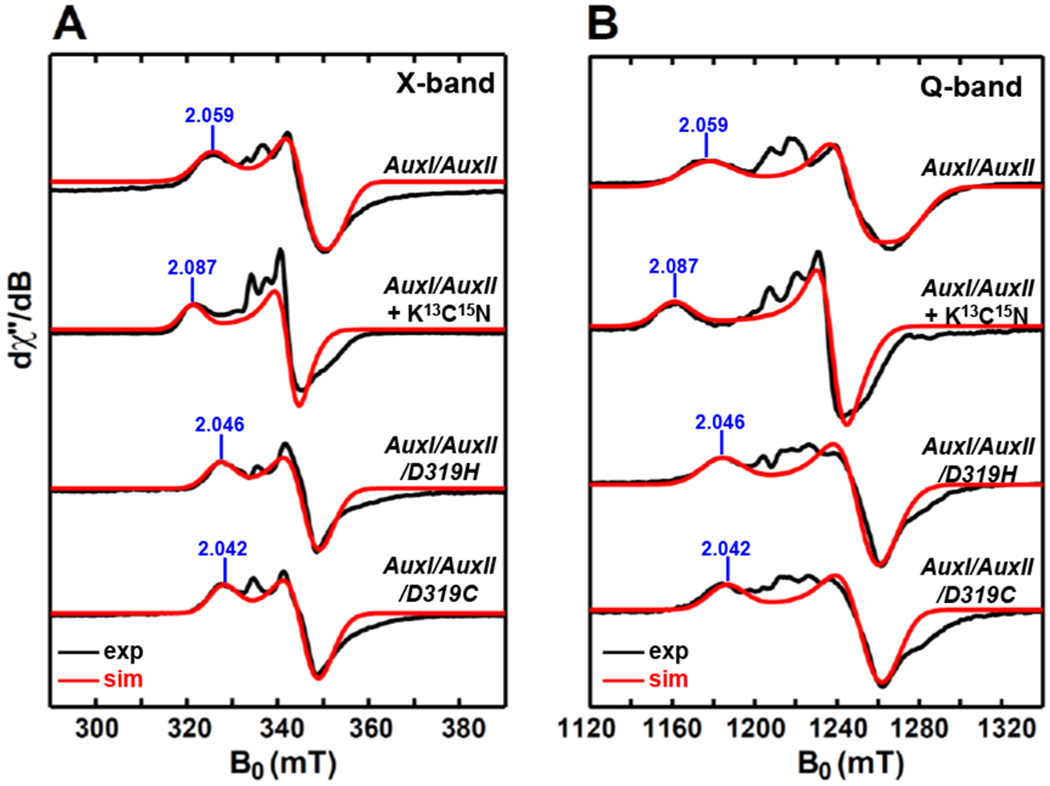
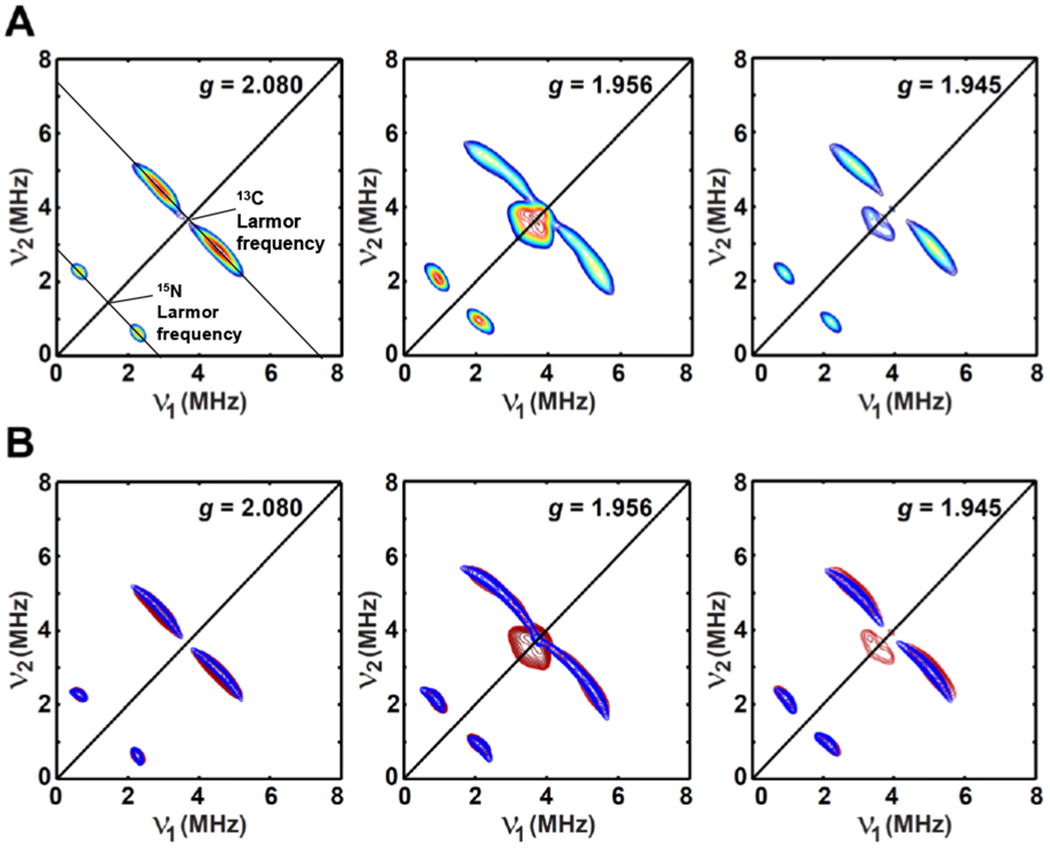
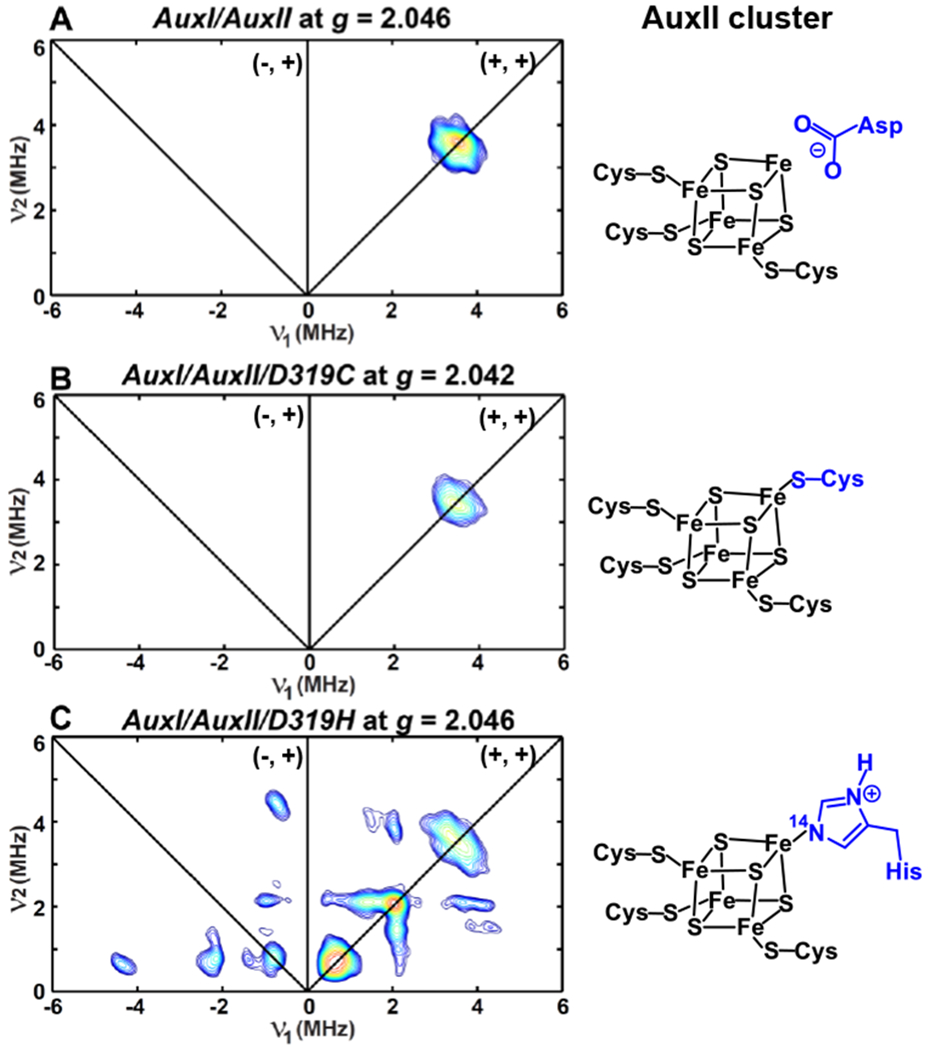
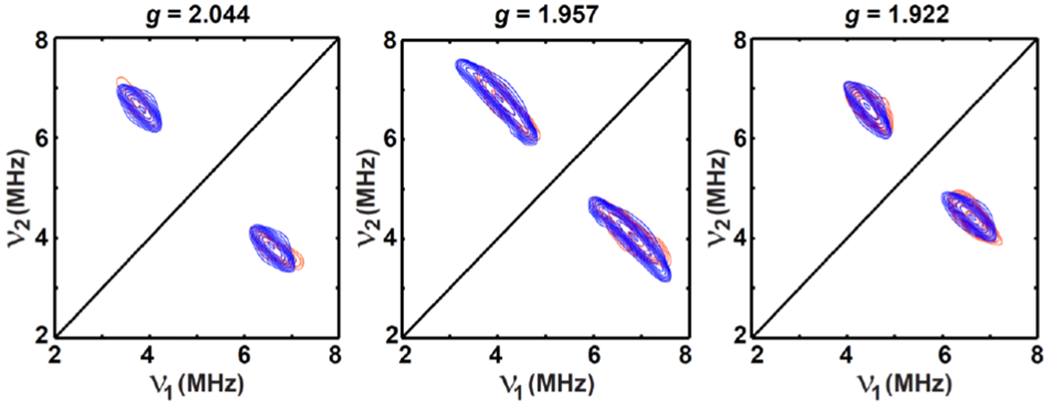
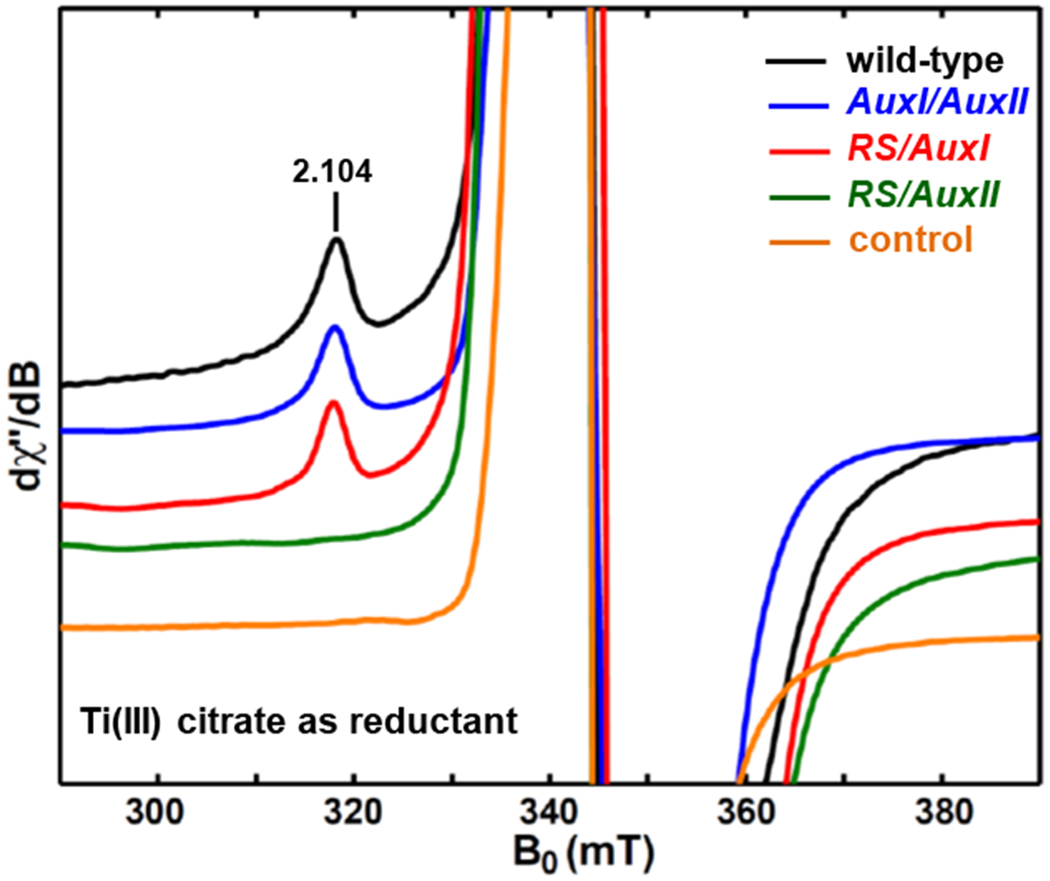
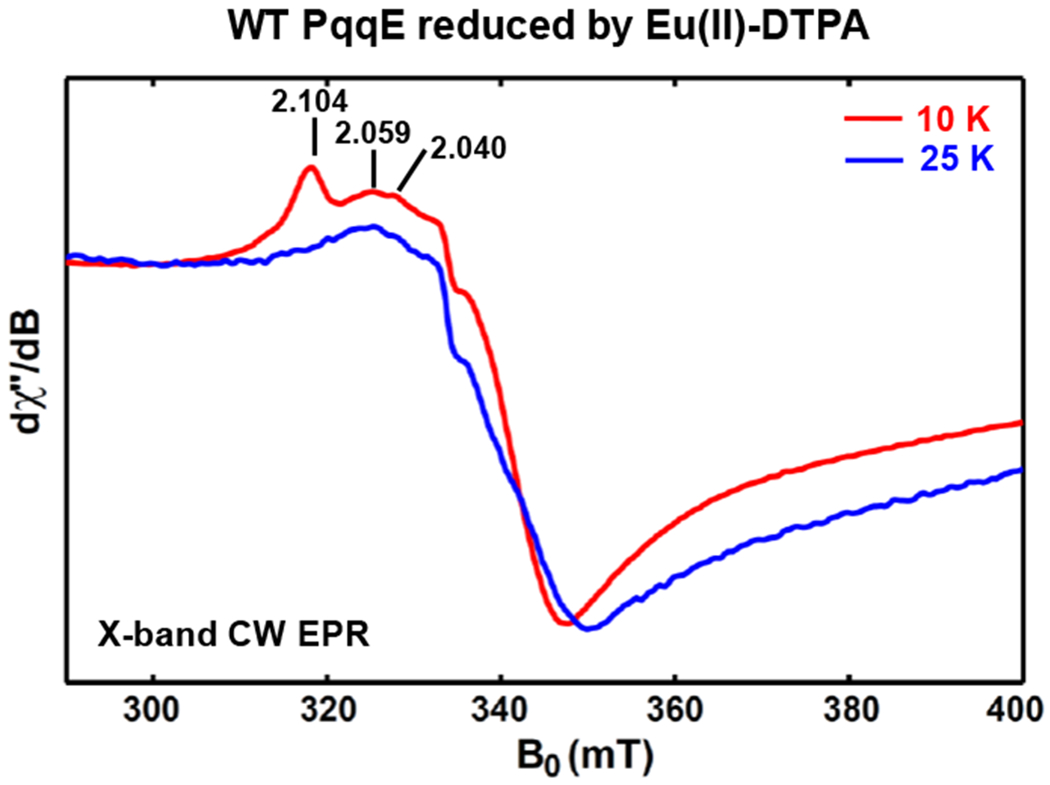
Pyrroloquinoline quinone (PQQ) is an important redox active quinocofactor produced by a wide variety of bacteria. A key step in PQQ biosynthesis is a carbon-carbon cross-link reaction between glutamate and tyrosine side chains within the ribosomally synthesized peptide substrate PqqA. This reaction is catalyzed by the radical SAM enzyme PqqE. Previous X-ray crystallographic and spectroscopic studies suggested that PqqE, like the other members of the SPASM domain family, contains two auxiliary Fe-S clusters (AuxI and AuxII) in addition to the radical SAM [4Fe-4S] cluster. However, a clear assignment of the electron paramagnetic resonance (EPR) signal of each Fe-S cluster was hindered by the isolation of a His-tagged PqqE variant with an altered AuxI cluster. In this work, we are able to isolate soluble PqqE variants by using a less disruptive -tactin chromatographic approach. We have unambiguously identified the EPR signatures for four forms of Fe-S clusters present in PqqE through the use of multifrequency EPR spectroscopy: the RS [4Fe-4S] cluster, the AuxII [4Fe-4S] cluster, and two different clusters ([4Fe-4S] and [2Fe-2S]) bound in the AuxI site. The RS [4Fe-4S] cluster, the AuxII [4Fe-4S] cluster, and the [2Fe-2S] cluster form in the AuxI site can all be reduced by sodium dithionite, with tensors of their reduced form determined as [2.040, 1.927, 1.897], [2.059, 1.940, 1.903], and [2.004, 1.958, 1.904], respectively. The AuxI [4Fe-4S] cluster that is determined on the basis of its relaxation profile can be reduced only by using low-potential reductants such as Ti(III) citrate or Eu(II)-DTPA to give rise to a = 2.104 signal. Identification of the EPR signature for each cluster paves the way for further investigations of SPASM domain radical SAM enzymes.
吡咯并喹啉醌 (PQQ) 是一种重要的氧化还原活性醌辅酶,由多种细菌产生。PQQ 生物合成的关键步骤是核糖体合成的肽底物 PqqA 中谷氨酸和酪氨酸侧链之间的碳-碳交叉连接反应。该反应由自由基 SAM 酶 PqqE 催化。以前的 X 射线晶体学和光谱研究表明,与 SPASM 结构域家族的其他成员一样,PqqE 除了包含自由基 SAM [4Fe-4S] 簇之外,还含有两个辅助的 Fe-S 簇(AuxI 和 AuxII)。然而,由于分离出具有改变的 AuxI 簇的 His 标签 PqqE 变体,每个 Fe-S 簇的电子顺磁共振(EPR)信号的明确分配受到阻碍。在这项工作中,我们能够通过使用较少破坏的 -tactin 色谱方法分离可溶性 PqqE 变体。通过使用多频 EPR 光谱,我们明确地鉴定了存在于 PqqE 中的四种形式的 Fe-S 簇的 EPR 特征:RS [4Fe-4S] 簇、AuxII [4Fe-4S] 簇以及结合在 AuxI 位点的两个不同的簇([4Fe-4S] 和 [2Fe-2S])。RS [4Fe-4S] 簇、AuxII [4Fe-4S] 簇和 AuxI 位点中的 [2Fe-2S] 簇都可以被连二亚硫酸钠还原,其还原形式的张量分别确定为 [2.040,1.927,1.897]、[2.059,1.940,1.903] 和 [2.004,1.958,1.904]。基于弛豫谱确定的 AuxI [4Fe-4S] 簇只能通过使用低电位还原剂(如 Ti(III) 柠檬酸盐或 Eu(II)-DTPA)还原,产生 = 2.104 的信号。确定每个簇的 EPR 特征为进一步研究 SPASM 结构域自由基 SAM 酶铺平了道路。