Institute of Physiotherapy and Health Sciences, Academy of Physical Education, Katowice, Poland.
College of Rehabilitation Sciences, University of Manitoba, Winnipeg, Canada.
Braz J Med Biol Res. 2019 Nov 25;52(12):e8474. doi: 10.1590/1414-431X20198474. eCollection 2019.
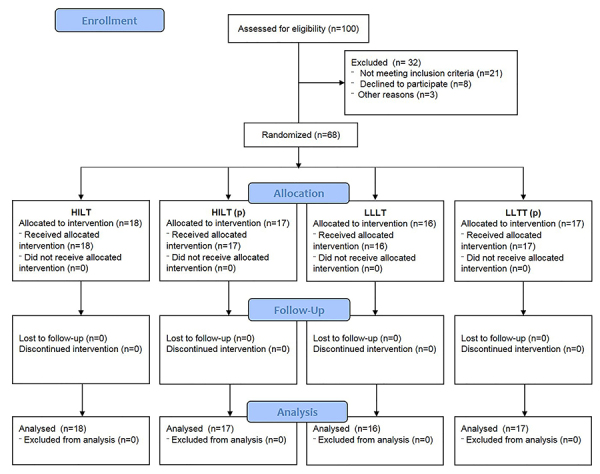
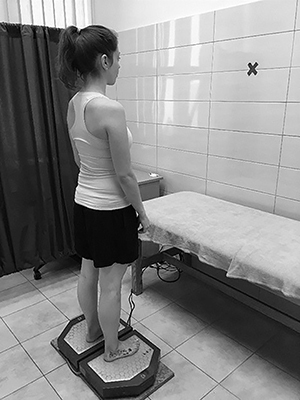
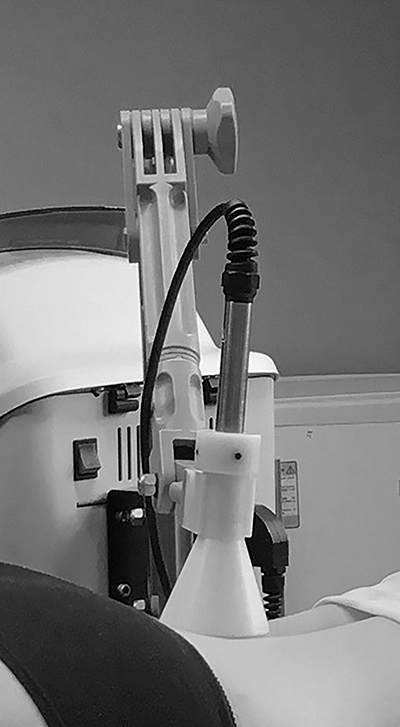
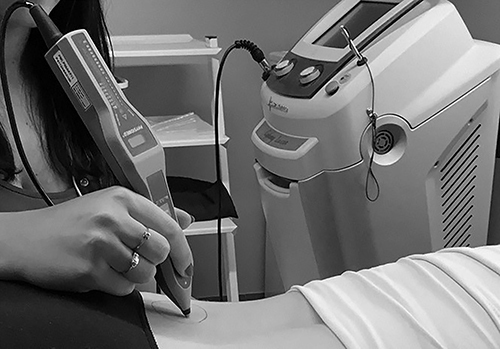
The management of nonspecific lumbar pain (NSLP) using laser irradiation remains controversial. A systematic review of recently published studies indicates that the effects of laser therapy are commonly assessed using only imperfect methods in terms of measurement error. The main objective of this study was to assess static postural stability using an objective tool in patients with chronic NSLP after laser irradiation at different doses and wavelengths. In total, 68 patients were included in the laser sessions and were randomly assigned into four groups: high-intensity laser therapy at 1064 nm and 60 J/cm2 for 10 min (HILT), sham (HILT placebo), low-level laser therapy at 785 nm and 8 J/cm2 for 8 min (LLLT), and sham (LLLT placebo). In addition, all patients were supplemented with physical exercises (standard stabilization training). To assess postural stability, a double-plate stabilometric platform was used. All measurements were performed pre- and post-laser sessions (three weeks) and at follow-up time points (one and three months). Laser procedures led to more balanced posture stability in patients, although these positive changes were significant mainly for short-term observation (after 4-week therapy). In the follow-up analysis, the parameters were gradually impaired. Kruskal-Wallis analysis of variance (ANOVA) for independent variables did not show any difference between the studied groups. Low- and high-intensity laser therapy does not lead to a significant improvement in postural sway in patients with NSLP compared with standard stabilization training based on short- and long-term observations.
使用激光照射治疗非特异性腰痛(NSLP)的管理仍然存在争议。对最近发表的研究进行系统评价表明,激光治疗的效果通常仅使用测量误差方面不完善的方法进行评估。本研究的主要目的是在慢性 NSLP 患者中使用客观工具评估静态姿势稳定性,这些患者在接受不同剂量和波长的激光照射后。共有 68 名患者被纳入激光治疗组,并随机分为四组:1064nm 高强度激光治疗,剂量为 60J/cm2,治疗时间为 10 分钟(HILT),假激光(HILT 安慰剂),785nm 低强度激光治疗,剂量为 8J/cm2,治疗时间为 8 分钟(LLLT),假激光(LLLT 安慰剂)。此外,所有患者均补充了物理治疗(标准稳定训练)。为了评估姿势稳定性,使用了双板平衡平台。所有测量均在激光治疗前(三周)和治疗后(一个月和三个月)进行。激光治疗后,患者的姿势稳定性更加平衡,尽管这些积极变化主要在短期观察(治疗 4 周后)时显著。在随访分析中,这些参数逐渐恶化。独立变量的 Kruskal-Wallis 方差分析(ANOVA)显示,研究组之间没有差异。与基于短期和长期观察的标准稳定训练相比,低强度和高强度激光治疗并不能显著改善 NSLP 患者的姿势摆动。