VIB Center for Inflammation Research, Ghent, Belgium.
Department of Biomedical Molecular Biology, Ghent University, Ghent, Belgium.
Front Immunol. 2019 Nov 8;10:2574. doi: 10.3389/fimmu.2019.02574. eCollection 2019.
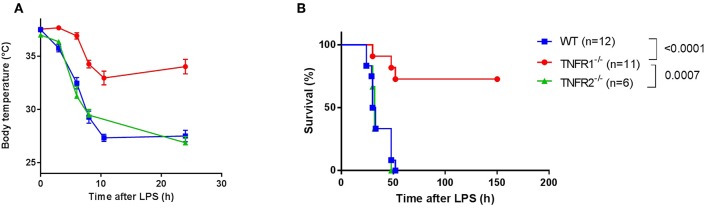
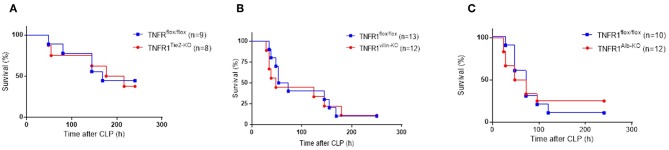
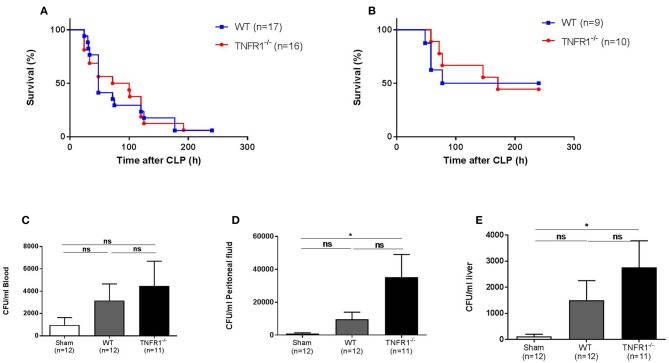
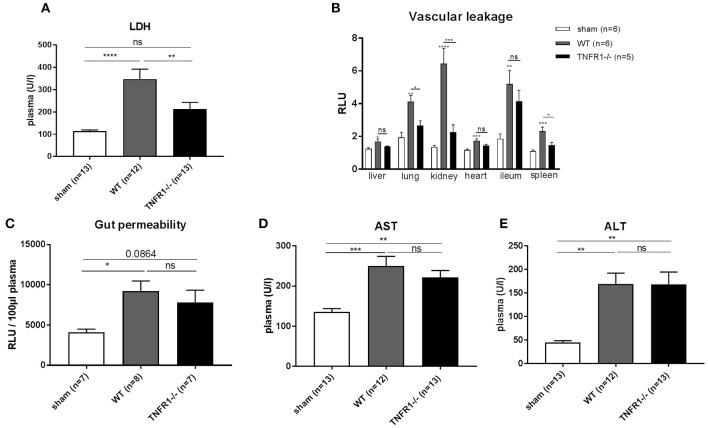
Sepsis is a complex syndrome resulting from a dysregulated immune response to an infection. Due to the high prevalence, morbidity, and mortality, there is a lot of interest in understanding pathways that play a role in sepsis, with a focus on the immune system. Tumor necrosis factor (TNF) is a pleiotropic pro-inflammatory cytokine and a master regulator of the immune system but clinical trials with TNF blockers in sepsis have failed to demonstrate significant protection. Since TNF stimulates two different receptors, TNF receptor 1 (TNFR1) and TNFR2, pan-TNF inhibition might be suboptimal since both receptors have opposite functions in polymicrobial sepsis. Therefore, we hypothesized that TNF has a dual role in sepsis, namely a mediating and a protective role, and that protection might be obtained by TNFR1-specific inhibition. We here confirmed that TNFR1 mice are protected in the sterile endotoxemia model, whereas TNFR1 deficiency did not protect in the cecal ligation and puncture (CLP)-induced polymicrobial sepsis model. Since whole body TNFR1 blockage might be deleterious because of the antibacterial function of TNF/TNFR1 signaling, we focused on the potential devastating role of TNF/TNFR1 signaling in specific cell types. We were interested in the gut epithelium, the endothelium, and hepatocytes using conditional TNFR1 mice, as these cell types have been shown to play a role in sepsis. However, none of these conditional knockout mice showed improved survival in the CLP model. We conclude that cell-specific targeting of TNFR1 to these cell types has no therapeutic future in septic peritonitis.
脓毒症是一种复杂的综合征,由感染引起的免疫反应失调导致。由于其高发病率、高患病率和高死亡率,人们非常关注参与脓毒症的途径,特别是免疫系统。肿瘤坏死因子 (TNF) 是一种多效性促炎细胞因子,是免疫系统的主要调节剂,但 TNF 阻滞剂在脓毒症中的临床试验未能证明有显著的保护作用。由于 TNF 刺激两种不同的受体,即 TNF 受体 1 (TNFR1) 和 TNFR2,因此泛 TNF 抑制可能不理想,因为这两种受体在多微生物脓毒症中具有相反的功能。因此,我们假设 TNF 在脓毒症中具有双重作用,即介导作用和保护作用,并且通过 TNFR1 特异性抑制可以获得保护作用。我们在这里证实,TNFR1 敲除小鼠在无菌性内毒素血症模型中受到保护,而 TNFR1 缺乏在盲肠结扎和穿刺 (CLP) 诱导的多微生物脓毒症模型中没有保护作用。由于全身 TNFR1 阻断可能因 TNF/TNFR1 信号的抗菌功能而有害,因此我们专注于 TNF/TNFR1 信号在特定细胞类型中的潜在破坏性作用。我们对肠道上皮细胞、内皮细胞和肝细胞使用条件性 TNFR1 敲除小鼠感兴趣,因为这些细胞类型已被证明在脓毒症中发挥作用。然而,在 CLP 模型中,这些条件性敲除小鼠均未显示出生存率的提高。我们得出结论,针对这些细胞类型的 TNFR1 细胞特异性靶向在脓毒性腹膜炎中没有治疗前景。