Sang Yatong, Gao Bo, Diaby Mohamed, Zong Wencheng, Chen Cai, Shen Dan, Wang Saisai, Wang Yali, Ivics Zoltán, Song Chengyi
1Institute of Animal Mobilome and Genome, College of Animal Science & Technology, Yangzhou University, Yangzhou, 225009 Jiangsu China.
2Division of Medical Biotechnology, Paul Ehrlich Institute, 63225 Langen, Germany.
Mob DNA. 2019 Nov 23;10:45. doi: 10.1186/s13100-019-0188-x. eCollection 2019.
The superfamily might represent the most diverse and widely distributed group of DNA transposons. Several families have been identified; however, exploring the diversity of this superfamily and updating its classification is still ongoing in the life sciences.
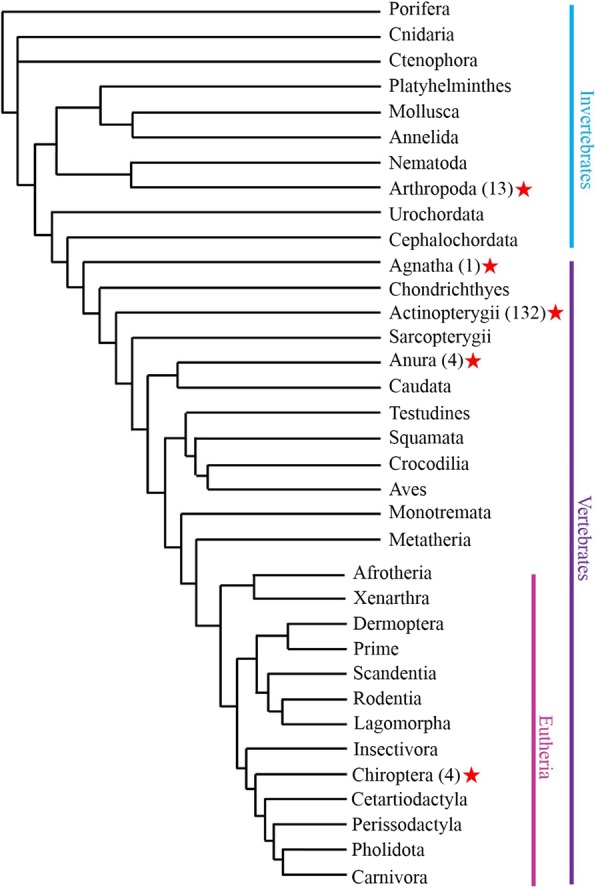
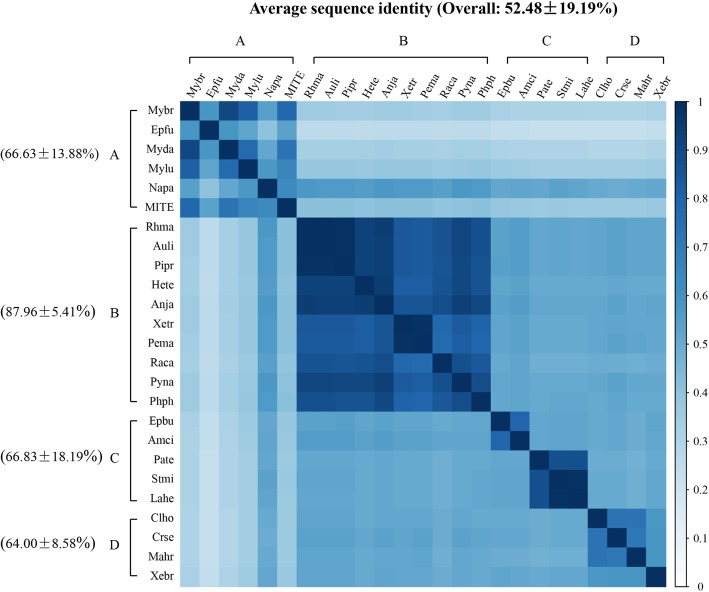
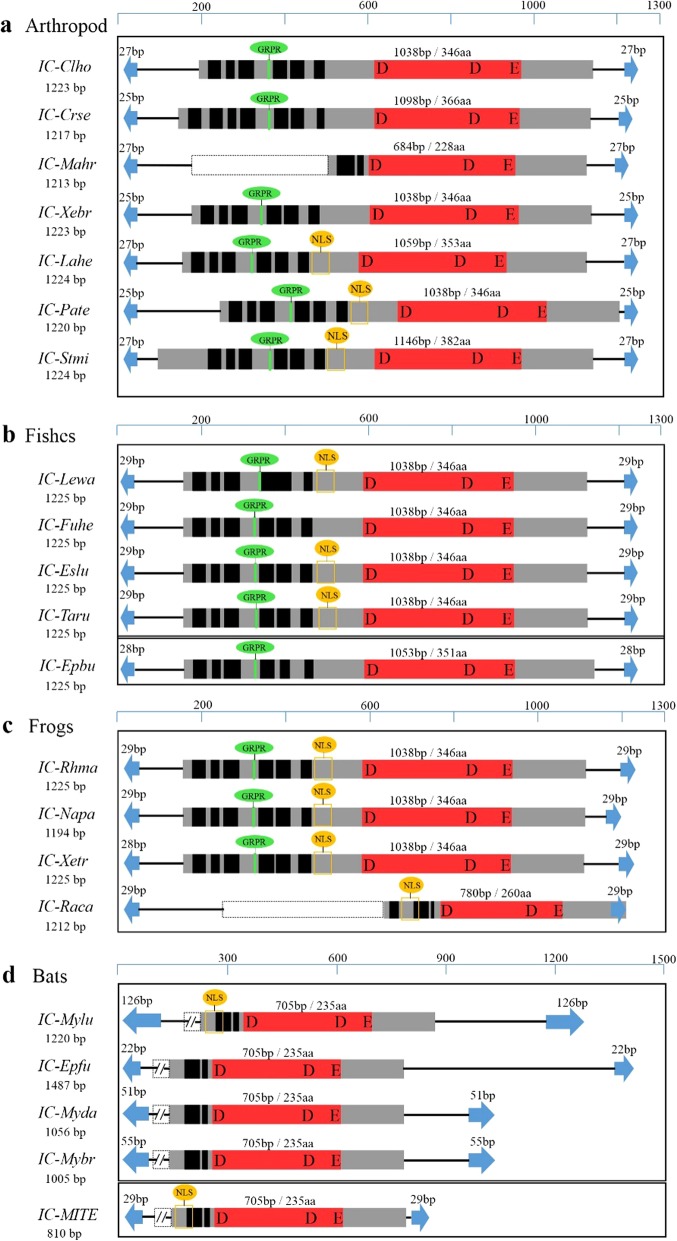
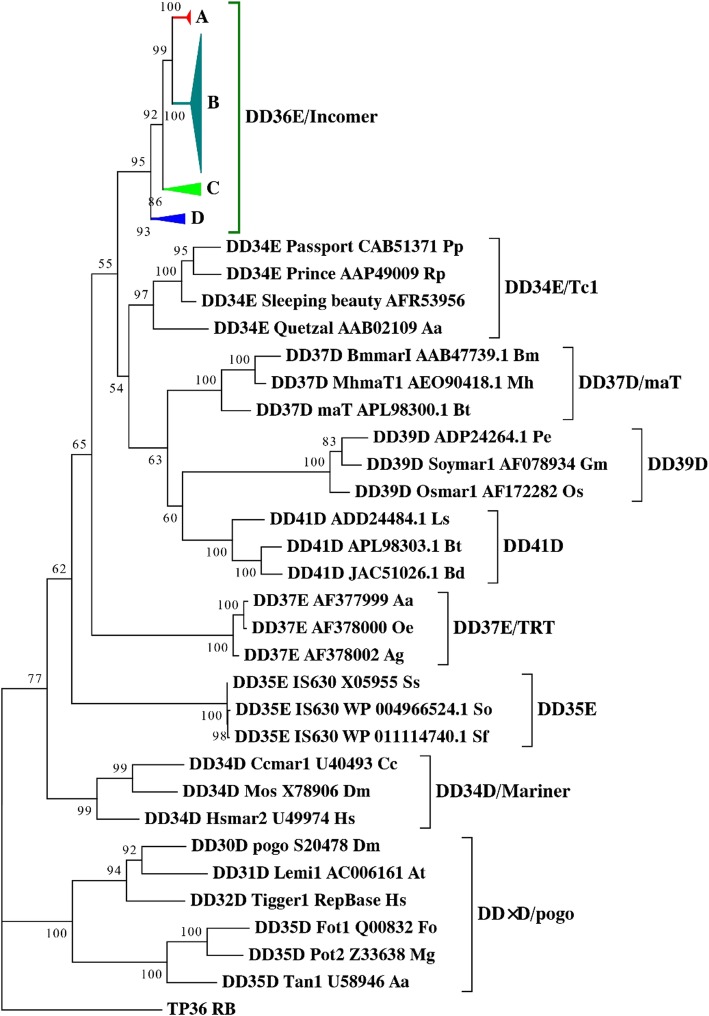
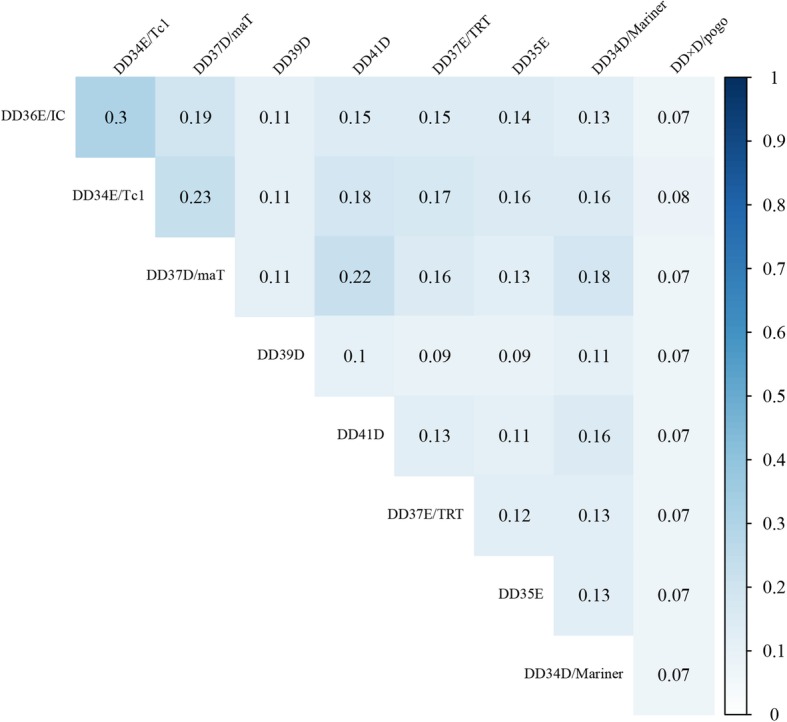
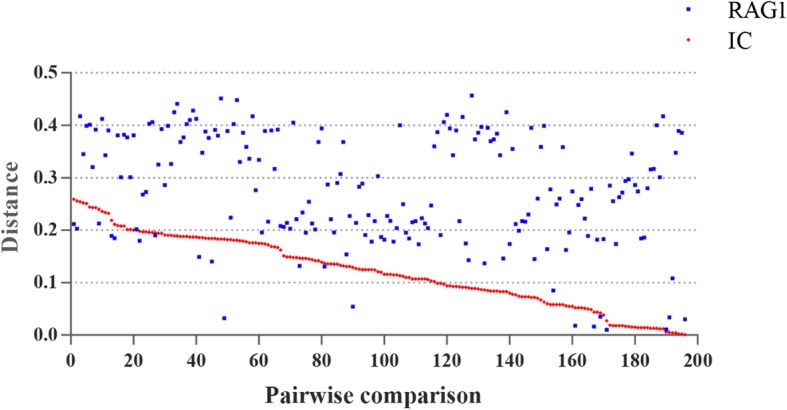
Here we identified a new family of transposons, named (), which is close to, but distinct from the known family DD34E. have a total length of about 1.2 kb, and harbor a single open reading frame encoding a ~ 346 amino acid transposase with a DD36E motif and flanked by short terminal inverted repeats (TIRs) (22-32 base pairs, bp). This family is absent from prokaryotes, and is mainly distributed among vertebrates (141 species of four classes), including Agnatha (one species of jawless fish), Actinopterygii (132 species of ray-finned fish), Amphibia (four species of frogs), and Mammalia (four species of bats), but have a restricted distribution in invertebrates (four species in Insecta and nine in Arachnida). All in bats (, , , and ) are present as truncated copies in these genomes, and most of them are flanked by relatively long TIRs (51-126 bp). High copy numbers of miniature inverted-repeat transposable elements (MITEs) derived from were also identified in bat genomes. Phylogenetic analysis revealed that are more closely related to DD34E than to other families of (e.g., DD34D and DD × D), and can be classified into four distinct clusters. The host and phylogenies and pairwise distance comparisons between genes and all consensus sequences of support the idea that multiple episodes of horizontal transfer (HT) of have occurred in vertebrates. In addition, the discovery of intact transposases, perfect TIRs and target site duplications of suggests that this family may still be active in Insecta, Arachnida, frogs, and fish.
Exploring the diversity of transposons and revealing their evolutionary profiles will help provide a better understanding of the evolution of DNA transposons and their impact on genomic evolution. Here, a newly discovered family (DD36E/) of transposons is described in animals. It displays a similar structural organization and close relationship with the known DD34E/ elements, but has a relatively narrow distribution, indicating that DD36E/ might have originated from the DD34E/ family. Our data also support the hypothesis of horizontal transfer of in vertebrates, even invading one lineage of mammals (bats). This study expands our understanding of the diversity of transposons and updates the classification of this superfamily.
该超家族可能代表了DNA转座子中最多样化且分布最广泛的群体。已鉴定出几个家族;然而,探索这个超家族的多样性并更新其分类在生命科学领域仍在进行中。
在这里,我们鉴定出一个新的转座子家族,命名为(),它与已知的DD34E家族相近,但又有所不同。()全长约1.2 kb,含有一个单一的开放阅读框,编码一个约346个氨基酸的转座酶,带有DD36E基序,两侧为短末端反向重复序列(TIRs)(22 - 32个碱基对,bp)。这个家族在原核生物中不存在,主要分布在脊椎动物(四类中的141个物种)中,包括无颌类(一种无颌鱼类)、辐鳍鱼纲(132种硬骨鱼类)、两栖纲(四种青蛙)和哺乳纲(四种蝙蝠),但在无脊椎动物中的分布有限(昆虫纲中有四种,蛛形纲中有九种)。蝙蝠基因组中的所有(,,,和)均以截短的拷贝形式存在,并且它们中的大多数两侧都有相对较长的TIRs(51 - 126 bp)。在蝙蝠基因组中还鉴定出了大量源自()的微型反向重复转座元件(MITEs)。系统发育分析表明,()与DD34E的亲缘关系比与其他()家族(例如DD34D和DD×D)更近,并且可以分为四个不同的簇。宿主和()的系统发育以及()基因与所有()共有序列之间的成对距离比较支持了()在脊椎动物中发生了多次水平转移(HT)的观点。此外,完整转座酶、完美TIRs和()靶位点重复序列的发现表明,这个家族在昆虫纲、蛛形纲、青蛙和鱼类中可能仍然具有活性。
探索()转座子的多样性并揭示其进化概况将有助于更好地理解DNA转座子的进化及其对基因组进化的影响。在这里,描述了动物中一个新发现的()转座子家族(DD36E/)。它显示出与已知的DD34E/元件相似的结构组织和密切关系,但分布相对较窄,表明DD36E/可能起源于DD34E/家族。我们的数据还支持()在脊椎动物中水平转移的假说,甚至侵入了一个哺乳类谱系(蝙蝠)。这项研究扩展了我们对()转座子多样性的理解,并更新了这个超家族的分类。