Department of Health Sciences, University Medical Center Groningen, University of Groningen, Hanzeplein 1, P.O. Box 30.001, FA10, 9700 RB Groningen, The Netherlands.
Health Promotion Research Centre, National University of Ireland Galway, University Road, H91 TK33 Galway, Ireland.
Int J Environ Res Public Health. 2019 Nov 29;16(23):4812. doi: 10.3390/ijerph16234812.
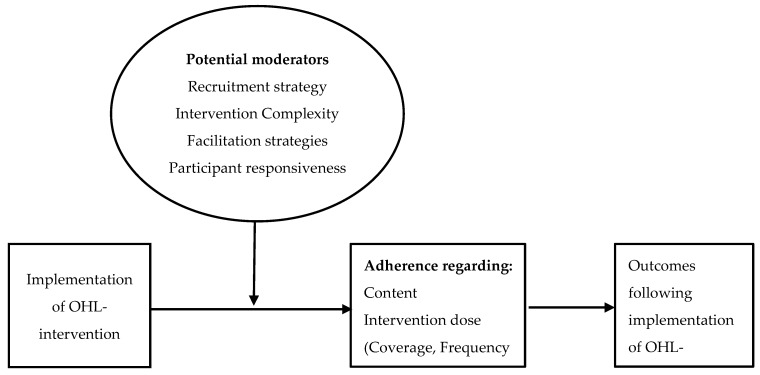
Organisational Health Literacy (OHL)-interventions are needed to overcome health inequality. OHL-interventions have successfully identified communication barriers at the organisational level, but evidence is limited on the extent to which this leads to sustainable organisational change. This study aims to assess the implementation fidelity, moderators (barriers and facilitators), and long-term impact of OHL-interventions in hospitals in Ireland and The Netherlands. We used a longitudinal mixed-methods approach to assess two similar OHL-interventions in one Irish and three Dutch hospitals. The OHL-interventions concerned the improvement of navigation and implementation of health literacy-friendly communication throughout organisations. Participants were 24 hospital employees and 40 older adults who use hospital services. At six, eight, and eighteen months, we assessed the level of implementation, barriers and facilitators, and impact through questionnaires and in-depth semi-structured interviews. After older adults and professionals had identified a number of communication problems, we found that professionals had successfully implemented OHL-interventions to promote navigation and comprehensible communication. Limited resources and variation in organisational structures and procedures were perceived as barriers to implementation. The participation of service users, leadership support, and a stepwise implementation of interventions were perceived to facilitate implementation. In the long term, the OHL-interventions led to system-wide improvements, as shown by better embedding of health literacy policies, enhanced patient engagement, provision of plain language training and comprehensible information. Findings were similar for the two countries. Embedded OHL-interventions resulted in sustainable and system-wide health literacy changes in all four hospitals. Following implementation, OHL-interventions have the potential to promote health equity and empowerment among health service users.
组织健康素养 (OHL)干预措施对于克服健康不平等至关重要。OHL 干预措施已经成功地在组织层面上发现了沟通障碍,但证据有限,无法确定这在多大程度上导致了可持续的组织变革。本研究旨在评估爱尔兰和荷兰四家医院的 OHL 干预措施的实施保真度、调节因素(障碍和促进因素)以及长期影响。我们采用纵向混合方法评估了爱尔兰和荷兰各一家医院的两项类似的 OHL 干预措施。OHL 干预措施涉及改善整个组织的导航和实施健康素养友好型沟通。参与者包括 24 名医院员工和 40 名使用医院服务的老年人。在六个月、八个月和十八个月时,我们通过问卷调查和深入的半结构化访谈评估了实施程度、障碍和促进因素以及影响。在老年人和专业人员确定了一些沟通问题后,我们发现专业人员已经成功地实施了 OHL 干预措施,以促进导航和可理解的沟通。资源有限以及组织结构和程序的变化被认为是实施的障碍。服务用户的参与、领导力支持以及逐步实施干预措施被认为有助于实施。从长远来看,OHL 干预措施导致了系统范围内的改进,表现在健康素养政策的更好嵌入、增强了患者的参与度、提供了简单语言培训和可理解的信息。这两个国家的结果相似。在所有四家医院,嵌入式 OHL 干预措施导致了可持续的系统范围的健康素养变化。实施后,OHL 干预措施有可能促进卫生服务使用者之间的健康公平和赋权。