Institut für angewandte Physik und Messtechnik, Universität der Bundeswehr München, Werner-Heisenberg-Weg 39, 85577, Neubiberg, Germany.
Radiat Oncol. 2019 Dec 3;14(1):218. doi: 10.1186/s13014-019-1416-8.
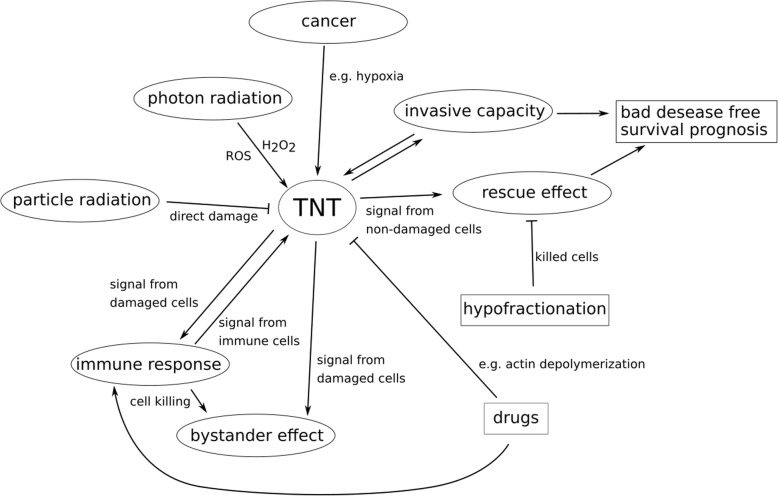
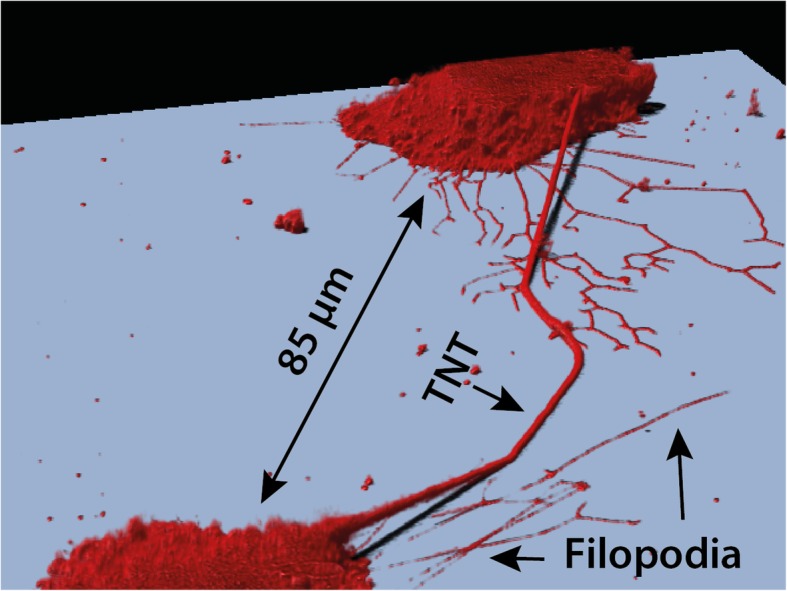
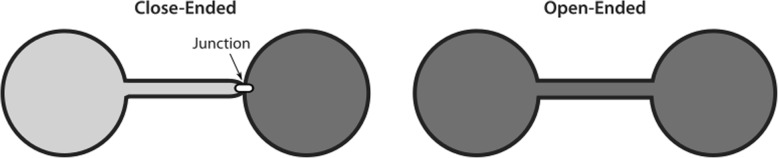
Direct cell-to-cell communication is crucial for the survival of cells in stressful situations such as during or after radiation exposure. This communication can lead to non-targeted effects, where non-treated or non-infected cells show effects induced by signal transduction from non-healthy cells or vice versa. In the last 15 years, tunneling nanotubes (TNTs) were identified as membrane connections between cells which facilitate the transfer of several cargoes and signals. TNTs were identified in various cell types and serve as promoter of treatment resistance e.g. in chemotherapy treatment of cancer. Here, we discuss our current understanding of how to differentiate tunneling nanotubes from other direct cellular connections and their role in the stress reaction of cellular networks. We also provide a perspective on how the capability of cells to form such networks is related to the ability to surpass stress and how this can be used to study radioresistance of cancer cells.
直接的细胞间通讯对于细胞在应激情况下的存活至关重要,例如在辐射暴露期间或之后。这种通讯可以导致非靶向效应,其中未治疗或未感染的细胞表现出由非健康细胞的信号转导诱导的效应,或者反之亦然。在过去的 15 年中,隧道纳米管(TNTs)被确定为细胞之间的膜连接,促进了几种货物和信号的转移。TNTs 在各种细胞类型中被识别,并作为治疗抵抗的促进剂,例如在癌症的化疗治疗中。在这里,我们讨论了我们目前对如何区分隧道纳米管与其他直接细胞连接及其在细胞网络应激反应中的作用的理解。我们还提供了一个视角,说明细胞形成这种网络的能力如何与克服应激的能力相关,以及如何利用这一点来研究癌细胞的辐射抗性。