School of Health Administration, Dalhousie University, Sir Charles Tupper Medical Building, 5850 College Street, 2nd Floor, PO Box 15000, Halifax, NS, B3H 4R2, Canada.
Dalla Lana School of Public Health, University of Toronto, 155 College Street, 5th Floor, Toronto, ON, M5T 3M7, Canada.
Curr Nutr Rep. 2019 Dec;8(4):411-428. doi: 10.1007/s13668-019-00295-z.
Update the state of evidence on the effectiveness of retail food environment interventions in influencing diet and explore the underlying role of public policy, through a systematic review of population-level interventions to promote health in the retail food environment, including community and consumer environments. Diet-related outcomes included purchasing, dietary intakes, diet quality, and health including weight. We coded studies for enabling public policy levers underpinning the intervention, using two widely used conceptual frameworks.
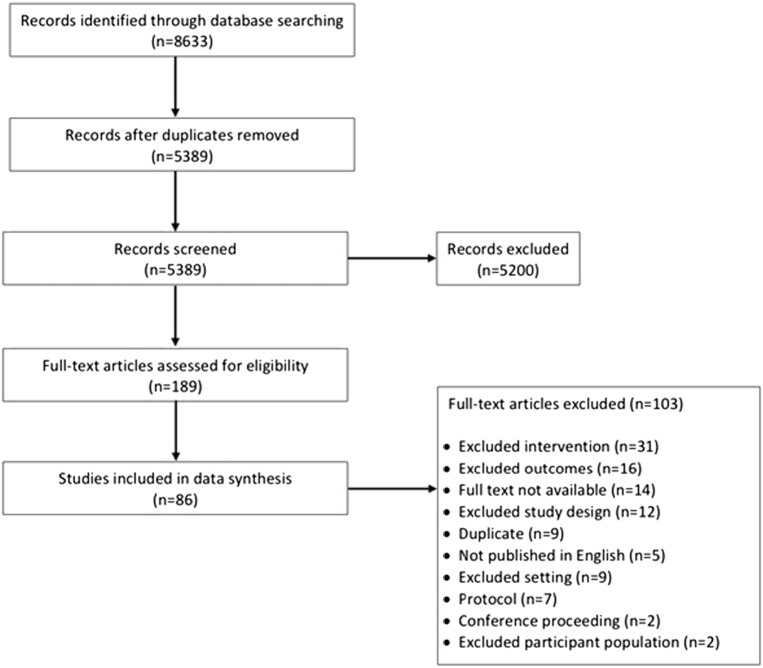
Of 86 articles (1974-2018), the majority (58 articles, 67%) showed at least one positive effect on diet. Thirteen articles (15%) discussed natural experiments, 27 articles (31%) used a design involving comparison groups including 23 articles (27%) specifically describing randomized controlled trials, and 46 (53%) were quasi-experimental (cross-sectional) evaluations. Across the "4Ps" of marketing (product, promotion, placement, and price), promotion comprised the greatest proportion of intervention strategies, especially in earlier literature (pre-2008). Few studies combined geographic access interventions with 4P strategies, and few used robust dietary intake assessments. Behavior change communication remains an intervention mainstay, but recent work has also incorporated environmental and social planning, and fiscal strategies. More recent interventions were multi-component. The retail food environment intervention literature continues to grow and has become more robust overall, with clearer evidence of the effect of interventions on diet-related outcomes, including consumer purchasing, dietary intakes, and health. There is still much scope for development in the field. Attention to enabling public policy could help to strengthen intervention implementation and evaluation in the retail food environment.
更新有关零售食品环境干预措施影响饮食的有效性的证据状况,并通过系统综述促进零售食品环境中的人群健康的干预措施,包括社区和消费者环境,探索公共政策的潜在作用。与饮食相关的结果包括购买、饮食摄入、饮食质量和健康(包括体重)。我们使用两个广泛使用的概念框架对研究进行了编码,以确定支持干预措施的公共政策杠杆。
在 86 篇文章(1974-2018 年)中,大多数(58 篇文章,占 67%)至少对饮食有一个积极影响。13 篇文章(15%)讨论了自然实验,27 篇文章(31%)使用了包括 23 篇文章(27%)专门描述随机对照试验的比较组设计,46 篇文章(53%)为准实验(横断面)评估。在营销的“4P”(产品、促销、定位和价格)中,促销构成了干预策略的最大部分,尤其是在早期文献(2008 年之前)中。很少有研究将地理可达性干预措施与 4P 策略结合使用,也很少有研究使用可靠的饮食摄入评估。行为改变交流仍然是干预的主要手段,但最近的工作也结合了环境和社会规划以及财政策略。最近的干预措施多为多组分。零售食品环境干预文献不断增加,整体上变得更加完善,干预对饮食相关结果(包括消费者购买、饮食摄入和健康)的影响的证据更加清晰。该领域仍有很大的发展空间。关注公共政策的实施可以帮助加强零售食品环境中的干预措施的实施和评估。