Michael Sean S, Bickley Daniel, Bookman Kelly, Zane Richard, Wiler Jennifer L
Department of Emergency Medicine, University of Colorado School of Medicine, Aurora, Colorado, USA.
Section of Emergency Medicine, Department of Medicine, University of Chicago Pritzker School of Medicine, Chicago, Illinois, USA.
BMJ Open Qual. 2019 Nov 18;8(4):e000817. doi: 10.1136/bmjoq-2019-000817. eCollection 2019.
Emergency department (ED) crowding is a critical problem in the delivery of acute unscheduled care. Many causes are external to the ED, but antiquated operational traditions like triage also contribute. A physician intake model has been shown to be beneficial in a single-centre study, but whether this solution is generalisable is not clear. We aimed to characterise the current state of front-end intake models in a national sample of EDs and quantify their effects on throughput measures.
We performed a descriptive mixed-method analysis of ED process changes implemented by a cross section of self-selecting institutions who reported 2 years of demographic/operational data and structured process descriptions of any 'new front-end processes to replace traditional nurse-based triage'.
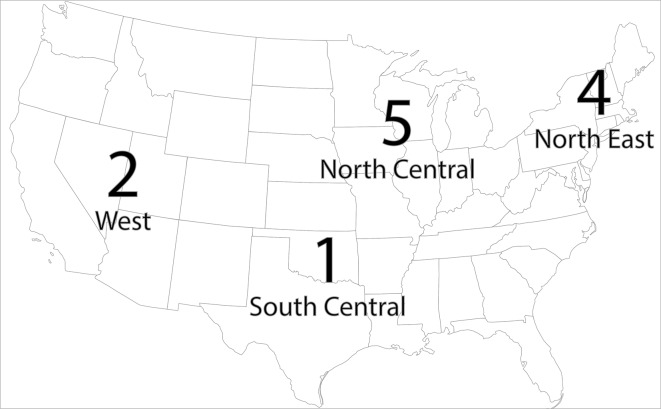
Among 25 participating institutions, 19 (76%) provided data. While geographically diverse, most were urban, academic adult level 1 trauma centres. Thirteen (68%) reported implementing a new intake process. All were run by attending emergency physicians, and six (46%) also included advanced practice providers. Daily operating hours ranged from 8 to 16 (median 12, IQR 10.25-15.85), and the majority performed labs, imaging and medication administration and directly discharged patients. Considering each site's before-and-after data as matched pairs, physician-driven intake was associated with mean decreases in arrival-to-provider time of 25 min (95% CI 13 to 37), ED length of stay 36 min (95% CI 12 to 59), and left before being seen rate 1.2% (95% CI 0.6% to 1.8%).
In this cross section of primarily academic EDs, implementing a physician-driven front-end intake process was feasible and associated with improvement in operational metrics.
急诊科拥挤是急性非预约护理服务中的一个关键问题。许多原因来自急诊科外部,但诸如分诊等过时的操作传统也有影响。在一项单中心研究中,医师接诊模式已被证明是有益的,但这种解决方案是否具有普遍性尚不清楚。我们旨在描述全国急诊科样本中前端接诊模式的现状,并量化其对诊疗效率指标的影响。
我们对自我选择的机构群体实施的急诊科流程变化进行了描述性混合方法分析,这些机构报告了两年的人口统计学/运营数据以及任何“取代传统护士分诊的新前端流程”的结构化流程描述。
在25个参与机构中,19个(76%)提供了数据。虽然地理位置多样,但大多数是城市学术性成人一级创伤中心。13个(68%)报告实施了新的接诊流程。所有流程均由急诊主治医师负责,其中6个(46%)还包括高级执业提供者。每日运营时间为8至16小时(中位数12,四分位距10.25 - 15.85),大多数机构进行实验室检查、影像学检查和药物管理,并直接为患者办理出院手续。将每个机构的前后数据视为配对数据,医师主导的接诊与到达医护人员的时间平均减少25分钟(95%置信区间13至37)、急诊科住院时间减少36分钟(95%置信区间12至59)以及未就诊离开率降低1.2%(95%置信区间0.6%至1.8%)相关。
在这个主要为学术性急诊科的样本中,实施医师主导的前端接诊流程是可行的,并且与运营指标的改善相关。