Gigase Frederieke A J, Suleri Anna, Isaevska Elena, Rommel Anna-Sophie, Boekhorst Myrthe G B M, Dmitrichenko Olga, El Marroun Hanan, Steegers Eric A P, Hillegers Manon H J, Muetzel Ryan L, Lieb Whitney, Cecil Charlotte A M, Pop Victor J M, Breen Michael, Bergink Veerle, de Witte Lot D
Department of Child and Adolescent Psychiatry, Erasmus University Medical Center, Rotterdam, Netherlands.
The Generation R Study Group, Erasmus University Medical Center, Rotterdam, Netherlands.
Front Immunol. 2025 Jun 9;16:1561798. doi: 10.3389/fimmu.2025.1561798. eCollection 2025.
Adaptations of the immune system throughout gestation have been proposed as important mechanisms regulating successful pregnancy. Dysregulation of the maternal immune system has been associated with adverse maternal and fetal outcomes. The design and interpretation of human biomarker studies require additional insights in the trajectories and drivers of peripheral immune markers.
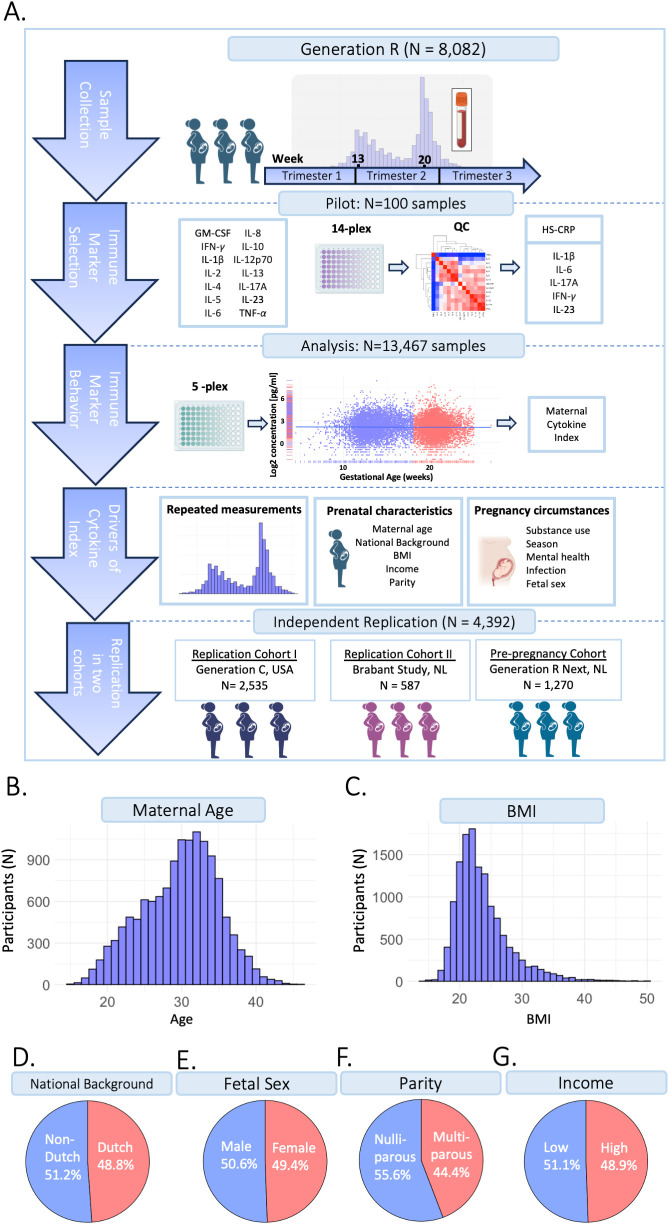
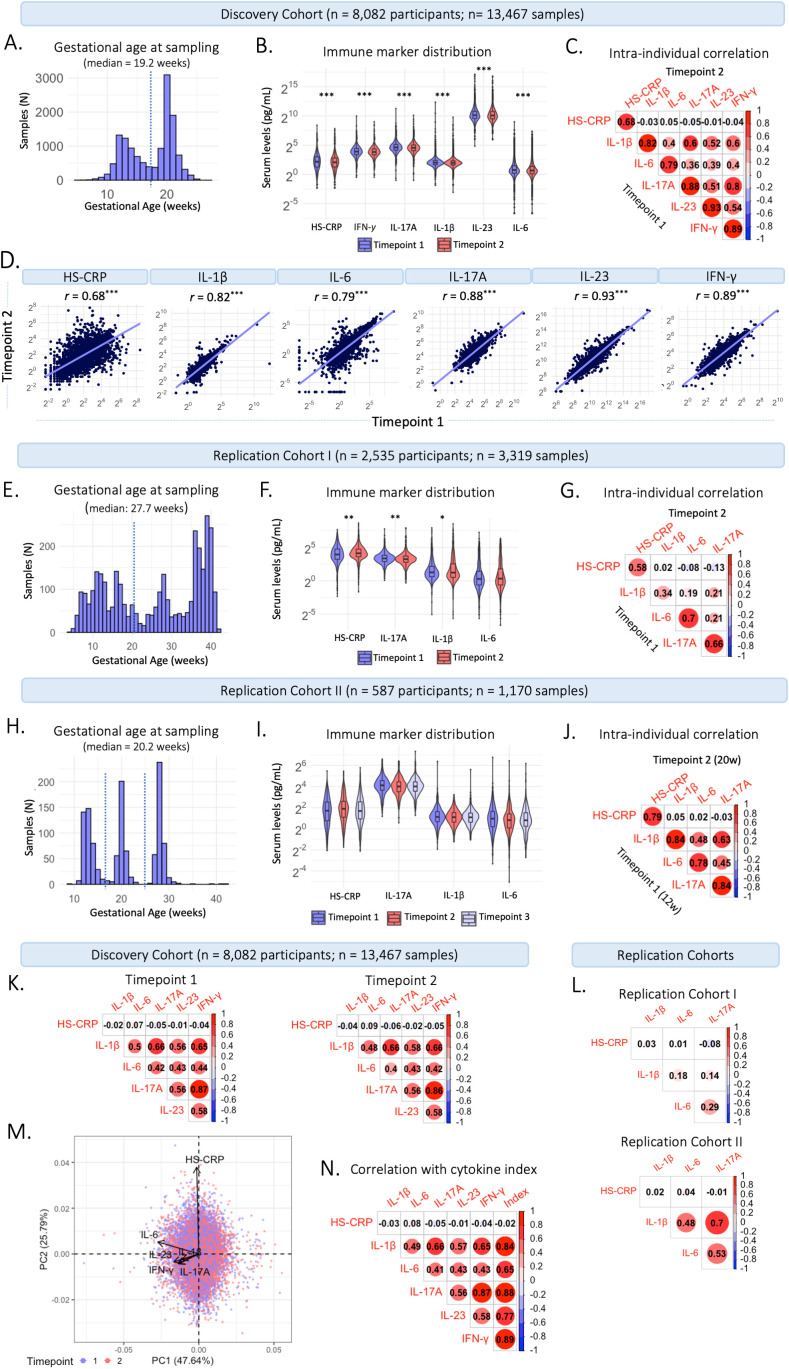
The current study mapped maternal inflammatory markers (C-reactive protein (CRP), interleukin (IL)-1β, IL-6, IL-17A, IL-23, interferon-γ) during pregnancy and investigated the impact of demographic, environmental and genetic drivers on maternal inflammatory marker levels in four multi-ethnic and socio-economically diverse population-based cohorts with more than 12,000 pregnant participants. Additionally, pregnancy inflammatory markers were compared to pre-pregnancy levels.
Cytokines showed a high correlation with each other, but not with CRP. Inflammatory marker levels showed high variability between individuals, yet high concordance within an individual over time during and pre-pregnancy. Pre-pregnancy body mass index (BMI) explained ~ 9.6% of the variance in CRP, but less than 1% of the variance in cytokines. The polygenic score of CRP was the best predictor of variance in CRP (14.1%). Gestational age and previously identified inflammation drivers, including tobacco use and parity, explained less than 1% of variance in both cytokines and CRP.
Our findings corroborate differential underlying regulatory mechanisms of CRP and cytokines and are suggestive of an individual inflammatory marker baseline which is, in part, genetically driven.
整个孕期免疫系统的适应性变化被认为是调节妊娠成功的重要机制。母体免疫系统失调与不良的母婴结局相关。人类生物标志物研究的设计和解读需要对外周免疫标志物的变化轨迹和驱动因素有更多的了解。
本研究绘制了孕期母体炎症标志物(C反应蛋白(CRP)、白细胞介素(IL)-1β、IL-6、IL-17A、IL-23、干扰素-γ)图谱,并在四个多民族且社会经济背景多样的基于人群的队列中,对超过12000名孕妇参与者,研究了人口统计学、环境和遗传驱动因素对母体炎症标志物水平的影响。此外,还将孕期炎症标志物与孕前水平进行了比较。
细胞因子之间显示出高度相关性,但与CRP不相关。炎症标志物水平在个体间差异很大,但在孕期和孕前个体内随时间变化具有高度一致性。孕前体重指数(BMI)解释了CRP变异的约9.6%,但对细胞因子变异的解释不到1%。CRP的多基因评分是CRP变异的最佳预测指标(14.1%)。孕周以及先前确定的炎症驱动因素,包括吸烟和生育次数,对细胞因子和CRP变异的解释均不到1%。
我们的研究结果证实了CRP和细胞因子潜在的不同调节机制,并提示存在个体炎症标志物基线,部分由基因驱动。