Webster Christopher C, Murphy Tamzyn E, Larmuth Kate M, Noakes Timothy D, Smith James A
Division of Exercise Science and Sports Medicine, University of Cape Town, Cape Town, South Africa.
Diabetes Metab Syndr Obes. 2019 Dec 5;12:2567-2582. doi: 10.2147/DMSO.S227090. eCollection 2019.
Low carbohydrate high fat (LCHF) diets are increasing in popularity amongst patients with type 2 diabetes (T2D), however it is unclear what constitutes a sustainable LCHF diet in a real-world setting.
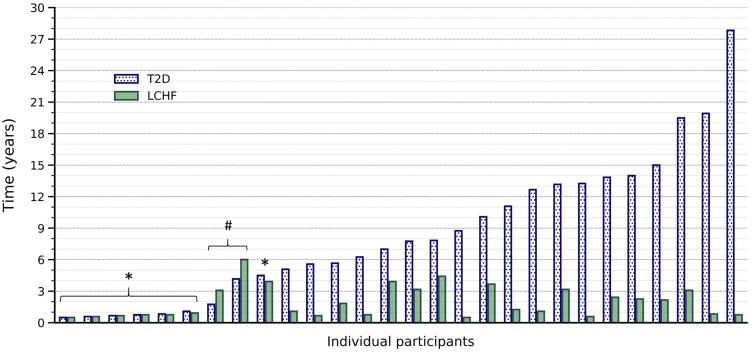
This descriptive multi-method study characterized the diets, T2D status, and personal experiences of individuals with T2D who claimed to have followed an LCHF diet for at least 6 months. Participants completed a medications history, mixed-method dietary assessment, provided a blood sample, and were interviewed in-depth about their experiences with the diet (First-Assessment). Past medical records were obtained corresponding to T2D diagnosis and prior to starting their LCHF diets. Additionally, participants were followed up 15 months later to assess T2D remission (Follow-Up).
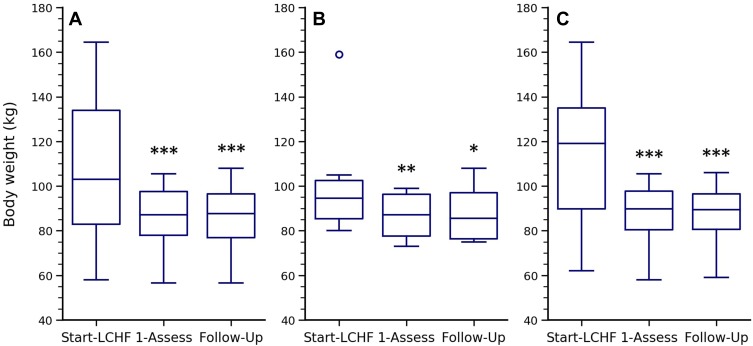
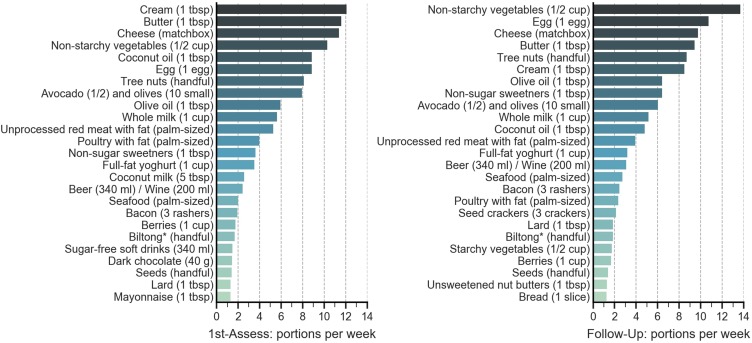
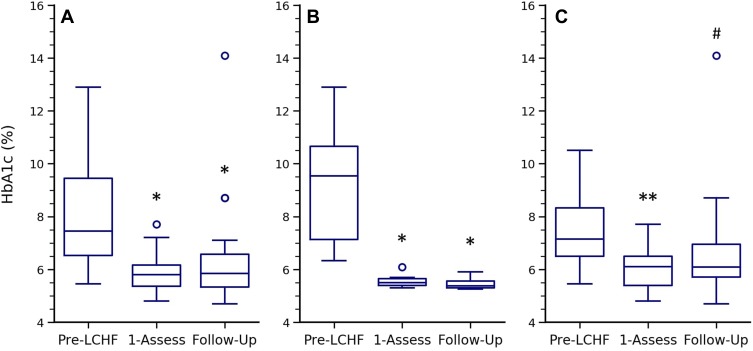
Twenty-eight participants completed First-Assessment and 24 completed Follow-Up. Habitual carbohydrate intake was 20 to 50 g/d for 10 participants and 50 to 115 g/d for 17 participants. Commonly reported foods were full-fat dairy, non-starchy vegetables, coconut oil, eggs, nuts, olives and avocados, olive oil, and red meat and poultry with fat. Median (interquartile range) for HbA1c was 7.5 (6.5-9.5) % prior to starting their diets, 5.8 (5.4-6.2) % at First-Assessment and 5.9 (5.3-6.6) % at Follow-Up. Reported body weight and glucose-lowering medication requirements were considerably lower at both assessments than when starting the diet. At Follow-Up, 24 participants had been following their LCHF diets for 35 (26-53) months, the majority of which were in full or partial T2D remission. Participants perceived reduced hunger and cravings as one of the most important aspects of their diets. Of concern, many participants felt unsupported by their doctors.
This study described the foods and characteristics of an LCHF "lifestyle" that was sustainable and effective for certain T2D patients in a real-world setting.
低碳水化合物高脂肪(LCHF)饮食在2型糖尿病(T2D)患者中越来越受欢迎,然而在现实环境中,何种饮食构成可持续的LCHF饮食尚不清楚。
这项描述性多方法研究对自称遵循LCHF饮食至少6个月的T2D患者的饮食、T2D状况及个人经历进行了特征分析。参与者完成了用药史、混合方法饮食评估,提供了血样,并就其饮食经历接受了深入访谈(首次评估)。获取了与T2D诊断及开始LCHF饮食之前对应的既往病历。此外,15个月后对参与者进行随访以评估T2D缓解情况(随访)。
28名参与者完成了首次评估,24名完成了随访。10名参与者的习惯性碳水化合物摄入量为每日20至50克,17名参与者为每日50至115克。常见的食物包括全脂乳制品、非淀粉类蔬菜、椰子油、鸡蛋、坚果、橄榄和鳄梨、橄榄油以及带脂肪的红肉和家禽。开始饮食前糖化血红蛋白(HbA1c)的中位数(四分位间距)为7.5(6.5 - 9.5)%,首次评估时为5.8(5.4 - 6.2)%,随访时为5.9(5.3 - 6.6)%。两次评估时报告的体重和降糖药物需求均显著低于开始饮食时。随访时,24名参与者已遵循LCHF饮食35(26 - 53)个月,其中大多数处于T2D完全或部分缓解状态。参与者认为饥饿感和食欲降低是其饮食中最重要的方面之一。令人担忧的是,许多参与者感觉未得到医生的支持。
本研究描述了一种LCHF“生活方式”的食物及特征,这种生活方式在现实环境中对某些T2D患者具有可持续性且有效。