DAHFMO-Unit of Histology and Medical Embryology, Sapienza University of Rome, Laboratory Affiliated to Istituto Pasteur Italia-Fondazione Cenci Bolognetti, Via A. Scarpa 14, 00161 Rome, Italy.
Istituto di Istologia ed Embriologia, Università Cattolica del Sacro Cuore, Fondazione Policlinico Universitario "Agostino Gemelli", IRCCS, 00168 Roma, Italy.
Oxid Med Cell Longev. 2019 Nov 16;2019:3018584. doi: 10.1155/2019/3018584. eCollection 2019.
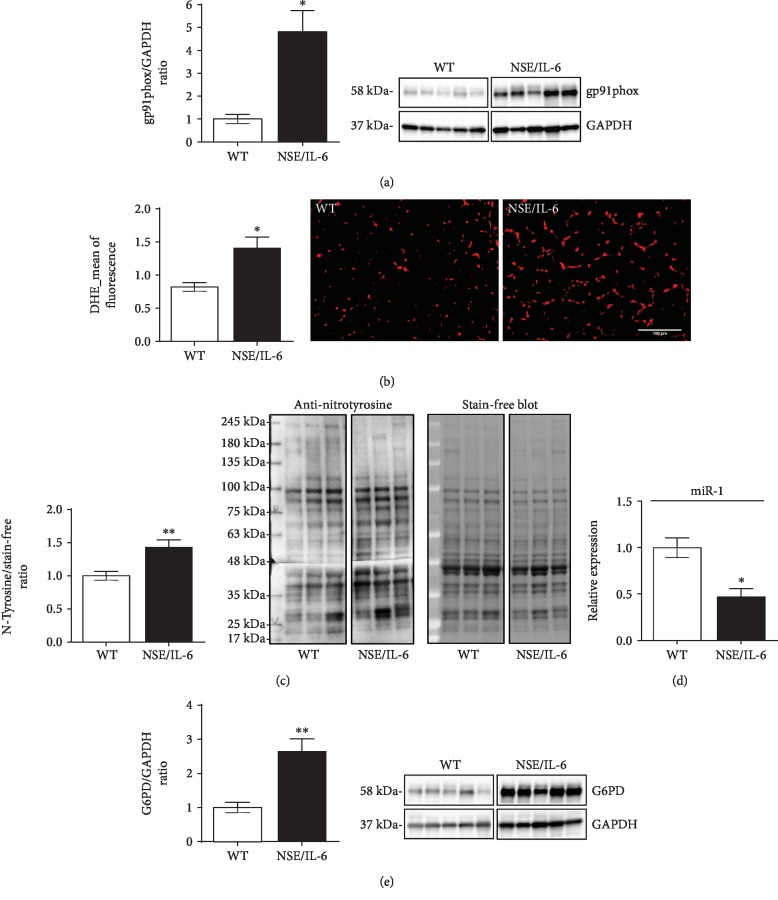
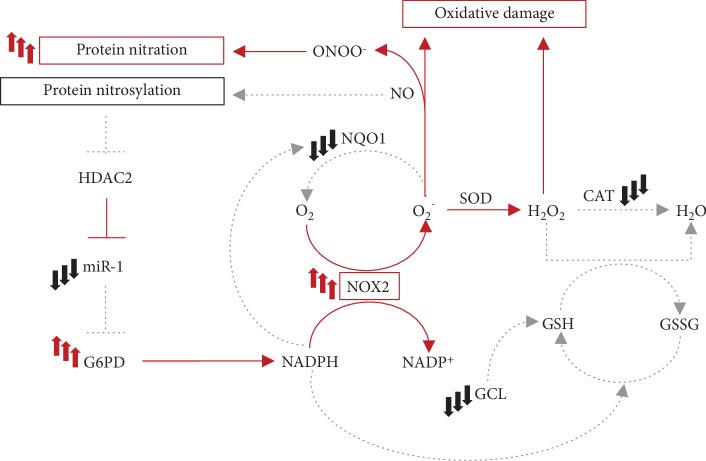
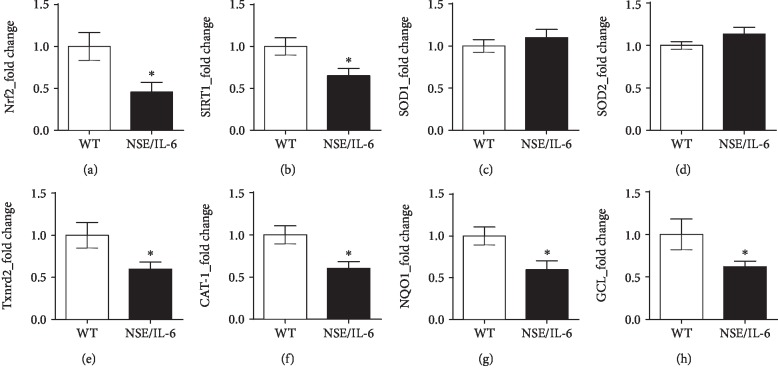
The extent of oxidative stress and chronic inflammation are closely related events which coexist in a muscle environment under pathologic conditions. It has been generally accepted that the inflammatory cells, as well as myofibers, are sources of reactive species which are, in turn, able to amplify the activation of proinflammatory pathways. However, the precise mechanism underlining the physiopathologic interplay between ROS generation and inflammatory response has to be fully clarified. Thus, the identification of key molecular players in the interconnected pathogenic network between the two processes might help to design more specific therapeutic approaches for degenerative diseases. Here, we investigated whether elevated circulating levels of the proinflammatory cytokine Interleukin-6 (IL-6) are sufficient to perturb the physiologic redox balance in skeletal muscle, independently of tissue damage and inflammatory response. We observed that the overexpression of circulating IL-6 enhances the generation and accumulation of free radicals in the diaphragm muscle of adult NSE/IL-6 mice, by deregulating redox-associated molecular circuits and impinging the nuclear factor erythroid 2-related factor 2- (Nrf2-) mediated antioxidant response. Our findings are coherent with a model in which uncontrolled levels of IL-6 in the bloodstream can influence the local redox homeostasis, inducing the establishment of prooxidative conditions in skeletal muscle tissue.
氧化应激和慢性炎症的程度是密切相关的事件,它们在病理条件下共存于肌肉环境中。人们普遍认为,炎症细胞以及肌纤维都是活性物质的来源,而这些活性物质反过来又能够放大促炎途径的激活。然而,ROS 生成和炎症反应之间的病理生理相互作用的确切机制仍需充分阐明。因此,确定这两个过程之间相互关联的致病网络中的关键分子参与者,可能有助于设计针对退行性疾病的更具特异性的治疗方法。在这里,我们研究了循环中促炎细胞因子白细胞介素 6 (IL-6) 的升高是否足以在不损伤组织和引发炎症反应的情况下,扰乱骨骼肌的生理氧化还原平衡。我们观察到,循环 IL-6 的过表达通过扰乱与氧化还原相关的分子通路并影响核因子红细胞 2 相关因子 2-(Nrf2-)介导的抗氧化反应,增强了成年 NSE/IL-6 小鼠膈肌中自由基的产生和积累。我们的发现与一种模型一致,即血液中不受控制的 IL-6 水平会影响局部氧化还原平衡,导致骨骼肌组织中形成促氧化条件。