Sino-Dutch Biomedical and Information Engineering School, Northeastern University, Shenyang, Liaoning, People's Republic of China.
Department of Biomedical Engineering, University of California, Davis, CA, United States of America.
Phys Med Biol. 2020 Jan 27;65(3):035003. doi: 10.1088/1361-6560/ab6240.
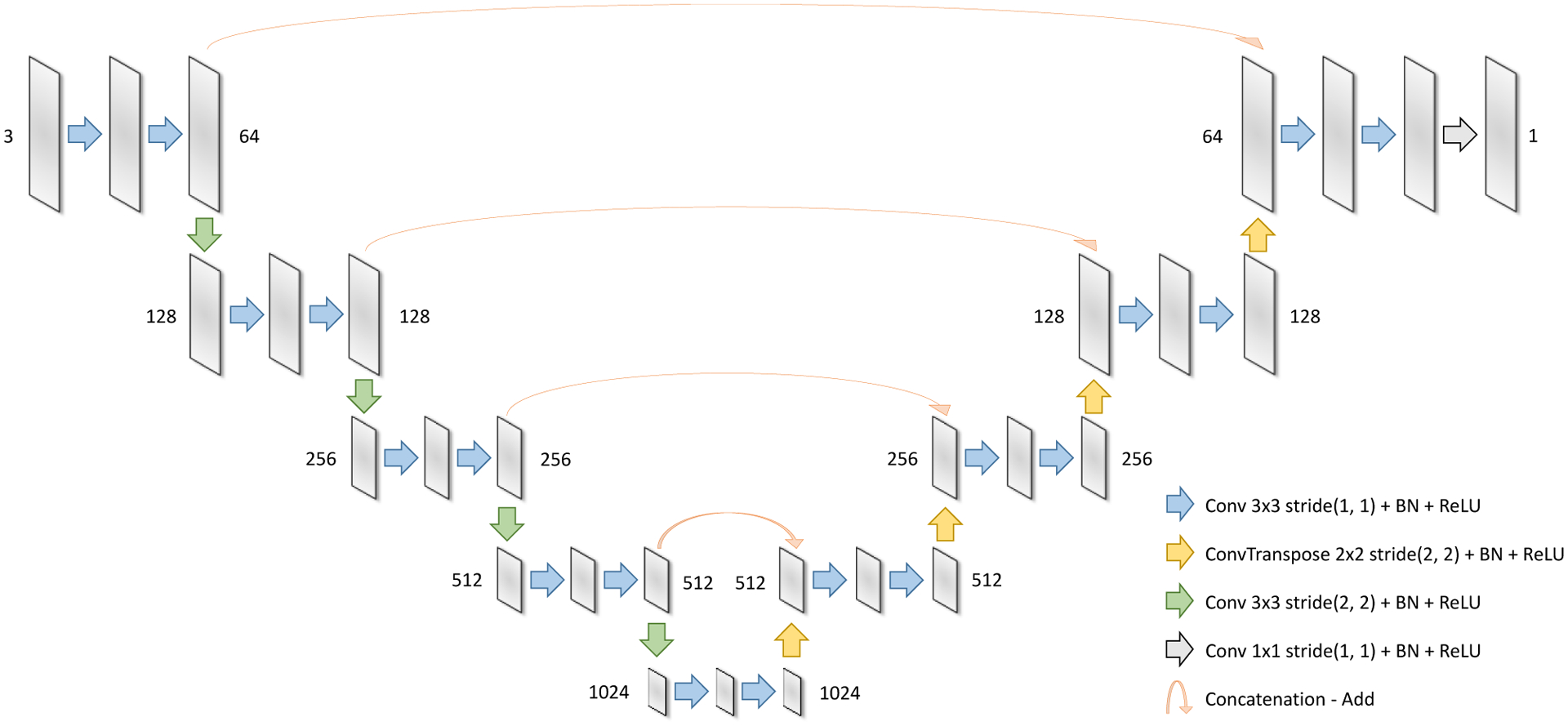
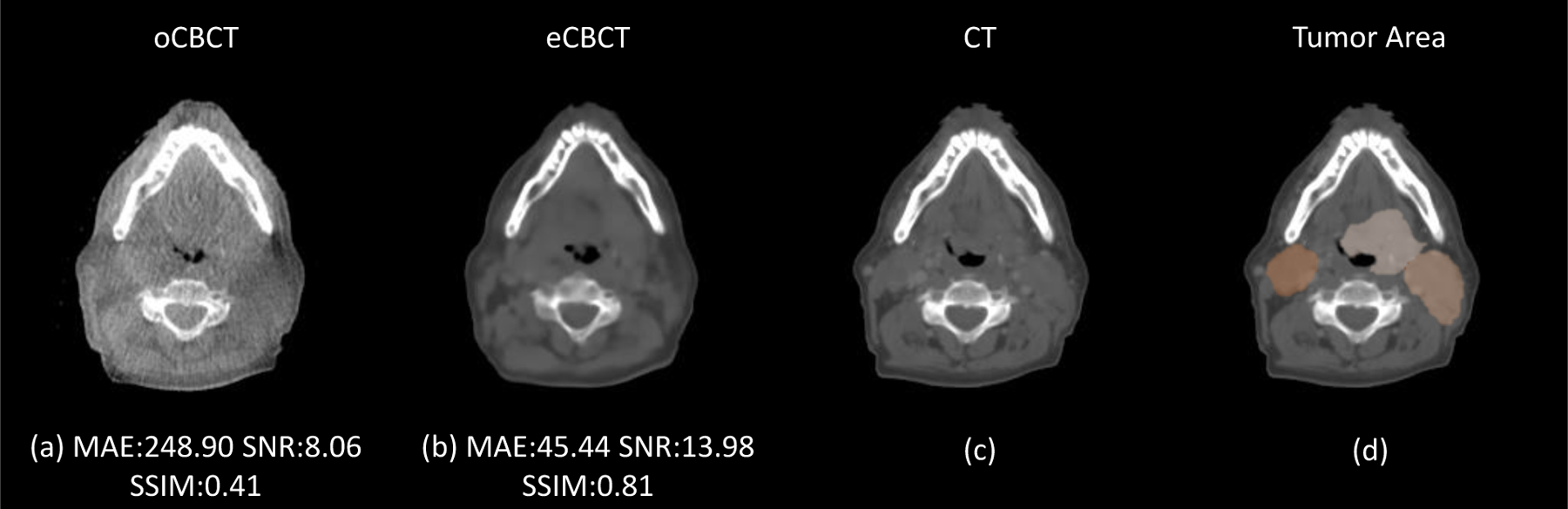
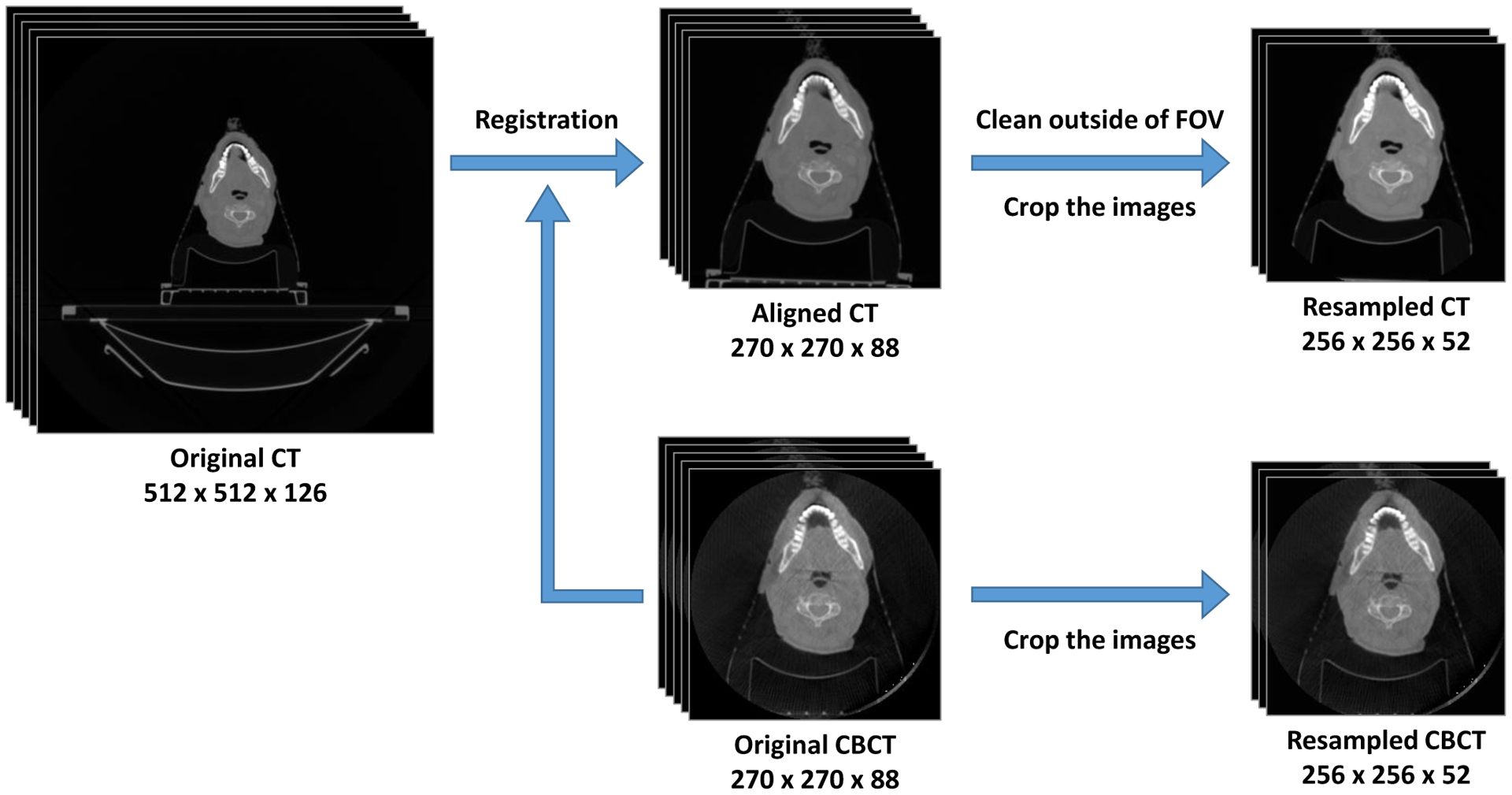
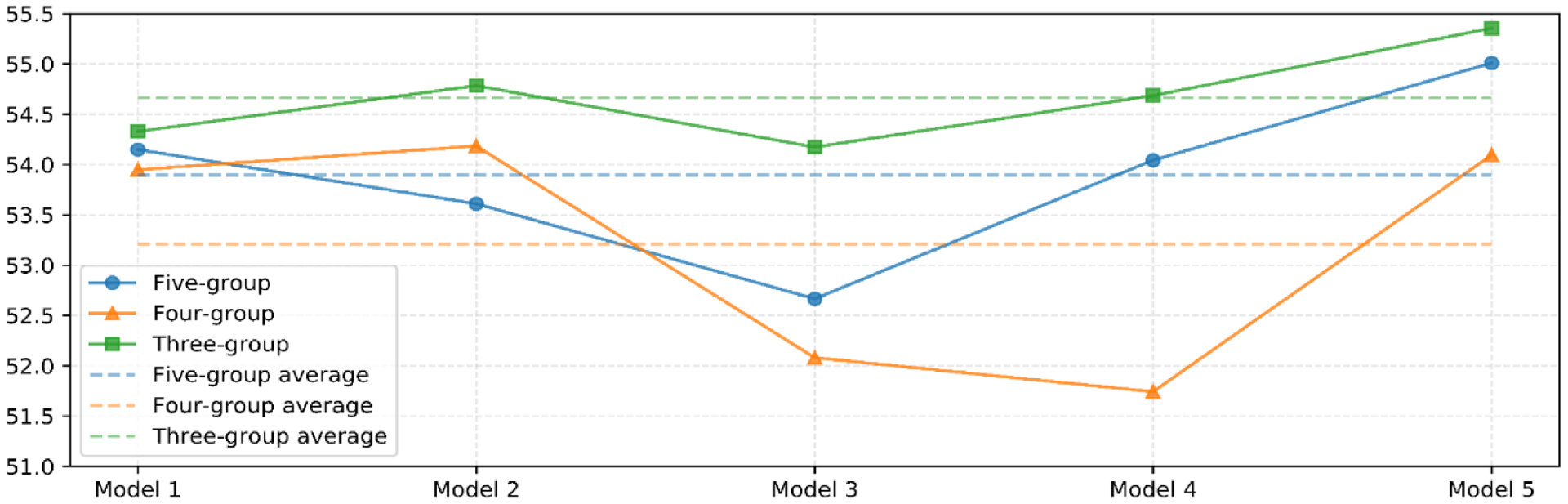
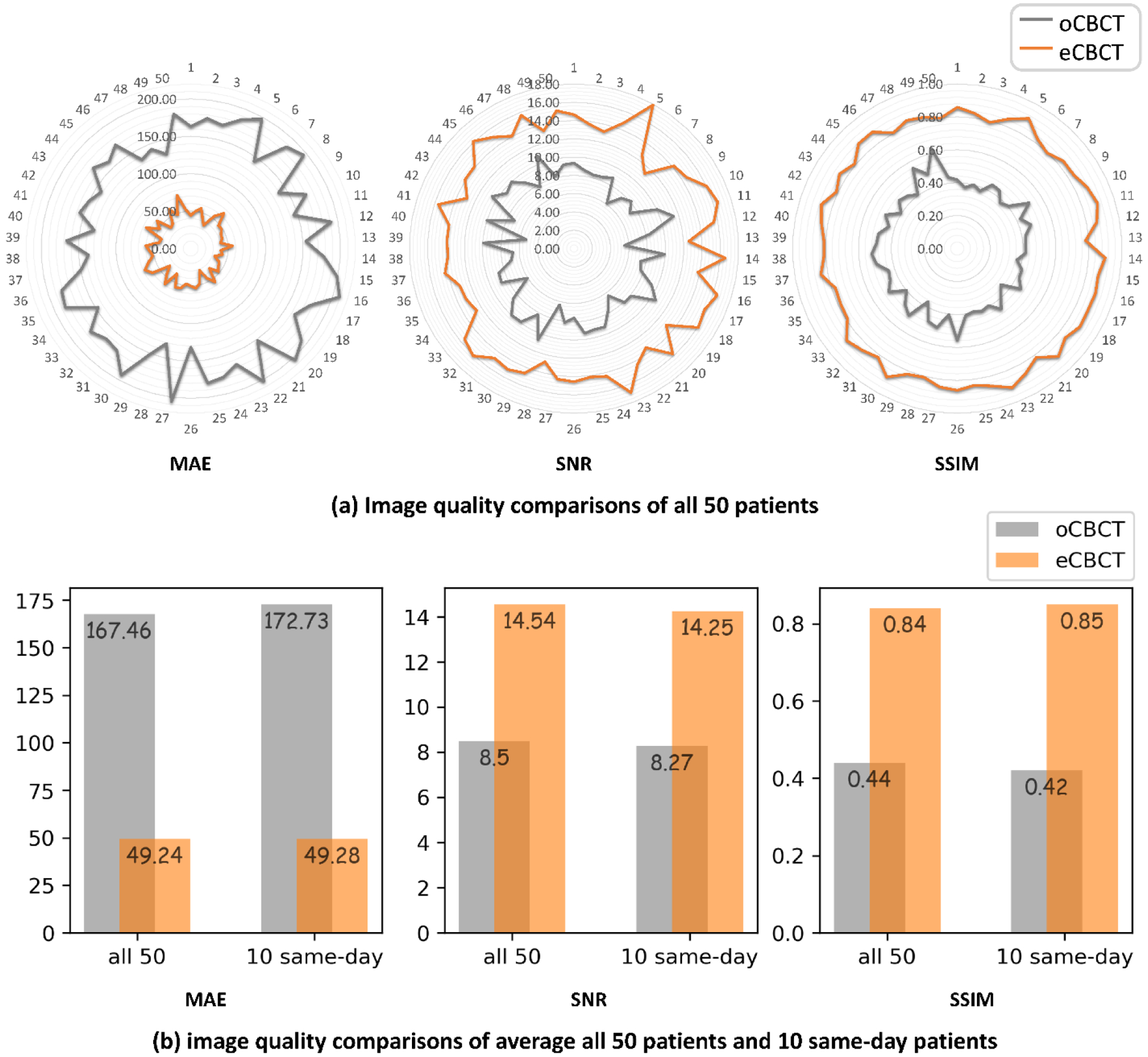
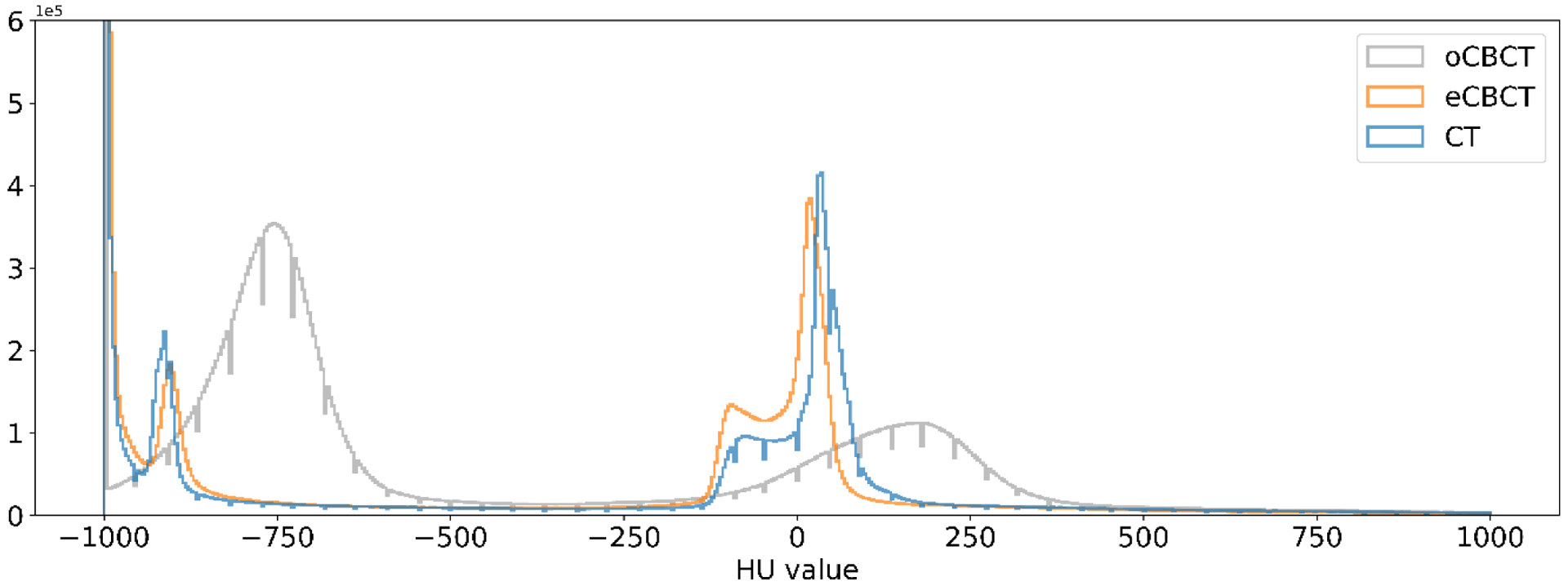
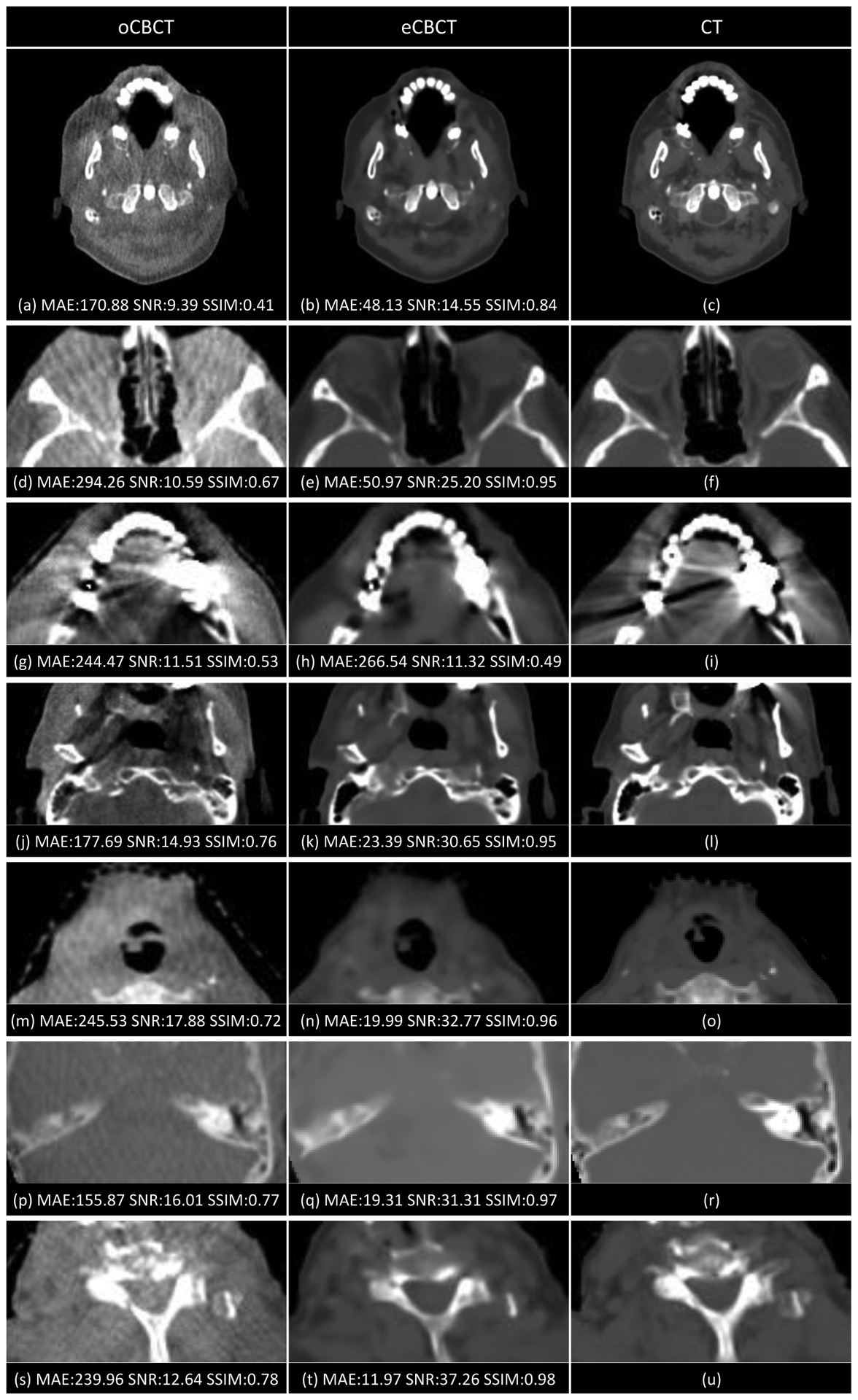
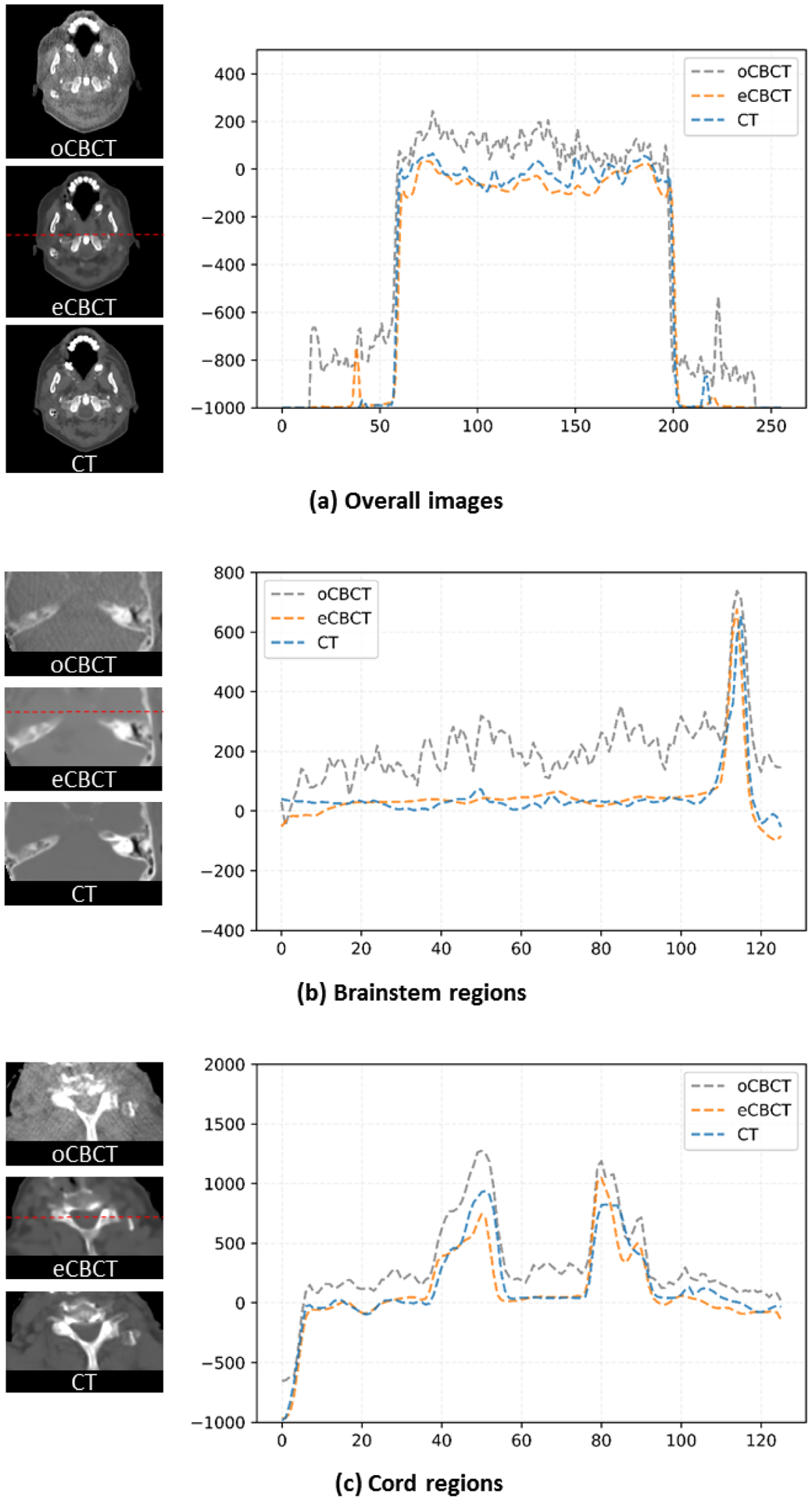
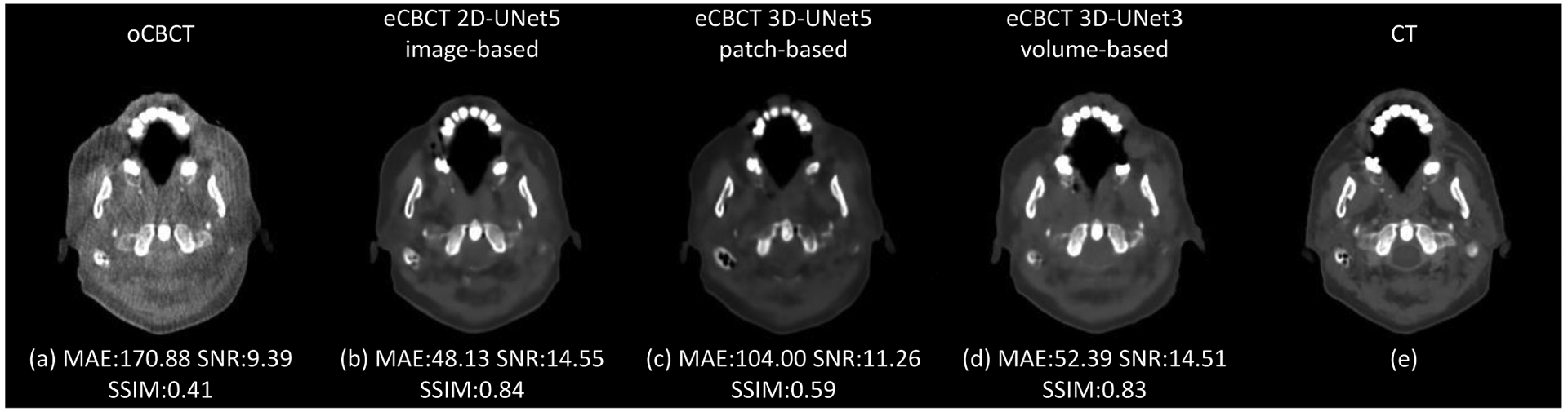
To improve image quality and CT number accuracy of fast-scan low-dose cone-beam computed tomography (CBCT) through a deep-learning convolutional neural network (CNN) methodology for head-and-neck (HN) radiotherapy. Fifty-five paired CBCT and CT images from HN patients were retrospectively analysed. Among them, 15 patients underwent adaptive replanning during treatment, thus had same-day CT/CBCT pairs. The remaining 40 patients (post-operative) had paired planning CT and 1st fraction CBCT images with minimal anatomic changes. A 2D U-Net architecture with 27-layers in 5 depths was built for the CNN. CNN training was performed using data from 40 post-operative HN patients with 2080 paired CT/CBCT slices. Validation and test datasets include 5 same-day datasets with 260 slice pairs and 10 same-day datasets with 520 slice pairs, respectively. To examine the impact of differences in training dataset selection and network performance as a function of training data size, additional networks were trained using 30, 40 and 50 datasets. Image quality of enhanced CBCT images were quantitatively compared against the CT image using mean absolute error (MAE) of Hounsfield units (HU), signal-to-noise ratio (SNR) and structural similarity (SSIM). Enhanced CBCT images reduced artifact distortion and improved soft tissue contrast. Networks trained with 40 datasets had imaging performance comparable to those trained with 50 datasets and outperformed those trained with 30 datasets. Comparison of CBCT and enhanced CBCT images demonstrated improvement in average MAE from 172.73 to 49.28 HU, SNR from 8.27 to 14.25 dB, and SSIM from 0.42 to 0.85. The image processing time is 2 s per patient using a NVIDIA GeForce GTX 1080 Ti GPU. The proposed deep-leaning methodology was fast and effective for image quality enhancement of fast-scan low-dose CBCT. This method has potential to support fast online-adaptive re-planning for HN cancer patients.
通过深度学习卷积神经网络(CNN)方法提高头颈(HN)放疗快速扫描低剂量锥形束 CT(CBCT)的图像质量和 CT 数准确性。对 55 例 HN 患者的 CBCT 和 CT 图像进行回顾性分析。其中,15 例患者在治疗过程中进行了自适应调整计划,因此有同日 CT/CBCT 对。其余 40 例(术后)患者有配对的计划 CT 和第 1 次分剂量 CBCT 图像,解剖变化最小。CNN 构建了一个具有 5 个深度 27 层的 2D U-Net 架构。使用来自 40 例术后 HN 患者的 2080 对 CT/CBCT 切片对 CNN 进行训练。验证和测试数据集分别包括 5 个同日数据集,每个数据集包含 260 对切片,以及 10 个同日数据集,每个数据集包含 520 对切片。为了检查训练数据集选择和网络性能的差异对训练数据大小的影响,使用 30、40 和 50 个数据集分别训练了额外的网络。使用平均绝对误差(MAE)、信噪比(SNR)和结构相似性(SSIM)对增强后的 CBCT 图像的图像质量与 CT 图像进行定量比较。增强后的 CBCT 图像减少了伪影失真,提高了软组织对比度。使用 40 个数据集训练的网络具有与 50 个数据集训练的网络相当的成像性能,优于使用 30 个数据集训练的网络。CBCT 和增强 CBCT 图像的比较表明,平均 MAE 从 172.73 降至 49.28 HU,SNR 从 8.27 升至 14.25 dB,SSIM 从 0.42 升至 0.85。使用 NVIDIA GeForce GTX 1080 Ti GPU 对每位患者的图像处理时间为 2 秒。该深度学习方法快速有效,可用于增强快速扫描低剂量 CBCT 的图像质量。该方法有可能支持 HN 癌症患者的快速在线自适应再计划。