Liver Disease and Liver Metabolism Lab, CIC bioGUNE, Centro de Investigación Biomédica en Red de Enfermedades Hepáticas y Digestivas (CIBERehd), 48160 Derio, Bizkaia, Spain.
Department of Biochemistry and Molecular Biology, Faculty of Science and Technology, University of the Basque Country (UPV/EHU), 48980 Leioa, Bizkaia, Spain.
Int J Mol Sci. 2019 Dec 19;21(1):40. doi: 10.3390/ijms21010040.
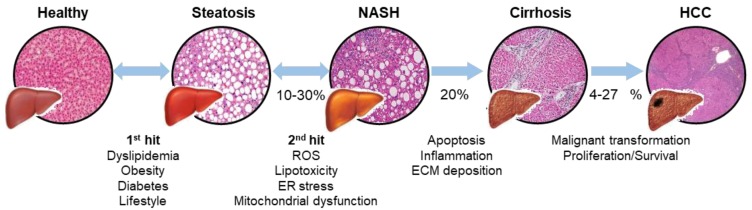
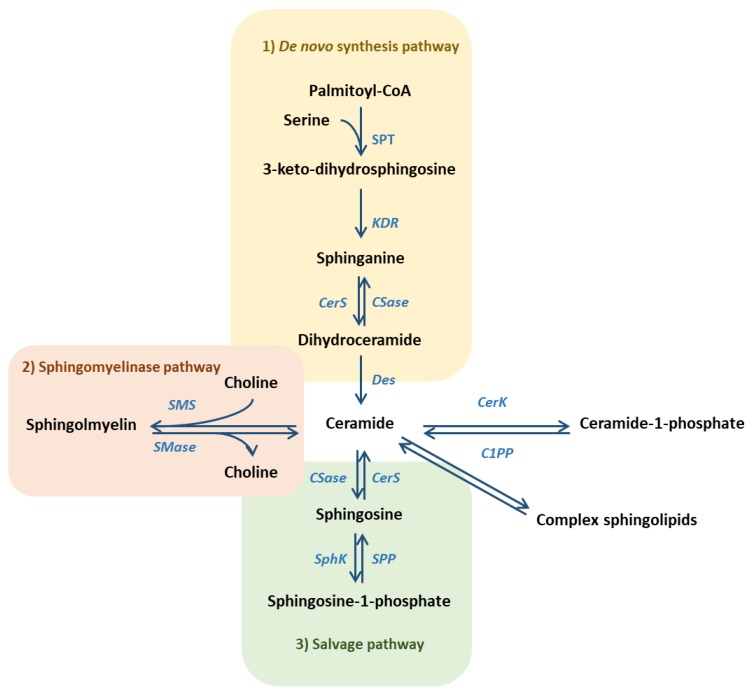
Non-alcoholic fatty liver disease (NAFLD) has emerged as one of the main causes of chronic liver disease worldwide. NAFLD comprises a group of conditions characterized by the accumulation of hepatic lipids that can eventually lead to non-alcoholic steatohepatitis (NASH), fibrosis, cirrhosis, and hepatocellular carcinoma (HCC), the fifth most common cancer type with a poor survival rate. In this context, several works have pointed out perturbations in lipid metabolism and, particularly, changes in bioactive sphingolipids, as a hallmark of NAFLD and derived HCC. In the present work, we have reviewed existing literature about sphingolipids and the development of NAFLD and NAFLD-derived HCC. During metabolic syndrome, considered a risk factor for steatosis development, an increase in ceramide and sphigosine-1-phosphate (S1P) have been reported. Likewise, other reports have highlighted that increased sphingomyelin and ceramide content is observed during steatosis and NASH. Ceramide also plays a role in liver fibrosis and cirrhosis, acting synergistically with S1P. Finally, during HCC, metabolic fluxes are redirected to reduce cellular ceramide levels whilst increasing S1P to support tumor growth.
非酒精性脂肪性肝病 (NAFLD) 已成为全球慢性肝病的主要病因之一。NAFLD 由一组以肝内脂质蓄积为特征的疾病组成,最终可能导致非酒精性脂肪性肝炎 (NASH)、纤维化、肝硬化和肝细胞癌 (HCC),这是第五种常见的癌症类型,存活率较低。在这种情况下,多项研究指出脂质代谢紊乱,特别是生物活性神经鞘脂的变化,是 NAFLD 和由此导致的 HCC 的标志。在本工作中,我们综述了有关神经鞘脂代谢与 NAFLD 和 NAFLD 衍生 HCC 发生发展的现有文献。在代谢综合征被认为是脂肪变性发展的危险因素的情况下,已报道鞘氨醇和神经鞘氨醇-1-磷酸 (S1P) 的增加。同样,其他报道也强调了在脂肪变性和 NASH 期间观察到鞘磷脂和神经酰胺含量的增加。神经酰胺在肝纤维化和肝硬化中也起作用,与 S1P 协同作用。最后,在 HCC 中,代谢通量被重新定向以降低细胞神经酰胺水平,同时增加 S1P 以支持肿瘤生长。