State Key Laboratory of Hydrology-Water Resources and Hydraulic Engineering, Hohai University, Nanjing 210098, China.
Business School, Hohai University, Nanjing 211100, China.
Int J Environ Res Public Health. 2019 Dec 19;17(1):49. doi: 10.3390/ijerph17010049.
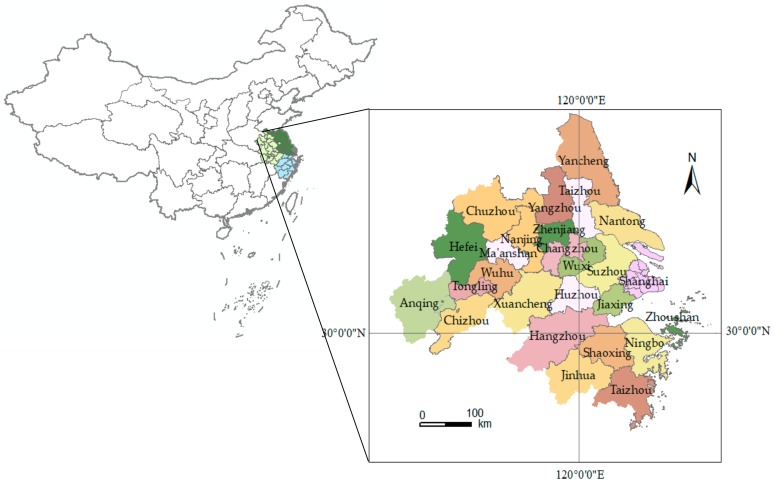
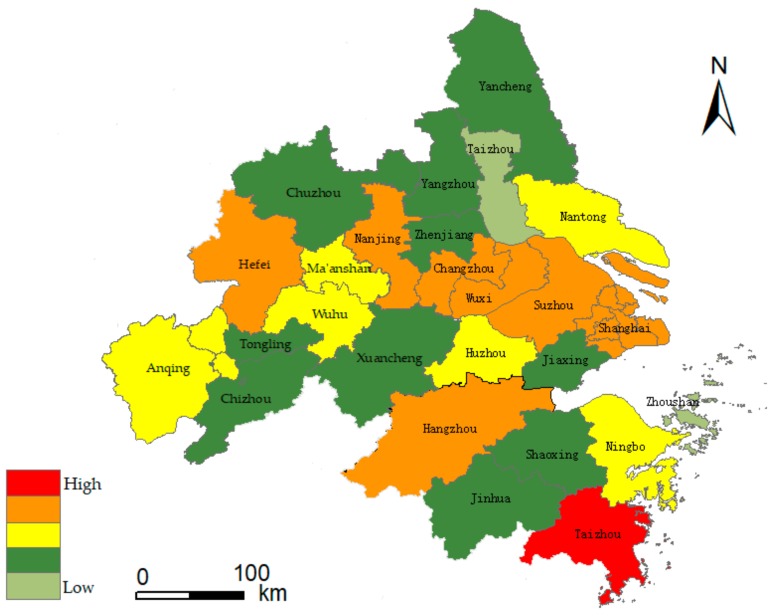
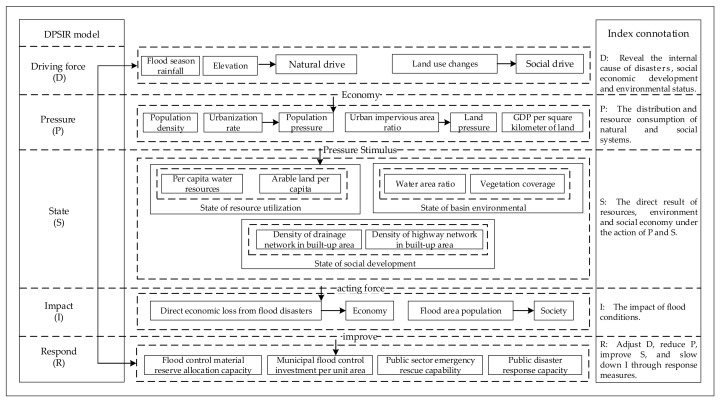
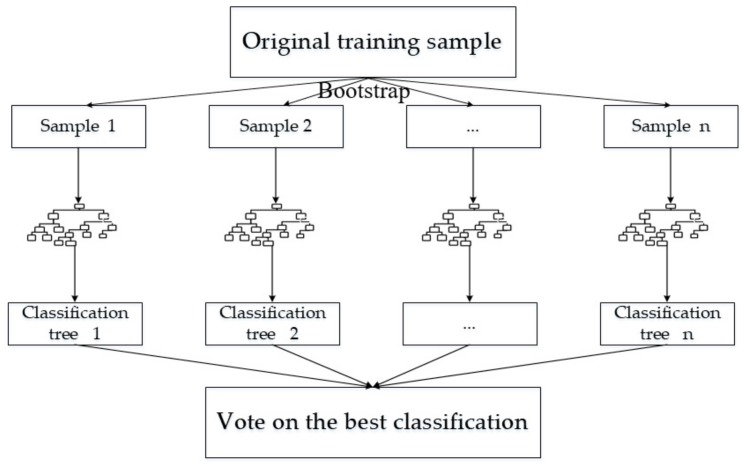
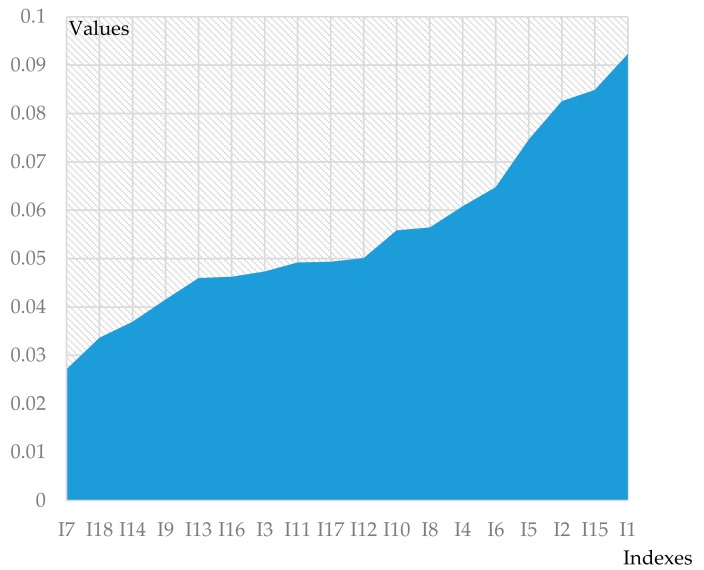
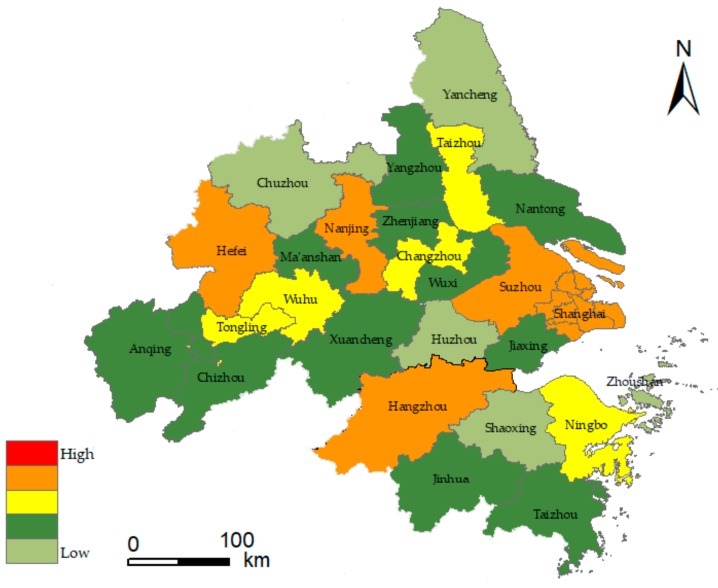
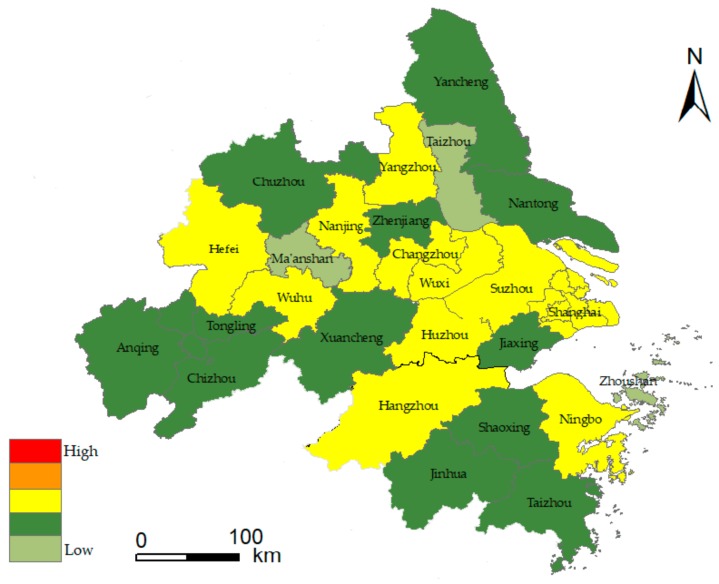
The Yangtze River Delta (YRD) is one of the most developed regions in China. This is also a flood-prone area where flood disasters are frequently experienced; the situations between the people-land nexus and the people-water nexus are very complicated. Therefore, the accurate assessment of flood risk is of great significance to regional development. The paper took the YRD urban agglomeration as the research case. The driving force, pressure, state, impact and response (DPSIR) conceptual framework was established to analyze the indexes of flood disasters. The random forest (RF) algorithm was used to screen important indexes of floods risk, and a risk assessment model based on the radial basis function (RBF) neural network was constructed to evaluate the flood risk level in this region from 2009 to 2018. The risk map showed the I-V level of flood risk in the YRD urban agglomeration from 2016 to 2018 by using the geographic information system (GIS). Further analysis indicated that the indexes such as flood season rainfall, urban impervious area ratio, gross domestic product (GDP) per square kilometer of land, water area ratio, population density and emergency rescue capacity of public administration departments have important influence on flood risk. The flood risk has been increasing in the YRD urban agglomeration during the past ten years under the urbanization background, and economic development status showed a significant positive correlation with flood risks. In addition, there were serious differences in the rising rate of flood risks and the status quo among provinces. There are still a few cities that have stabilized at a better flood-risk level through urban flood control measures from 2016 to 2018. These results were basically in line with the actual situation, which validated the effectiveness of the model. Finally, countermeasures and suggestions for reducing the urban flood risk in the YRD region were proposed, in order to provide decision support for flood control, disaster reduction and emergency management in the YRD region.
长三角(YRD)是中国最发达的地区之一。这也是一个经常遭受洪水灾害的地区,人地关系和人水关系非常复杂。因此,准确评估洪水风险对区域发展具有重要意义。本文以长三角城市群为研究案例,采用驱动力-压力-状态-影响-响应(DPSIR)概念框架,分析了洪水灾害的指标。采用随机森林(RF)算法筛选洪水风险的重要指标,构建基于径向基函数(RBF)神经网络的风险评估模型,评估该地区 2009 年至 2018 年的洪水风险水平。风险图利用地理信息系统(GIS)展示了 2016 年至 2018 年长三角城市群洪水风险的 I-V 级。进一步分析表明,洪水季节降雨量、城市不透水面积比、每平方公里土地国内生产总值(GDP)、水域面积比、人口密度和公共行政部门的应急救援能力等指标对洪水风险有重要影响。在城市化背景下,过去十年长三角城市群的洪水风险一直在增加,经济发展状况与洪水风险呈显著正相关。此外,各省份洪水风险上升率和现状存在较大差异。还有少数城市通过城市防洪措施,在 2016 年至 2018 年期间稳定在较好的洪水风险水平。这些结果基本符合实际情况,验证了模型的有效性。最后,提出了长三角地区降低城市洪水风险的对策和建议,为长三角地区的防洪、减灾和应急管理提供决策支持。