Department of Physiology, Institute of Bioscience, University of São Paulo, São Paulo, Brazil.
Department of Clinical Science, University of Bergen, Bergen, Norway.
Sci Rep. 2019 Dec 27;9(1):19841. doi: 10.1038/s41598-019-56305-1.
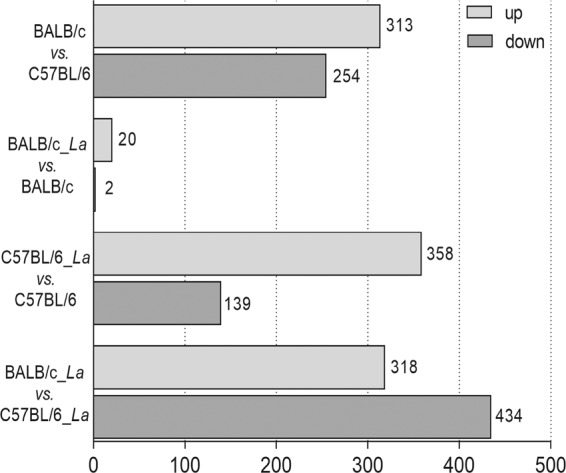
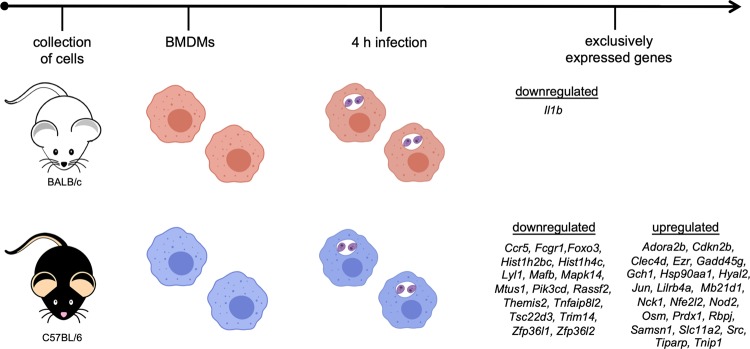
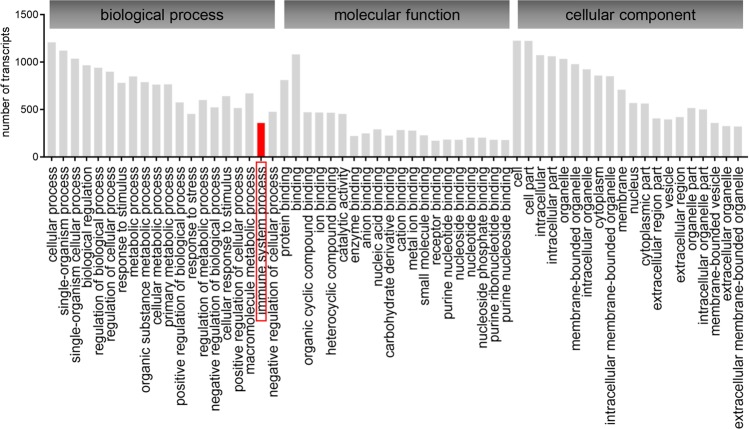
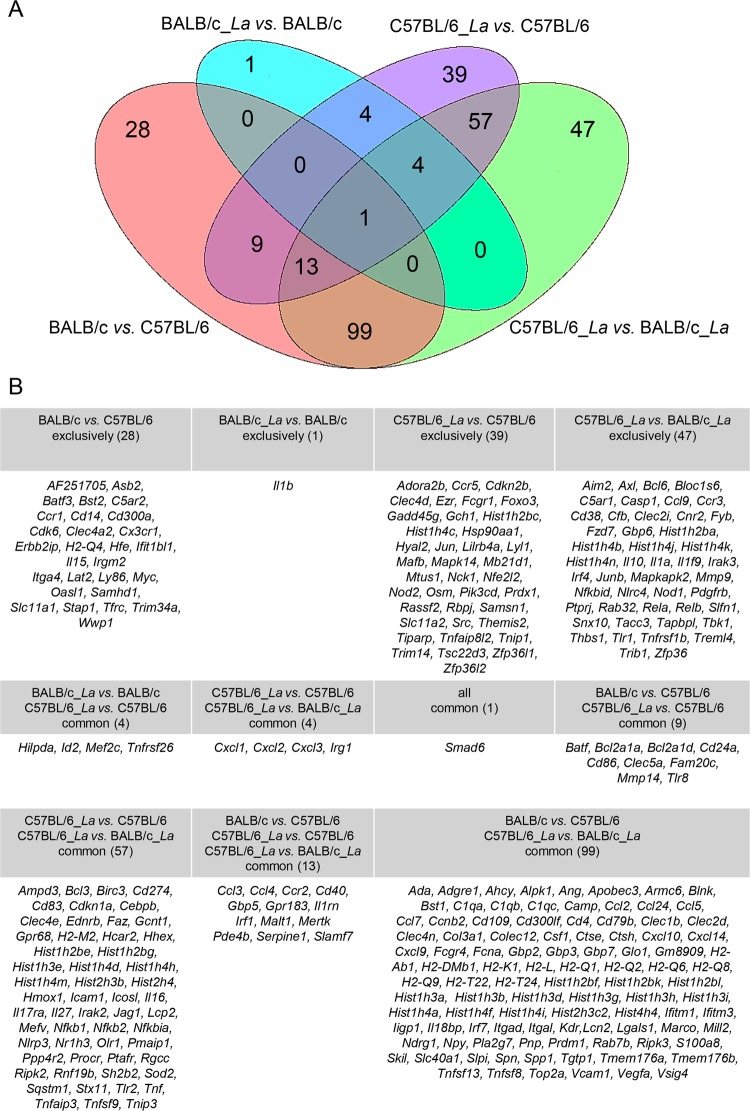
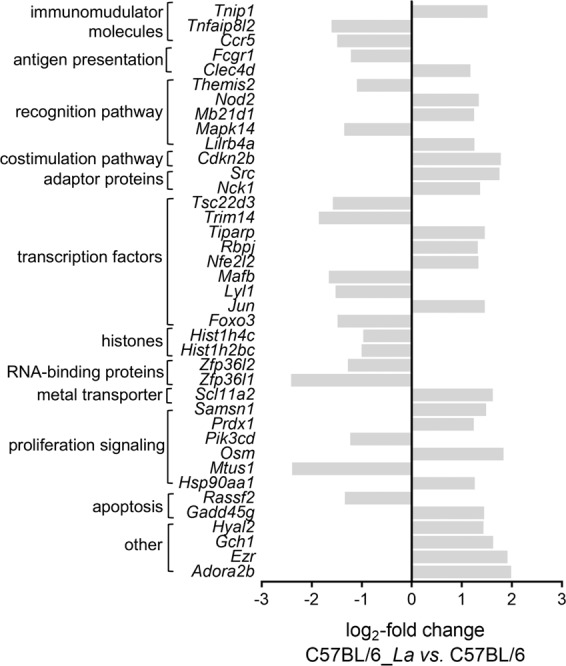
The fate of Leishmania infection can be strongly influenced by the host genetic background. In this work, we describe gene expression modulation of the immune system based on dual global transcriptome profiles of bone marrow-derived macrophages (BMDMs) from BALB/c and C57BL/6 mice infected with Leishmania amazonensis. A total of 12,641 host transcripts were identified according to the alignment to the Mus musculus genome. Differentially expressed genes (DEGs) profiling revealed a differential modulation of the basal genetic background between the two hosts independent of L. amazonensis infection. In addition, in response to early L. amazonensis infection, 10 genes were modulated in infected BALB/c vs. non-infected BALB/c macrophages; and 127 genes were modulated in infected C57BL/6 vs. non-infected C57BL/6 macrophages. These modulated genes appeared to be related to the main immune response processes, such as recognition, antigen presentation, costimulation and proliferation. The distinct gene expression was correlated with the susceptibility and resistance to infection of each host. Furthermore, upon comparing the DEGs in BMDMs vs. peritoneal macrophages, we observed no differences in the gene expression patterns of Jun, Fcgr1 and Il1b, suggesting a similar activation trends of transcription factor binding, recognition and phagocytosis, as well as the proinflammatory cytokine production in response to early L. amazonensis infection. Analysis of the DEG profile of the parasite revealed only one DEG among the 8,282 transcripts, indicating that parasite gene expression in early infection does not depend on the host genetic background.
利什曼原虫感染的命运可以受到宿主遗传背景的强烈影响。在这项工作中,我们描述了基于感染了莱什曼原虫亚马逊亚种的 BALB/c 和 C57BL/6 小鼠的骨髓来源巨噬细胞(BMDM)的双重全转录组图谱的免疫系统基因表达调节。根据与 Mus musculus 基因组的比对,共鉴定出 12641 个宿主转录本。差异表达基因(DEG)分析显示,在感染之前,两个宿主之间的基础遗传背景存在差异调节,而与 L. amazonensis 感染无关。此外,在感染早期,感染的 BALB/c 与未感染的 BALB/c 巨噬细胞中调节了 10 个基因;而感染的 C57BL/6 与未感染的 C57BL/6 巨噬细胞中调节了 127 个基因。这些调节基因似乎与主要的免疫反应过程有关,如识别、抗原呈递、共刺激和增殖。不同的基因表达与每个宿主的易感性和抗性有关。此外,在比较 BMDM 与腹腔巨噬细胞中的 DEGs 时,我们观察到 Jun、Fcgr1 和 Il1b 基因表达模式没有差异,这表明在感染早期,转录因子结合、识别和吞噬作用以及促炎细胞因子的产生存在相似的激活趋势。对寄生虫 DEG 谱的分析表明,在 8282 个转录本中只有一个 DEG,这表明寄生虫在早期感染中的基因表达不依赖于宿主遗传背景。