University of A Coruña, Department of Computer Science and Information Technology, A Coruña, Spain.
CITIC-Research Center of Information and Communication Technologies, University of A Coruña, A Coruña, Spain.
Sci Rep. 2019 Dec 27;9(1):19940. doi: 10.1038/s41598-019-56507-7.
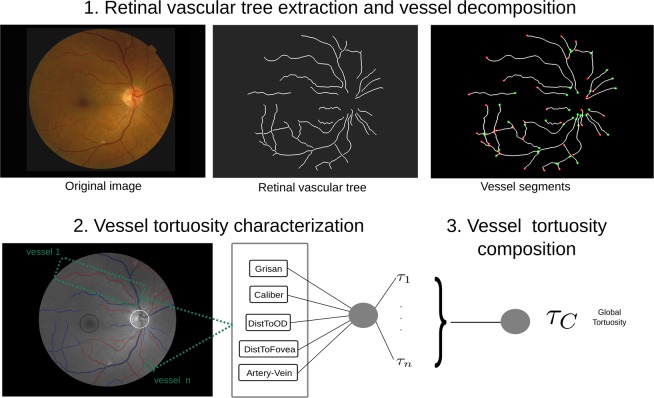
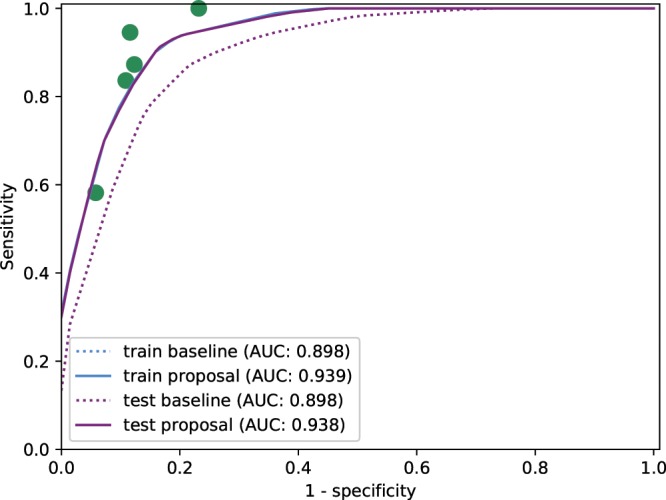
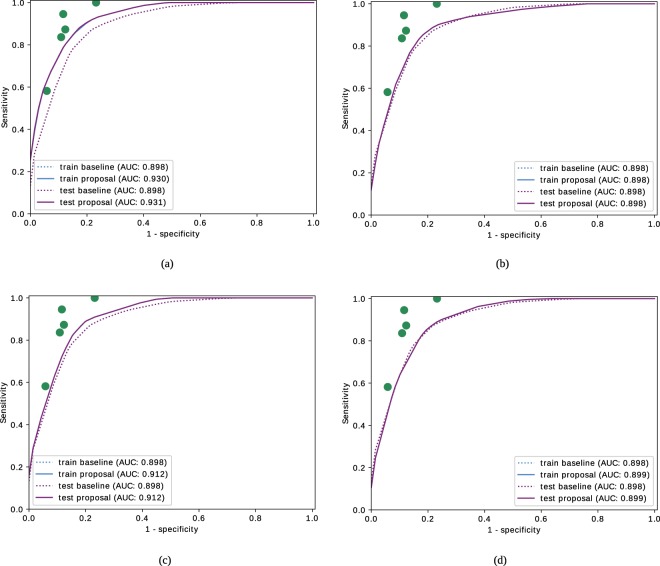
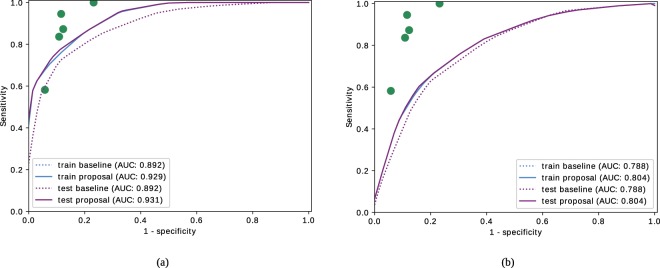
The retinal vascular tortuosity presents a valuable potential as a clinical biomarker of many relevant vascular and systemic diseases. Commonly, the existent approaches face the tortuosity quantification by means of fully mathematical representations of the vessel segments. However, the specialists, based on their diagnostic experience, commonly analyze additional domain-related information that is not represented in these mathematical metrics of reference. In this work, we propose a novel computational tortuosity metric that outperforms the mathematical metrics of reference also incorporating anatomical properties of the fundus image such as the distinction between arteries and veins, the distance to the optic disc, the distance to the fovea, and the vessel caliber. The evaluation of its prognostic performance shows that the integration of the anatomical factors provides an accurate tortuosity assessment that is more adjusted to the specialists' perception.
视网膜血管迂曲是许多相关血管和系统性疾病的一个有价值的临床生物标志物。通常,现有的方法通过对血管段进行完全的数学表示来进行迂曲度的量化。然而,专家们根据他们的诊断经验,通常会分析这些参考数学指标中没有表示的其他与领域相关的信息。在这项工作中,我们提出了一种新的计算迂曲度度量方法,该方法在纳入眼底图像的解剖学特性(如动脉和静脉的区分、与视盘的距离、与黄斑的距离以及血管口径)的情况下,优于参考的数学度量方法。对其预后性能的评估表明,解剖学因素的整合提供了一种更符合专家感知的准确的迂曲度评估。