
氧杂蒽酮通过激活Nrf-2和调节NF-κB、MAPK信号通路来保护铅诱导的慢性肾脏病(CKD)。
Xanthones protects lead-induced chronic kidney disease (CKD) via activating Nrf-2 and modulating NF-kB, MAPK pathway.
作者信息
Rana Mohammad Nasiruddin, Tangpong Jitbanjong, Rahman Md Atiar
机构信息
Biomedical Sciences, School of Allied Health Sciences, Walailak University, Thasala, Nakhon Si Thammarat, 80161, Thailand.
Department of Pharmacology, Zhejiang University School of Medicine, Hangzhou, 310058, PR China.
出版信息
Biochem Biophys Rep. 2019 Dec 10;21:100718. doi: 10.1016/j.bbrep.2019.100718. eCollection 2020 Mar.
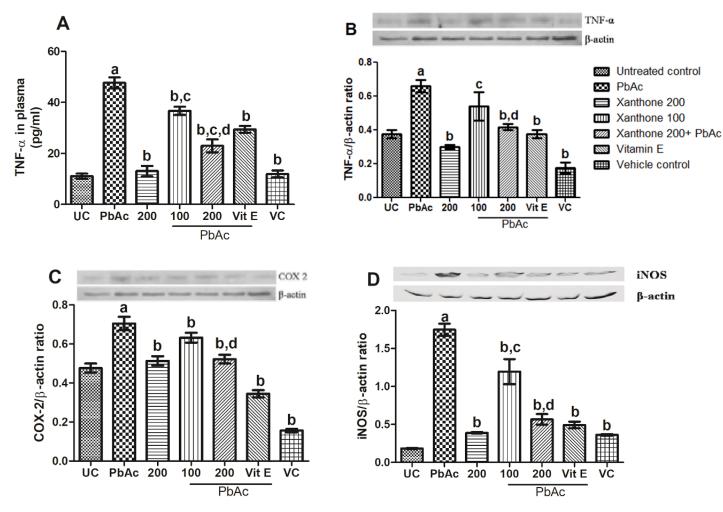
Xanthones from a tropical fruit of L. is known to possess a wide spectrum of pharmacologic properties, including antioxidant, anti-bacterial, anti-inflammatory, and antidiabetic activities. The current study aimed to assess the possible protective effects of xanthones against lead acetate (PbAc)-induced chronic kidney disease (CKD). To accomplish, antioxidant assays of xanthones, oxidative stress parameters, histopathology, inflammatory parameters were evaluated using PbAc-induced IRC male mice. The study was supported by molecular docking of respective organ receptor protein-ligand interaction. Results revealed that xanthones potentially scavenged the DPPH, superoxide, hydroxyl, and nitric oxide radicals. Oxidative stress, kidney dysfunction, inflammatory markers, and kidney apoptosis increased by PbAc were attenuated with the co-treatment of xanthones. The treatment remarkably improved the tissue architecture. Of note, prediction of activity study showed that protective role of xanthones could be due to its efficacy to activate the Nrf-2, regulate the intracellular [Ca], as well as downregulate the NF-kB, MAPK pathway. In a nutshell, xanthones could be a potential candidate for the management of PbAc-induced kidney damage.
来自罗望子属一种热带水果的氧杂蒽酮已知具有广泛的药理特性,包括抗氧化、抗菌、抗炎和抗糖尿病活性。当前研究旨在评估氧杂蒽酮对醋酸铅(PbAc)诱导的慢性肾脏病(CKD)的潜在保护作用。为实现这一目标,使用PbAc诱导的IRC雄性小鼠评估了氧杂蒽酮的抗氧化测定、氧化应激参数、组织病理学、炎症参数。该研究得到了各器官受体蛋白-配体相互作用的分子对接的支持。结果显示,氧杂蒽酮可能清除二苯基苦味酰基自由基(DPPH)、超氧阴离子、羟基和一氧化氮自由基。PbAc所增加的氧化应激、肾功能障碍、炎症标志物和肾细胞凋亡通过与氧杂蒽酮联合治疗而减轻。该治疗显著改善了组织结构。值得注意的是,活性预测研究表明,氧杂蒽酮的保护作用可能归因于其激活核因子E2相关因子2(Nrf-2)、调节细胞内钙离子浓度以及下调核因子κB(NF-κB)、丝裂原活化蛋白激酶(MAPK)途径的功效。简而言之,氧杂蒽酮可能是治疗PbAc诱导的肾损伤的潜在候选药物。




 Zotero 插件