Department of Cardiac Surgery, Rostock University Medical Center, 18059 Rostock, Germany.
Department Life, Light & Matter (LL&M), University of Rostock, A.-Einstein-Str. 25, 18057 Rostock, Germany.
Cells. 2019 Dec 27;9(1):78. doi: 10.3390/cells9010078.
Bone marrow (BM)-derived stem cells with their various functions and characteristics have become a well-recognized source for the cell-based therapies. However, knowledge on their therapeutic potential and the shortage for a cross-link between distinct BM-derived stem cells, primed after the onset of myocardial infarction (MI), seems to be still rudimentary. Therefore, the post-examination of the therapeutic characteristics of such primed hematopoietic CD133 and mesenchymal CD271 stem cells was the object of the present study.
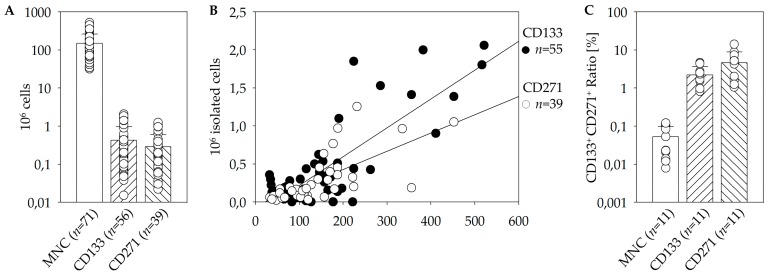
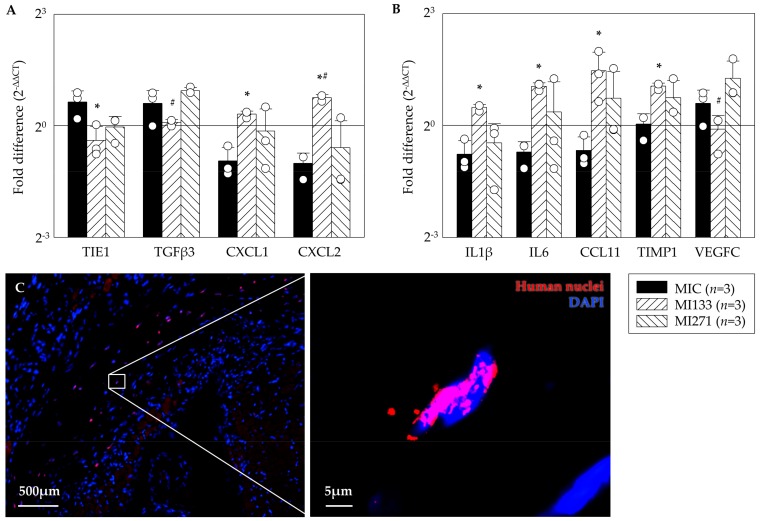
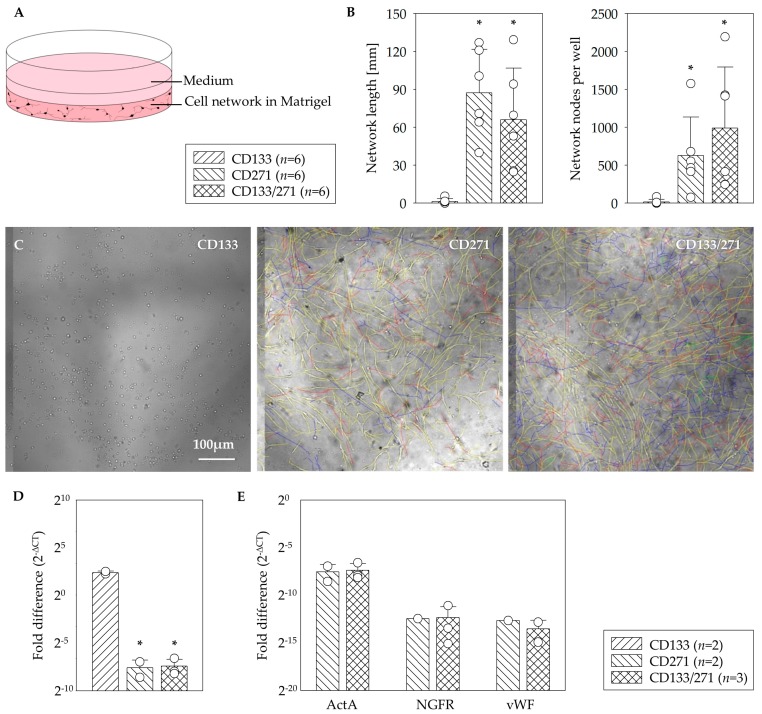
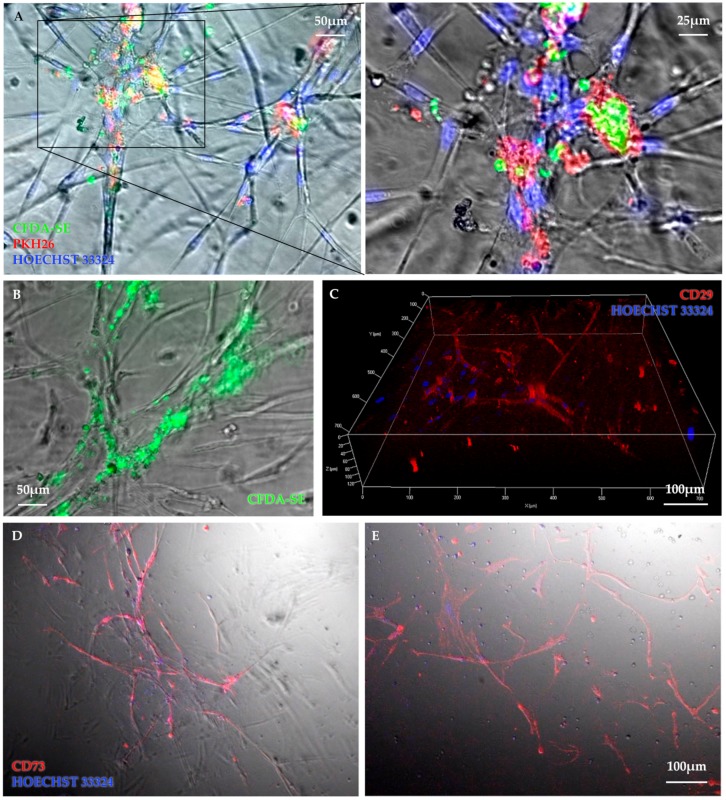
The effects of respective CD133 and CD271 mononuclear cells alone as well as in the co-culture model have been explored with focus on their angiogenic potential. The phenotypic analysis revealed a small percentage of isolated cells expressing both surface markers. Moreover, target stem cells isolated with our standardized immunomagnetic isolation procedure did not show any negative alterations following BM storage in regard to cell numbers and/or quality. In vitro network formation relied predominantly on CD271 stem cells when compared with single CD133 culture. Interestingly, CD133 cells contributed in the tube formation, only if they were cultivated in combination with CD271 cells. Additional to the in vitro examination, therapeutic effects of the primed stem cells were investigated 48 h post MI in a murine model. Hence, we have found a lower expression of transforming growth factor βeta 3 (TGFβ3) as well as an increase of the proangiogenic factors after CD133 cell treatment in contrast to CD271 cell treatment. On the other hand, the CD271 cell therapy led to a lower expression of the inflammatory cytokines.
The interactions between CD271 and CD133 subpopulations the extent to which the combination may enhance cardiac regeneration has still not been investigated so far. We expect that the multiple characteristics and various regenerative effects of CD271 cells alone as well as in combination with CD133 will result in an improved therapeutic impact on ischemic heart disease.
骨髓(BM)衍生的干细胞具有多种功能和特性,已成为细胞治疗的公认来源。然而,关于其治疗潜力以及在心肌梗死(MI)发作后不同骨髓衍生干细胞之间的联系的知识似乎仍然很基础。因此,本研究旨在检查这种诱导的造血 CD133 和间充质 CD271 干细胞的治疗特征。
我们探讨了单独使用各自的 CD133 和 CD271 单核细胞以及共培养模型的效果,重点关注其血管生成潜力。表型分析显示,分离的细胞中有一小部分表达两种表面标志物。此外,用我们标准化的免疫磁分离程序分离的靶干细胞在 BM 储存后,细胞数量和/或质量没有任何负面改变。与单独的 CD133 培养相比,体外网络形成主要依赖于 CD271 干细胞。有趣的是,如果 CD133 细胞与 CD271 细胞共培养,则它们在管形成中起作用。除了体外检查外,我们还在 MI 后 48 小时在小鼠模型中研究了诱导的干细胞的治疗效果。因此,与 CD271 细胞治疗相比,我们发现 CD133 细胞治疗后转化生长因子βeta 3(TGFβ3)的表达降低,促血管生成因子增加。另一方面,CD271 细胞治疗导致炎症细胞因子的表达降低。
CD271 和 CD133 亚群之间的相互作用以及组合可能增强心脏再生的程度迄今为止尚未得到研究。我们预计,CD271 细胞单独以及与 CD133 联合的多种特征和各种再生效应将导致对缺血性心脏病的治疗效果得到改善。