Shanghai Institute of Biological Products, Shanghai, People's Republic of China.
East China University of Science and Technology, Shanghai, People's Republic of China.
Emerg Microbes Infect. 2020 Jan 2;9(1):78-87. doi: 10.1080/22221751.2019.1708214. eCollection 2020.
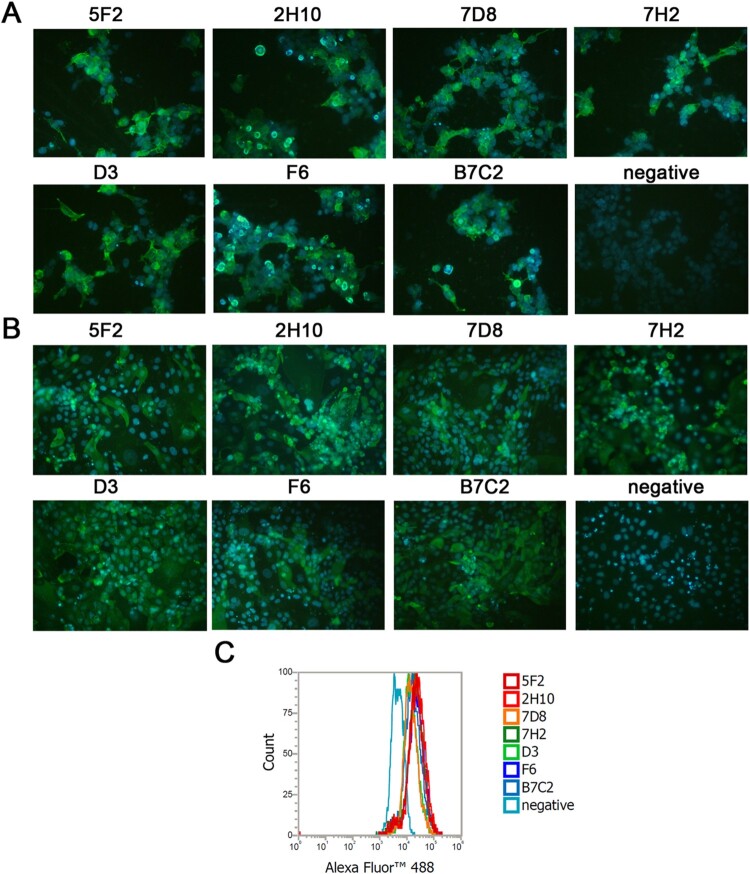
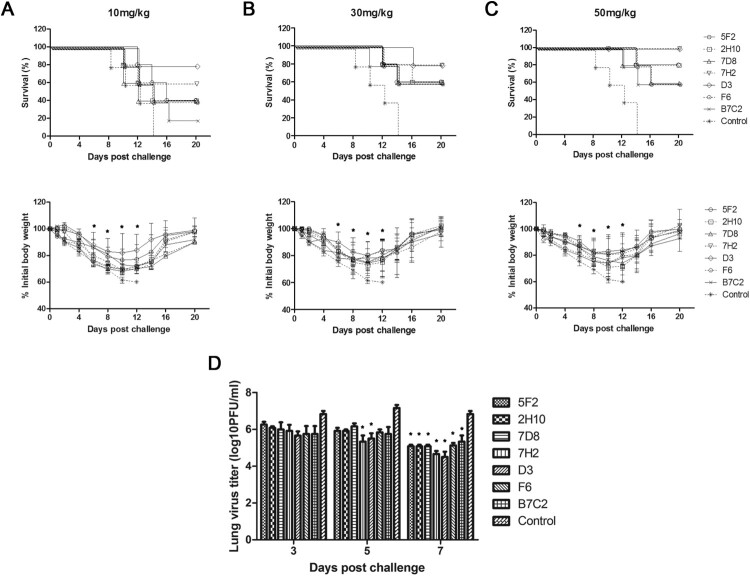
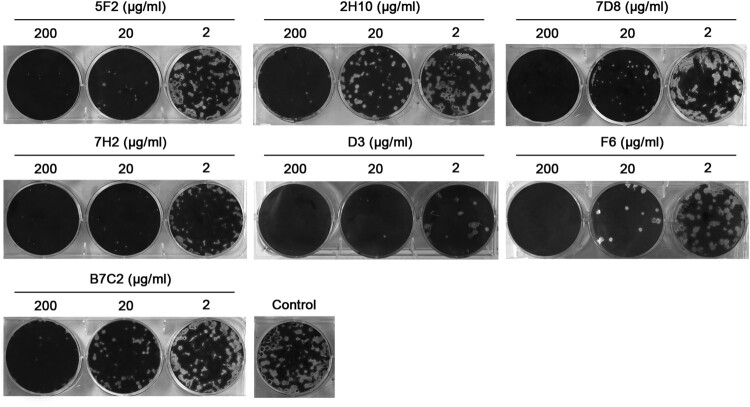
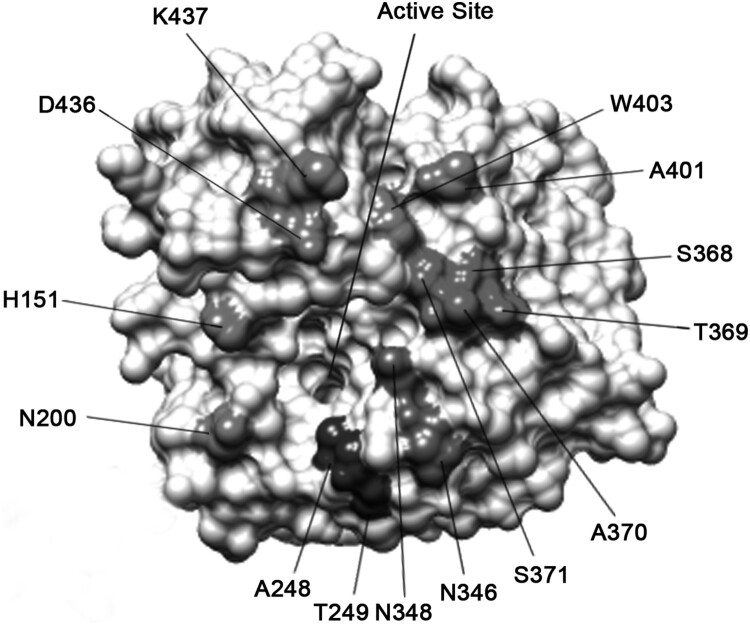
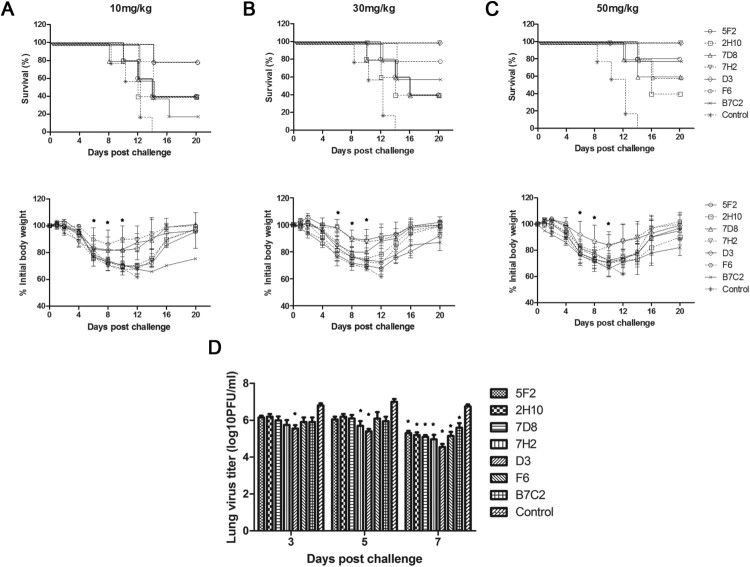
The H7N9 influenza virus has been circulating in China for more than six years. The neuraminidase (NA) has gained great concern for the development of antiviral drugs, therapeutic antibodies, and new vaccines. In this study, we screened seven mouse monoclonal antibodies (mAbs) and compared their protective effects against H7N9 influenza virus. The epitope mapping from escape mutants showed that all the seven mAbs could bind to the head region of the N9 NA close to the enzyme activity sites, and four key sites of N9 NA were reported for the first time. The mAbs D3 and 7H2 could simultaneously inhibit the cleavage of the sialic acid of fetuin protein with large molecular weight and NA-XTD with small molecule weight in the NA inhibition experiment, prevent the formation of virus plaque at a low concentration, and effectively protect the mice from the challenge of the lethal dose of H7N9 virus.
H7N9 流感病毒在中国已流行六年有余。神经氨酸酶(NA)因其在抗病毒药物、治疗性抗体和新型疫苗研发方面的重要作用而备受关注。本研究筛选了七株针对 H7N9 流感病毒的鼠源单克隆抗体(mAb),并比较了它们的保护效果。逃逸突变体的表位作图显示,这 7 株 mAb 均能结合到 N9 NA 头部靠近酶活性中心的区域,且首次报道了 N9 NA 的 4 个关键结合位点。mAb D3 和 7H2 能在 NA 抑制实验中同时抑制大分子胎球蛋白和小分子 NA-XTD 上唾液酸的切割,在低浓度时能阻止病毒斑的形成,能有效保护小鼠免受致死剂量 H7N9 病毒的攻击。