The Key Laboratory of Cardiovascular Remodeling and Function Research, Chinese Ministry of Education and Chinese Ministry of Health, The State and Shandong Province Joint Key Laboratory of Translational Cardiovascular Medicine, Qilu Hospital of Shandong University, Jinan, China.
Department of Cardiovascular Medicine, Tai'an City Central Hospital, Taian, China.
Biosci Rep. 2020 Jan 31;40(1). doi: 10.1042/BSR20193267.
Atherosclerosis (AS) is a chronic inflammatory disease that contributes to multiple cardiovascular diseases (CVDs), and foam cell formation plays important roles in the progression of AS. There is an urgent need to identify new molecular targets for treating AS, and thereby improve the quality of life and reduce the financial burden of individuals with CVD.
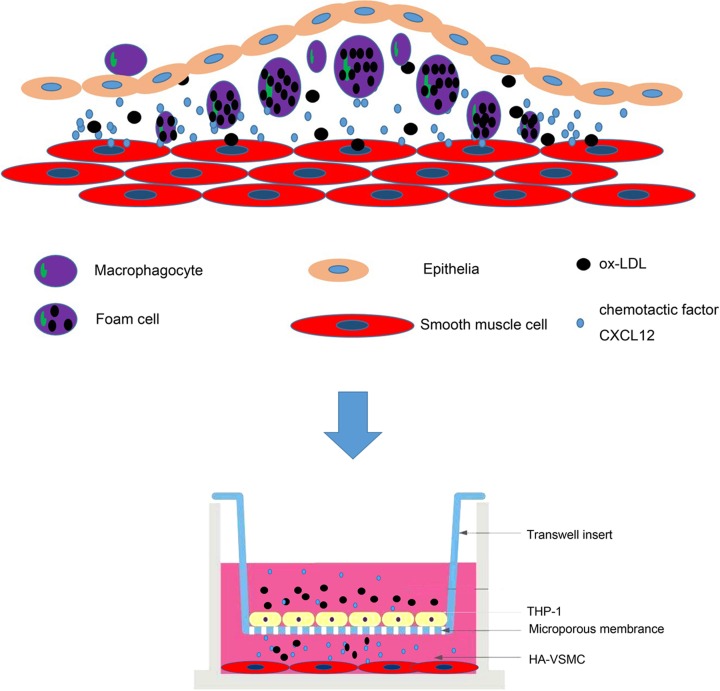
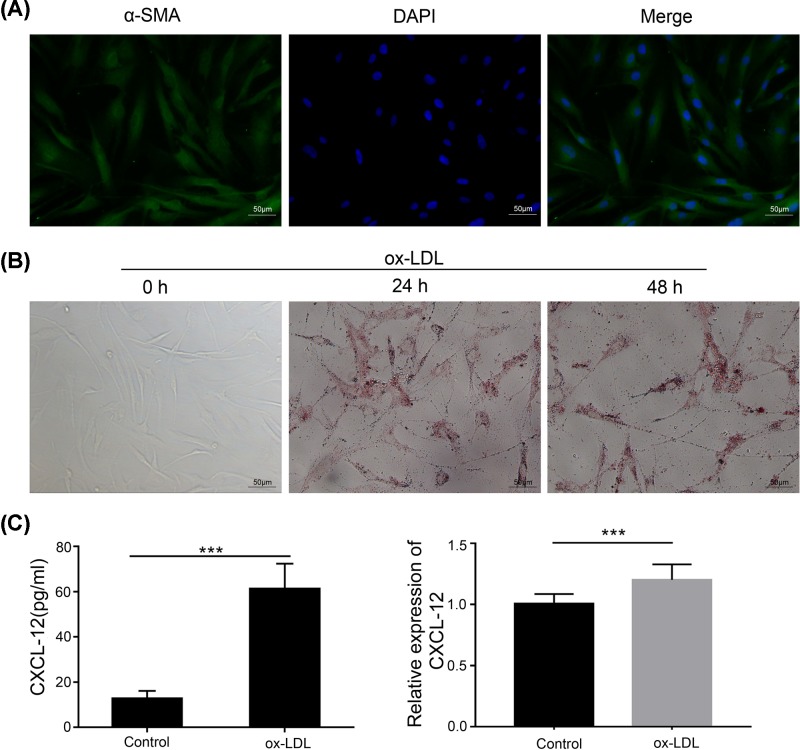
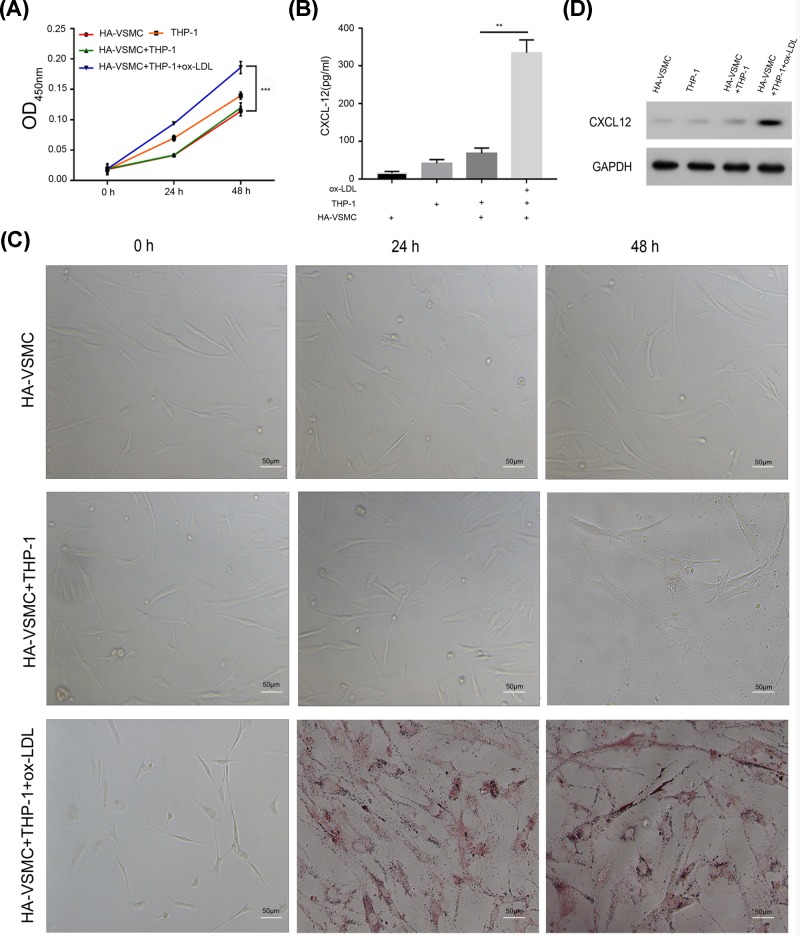
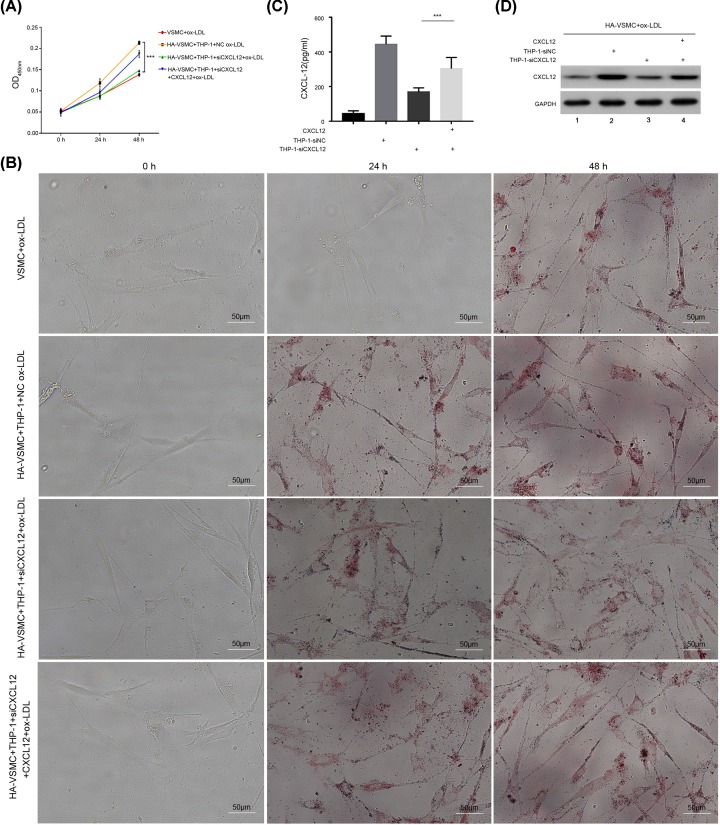
An in vitro model of AS was generated by treating THP-1 cells and human aortic vascular smooth muscle cells (HA-VSMCs) with oxidized low-density lipoproteins (ox-LDLs). HA-VSMC proliferation and foam cell formation were detected by the MTT assay and Oil Red O staining. C-X-C motif chemokine 12 (CXCL12) expression was suppressed by siRNA. An AS rat model was established by feeding rats a high-fat diet and vitamin D2 for 3 weeks. Histopathology examinations were conducted by Hematoxylin and Eosin (H&E) staining and the levels ionized calcium-binding adapter molecule 1 (IBA1) and α smooth muscle actin (α-SMA) expression were determined by ELISA assays and immunohistochemistry.
An in vitro model of AS was established with THP-1 cells. CXCL12 expression in the model THP-1 cells was significantly increased when compared with its expression in control cells. Suppression of CXCL12 expression reduced the progression of AS in the cell model. Moreover, CXCL12 promoted AS in the in vivo rat model.
Our results suggest that CXCL12 plays an important role in promoting the progression of AS. Furthermore, inhibition of CXCL12 might suppress the development of AS by inhibiting HA-VSMC proliferation and their transformation to foam cells.
动脉粥样硬化(AS)是一种慢性炎症性疾病,可导致多种心血管疾病(CVDs),泡沫细胞形成在 AS 的进展中起重要作用。迫切需要确定治疗 AS 的新分子靶点,从而提高 CVD 患者的生活质量并减轻其经济负担。
通过用氧化低密度脂蛋白(ox-LDL)处理 THP-1 细胞和人主动脉血管平滑肌细胞(HA-VSMCs),建立 AS 的体外模型。通过 MTT 测定法和油红 O 染色检测 HA-VSMC 的增殖和泡沫细胞形成。用 siRNA 抑制 C-X-C 基序趋化因子 12(CXCL12)的表达。通过用高脂肪饮食和维生素 D2 喂养大鼠 3 周来建立 AS 大鼠模型。通过苏木精和伊红(H&E)染色进行组织病理学检查,并通过 ELISA 测定法和免疫组织化学法测定离子钙结合接头分子 1(IBA1)和α平滑肌肌动蛋白(α-SMA)的表达水平。
建立了 THP-1 细胞的 AS 体外模型。与对照细胞相比,模型 THP-1 细胞中的 CXCL12 表达明显增加。抑制 CXCL12 表达可减少细胞模型中 AS 的进展。此外,CXCL12 促进了体内大鼠模型中的 AS。
我们的结果表明,CXCL12 在促进 AS 的进展中起重要作用。此外,抑制 CXCL12 可能通过抑制 HA-VSMC 的增殖及其向泡沫细胞的转化来抑制 AS 的发展。