Zheng Liuyi, Lin Guangyao, Li Ruyue, Gan Haining, Huang Xuejun, Yao Nan, Cai Dake, Zhao Ziming, Hu Zixuan, Li Minyi, Xu Huazhen, Li Leyi, Peng Sha, Zhao Xinxin, Lai Yijing, Chen Yuxing, Huang Dane
The Fifth Clinical College of Guangzhou University of Chinese Medicine, Guangzhou, China.
Guangdong Provincial Key Laboratory of Research and Development in Traditional Chinese Medicine, Guangdong Provincial Second Hospital of Traditional Chinese Medicine (Guangdong Provincial Engineering Technology Research Institute of Traditional Chinese Medicine), Guangzhou, China.
Front Pharmacol. 2022 Jul 25;13:881078. doi: 10.3389/fphar.2022.881078. eCollection 2022.
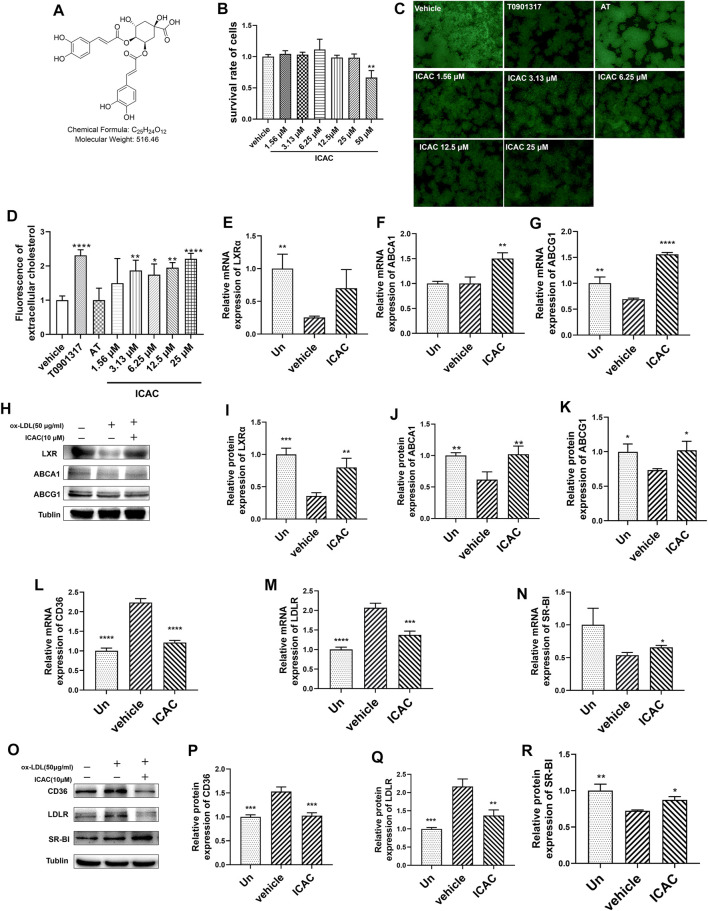
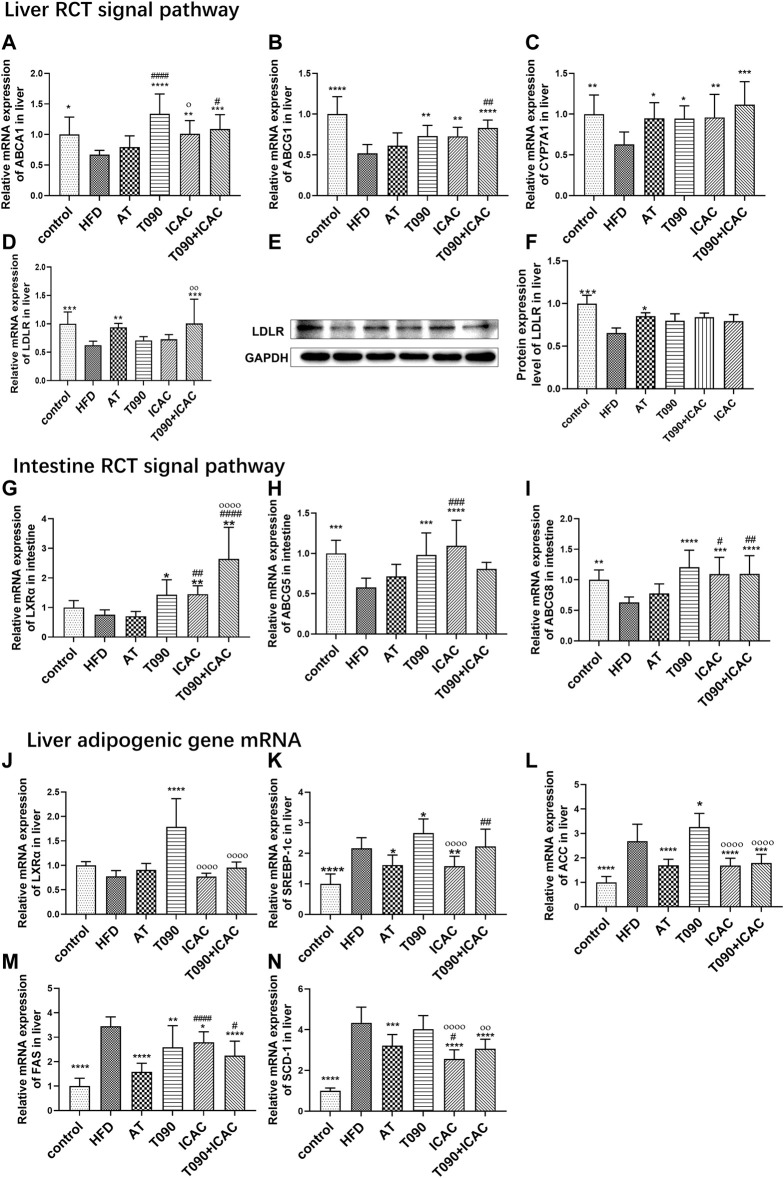
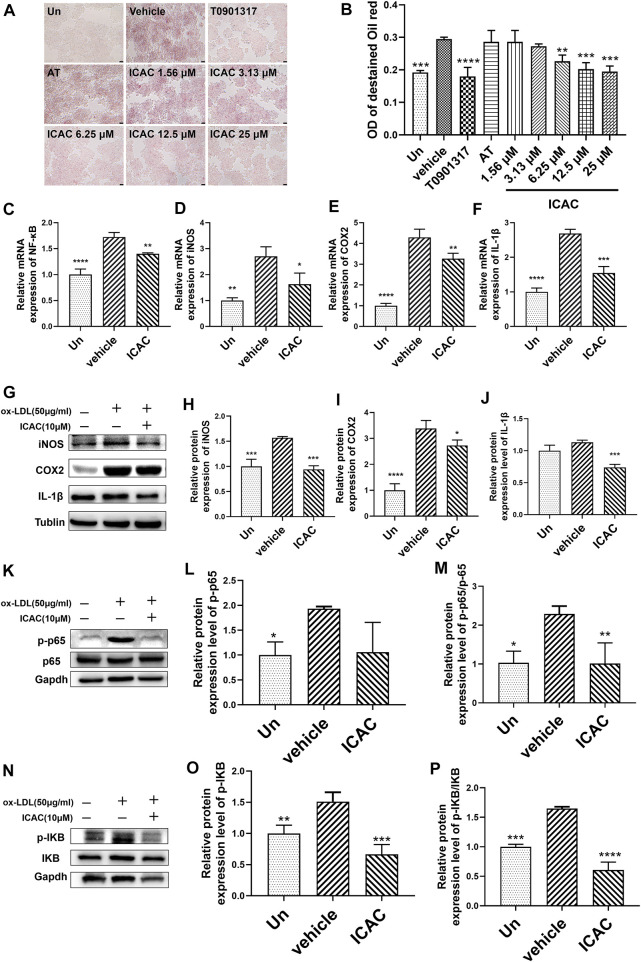
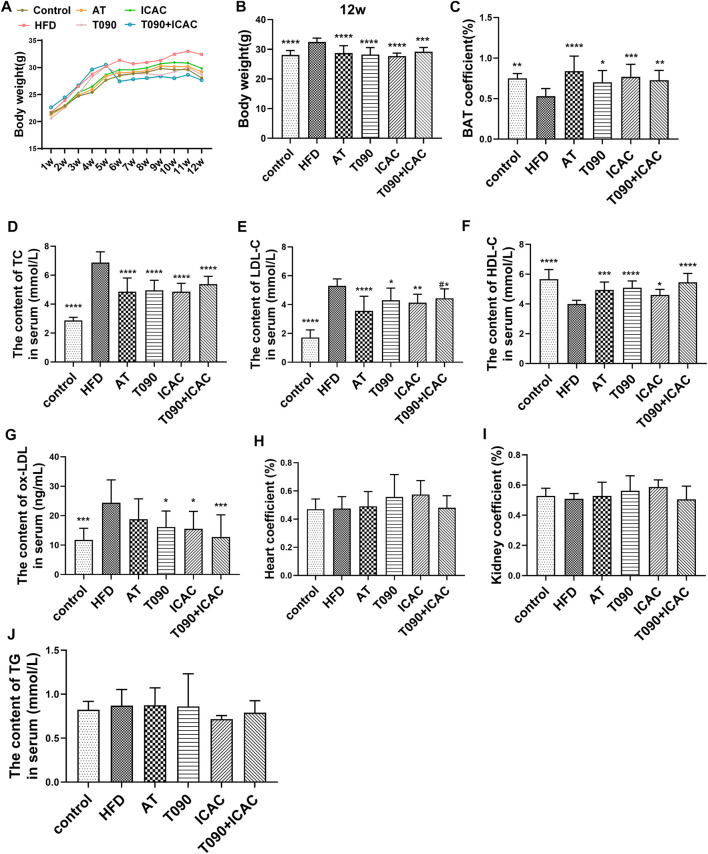
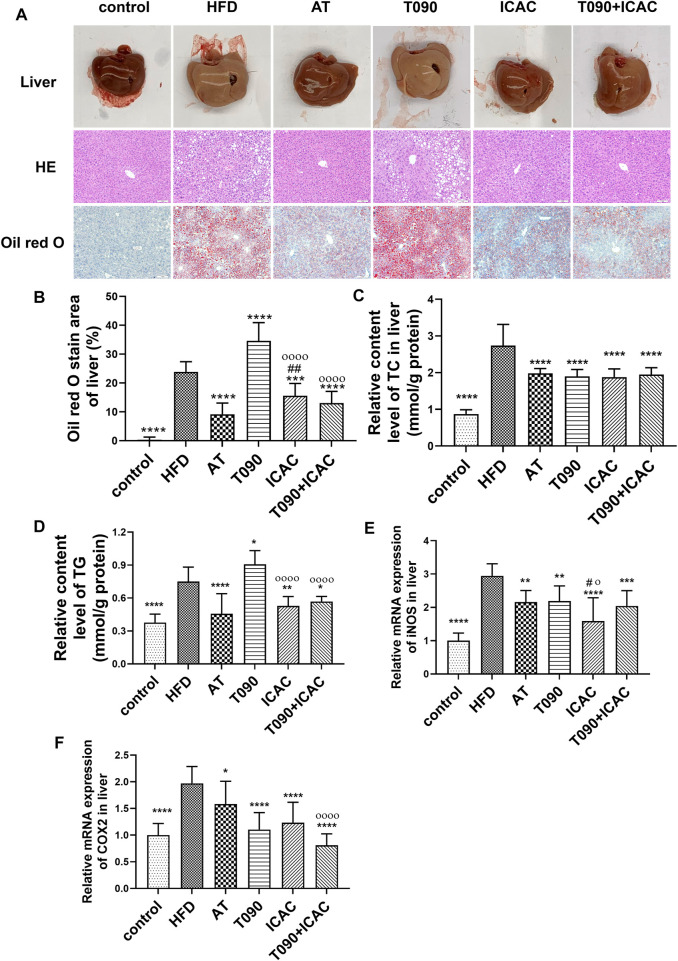
Promoting cholesterol reverse transport (RCT) has been proven to be a promising hyperlipidemia therapy since it is more effective for the treatment of atherosclerosis (AS) caused by hyperlipidemia. Liver X receptor (LXR) agonists can accelerate RCT, but most of them trigger undesirable liver steatosis due to the activation of liver LXRα. We aim to figure out whether isochlorogenic acid C (ICAC) facilitates RCT without causing hepatic steatosis. study, we established foam macrophages and macrophages with loaded NBD-cholesterol models to investigate the competence of RCT promoting ICAC. RT-qPCR and Western blot were used to verify ICAC's regulation of RCT and NF-κB inflammatory pathways. In this study, male 6-week-old C57BL/6 mice were fed a high-fat diet (HFD) to investigate ICAC's anti-hyperlipidemic effect and its functions in regulating RCT. The anti-hyperlipidemic effect of ICAC was evaluated by blood and liver lipid levels, liver hematoxylin, oil red o staining, and liver coefficient. Finally, mRNA levels of genes involved in RCT and inflammation pathways in the liver and intestine were detected by RT-qPCR. ICAC prevented macrophages from foaming by up-regulating the LXRα mediated RCT pathway and down-regulating expression of the cholesterol absorption genes LDLR and CD36, as well as suppressing iNOS, COX2, and IL-1β inflammatory factors. In HFD-fed mice, ICAC significantly lowered the lipid level both in the serum and the liver. Mechanistic studies showed that ICAC strengthened the RCT pathway in the liver and intestine but didn't affect liver LXRα. Furthermore, ICAC impeded both adipogenesis and the inflammatory response in the liver. ICAC accelerated RCT without affecting liver LXRα, thus resulting in a lipid-lowering effect without increasing liver adipogenesis. Our results indicated that ICAC could be a new RCT promoter for hyperlipidemia treatment without causing liver steatosis.
促进胆固醇逆向转运(RCT)已被证明是一种很有前景的高脂血症治疗方法,因为它对治疗高脂血症引起的动脉粥样硬化(AS)更有效。肝脏X受体(LXR)激动剂可以加速RCT,但由于肝脏LXRα的激活,它们中的大多数会引发不良的肝脂肪变性。我们旨在弄清楚异绿原酸C(ICAC)是否能促进RCT而不引起肝脂肪变性。在本研究中,我们建立了泡沫巨噬细胞和负载NBD-胆固醇的巨噬细胞模型,以研究ICAC促进RCT的能力。采用RT-qPCR和蛋白质免疫印迹法验证ICAC对RCT和NF-κB炎症通路的调节作用。在本研究中,对6周龄雄性C57BL/6小鼠喂食高脂饮食(HFD),以研究ICAC的抗高脂血症作用及其在调节RCT中的功能。通过血液和肝脏脂质水平、肝脏苏木精、油红O染色和肝脏系数评估ICAC的抗高脂血症作用。最后,通过RT-qPCR检测肝脏和肠道中参与RCT和炎症通路的基因的mRNA水平。ICAC通过上调LXRα介导的RCT途径、下调胆固醇吸收基因LDLR和CD36的表达,以及抑制iNOS、COX2和IL-1β炎症因子,防止巨噬细胞泡沫化。在喂食HFD的小鼠中,ICAC显著降低了血清和肝脏中的脂质水平。机制研究表明,ICAC增强了肝脏和肠道中的RCT途径,但不影响肝脏LXRα。此外,ICAC抑制了肝脏中的脂肪生成和炎症反应。ICAC加速了RCT,而不影响肝脏LXRα,从而在不增加肝脏脂肪生成的情况下产生降脂作用。我们的结果表明,ICAC可能是一种新的用于高脂血症治疗的RCT促进剂,且不会引起肝脂肪变性。