Department of MR, Shandong Medical Imaging Research Institute, Shandong University, Jinan, Shandong, China; Division of MR Research, Department of Radiology, Johns Hopkins University, MD, United States.
Department of Respiratory Medicine, Shandong Provincial Qianfoshan Hospital, Shandong University, Jinan, Shandong, China.
Neuroimage Clin. 2020;25:102153. doi: 10.1016/j.nicl.2019.102153. Epub 2019 Dec 27.
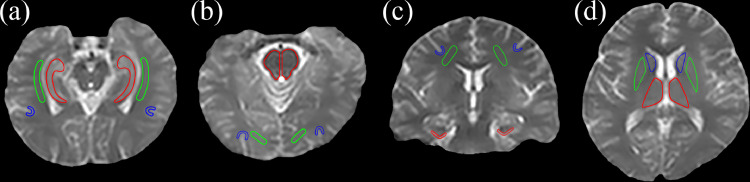
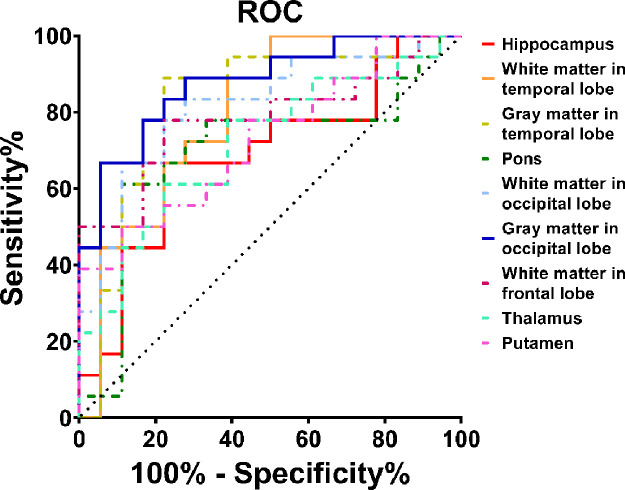
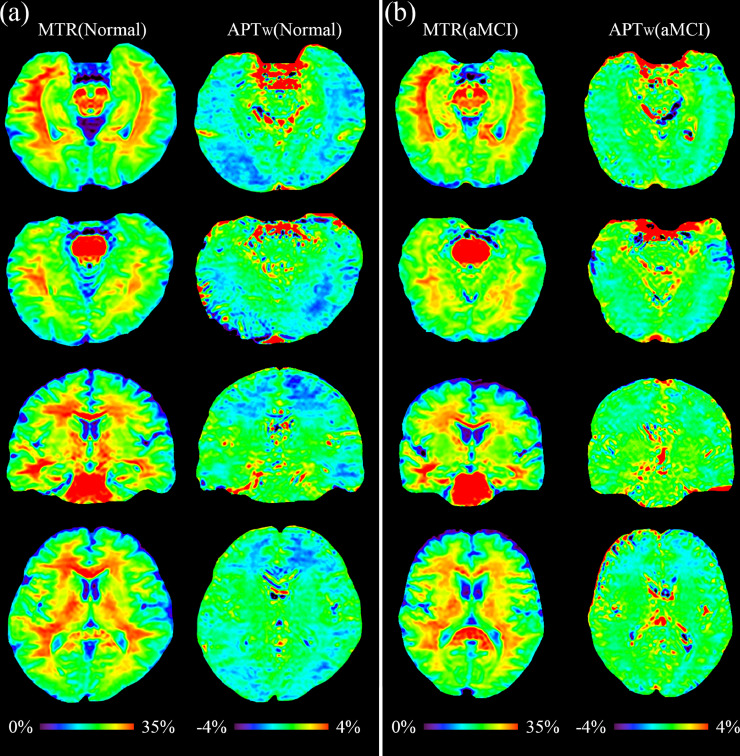
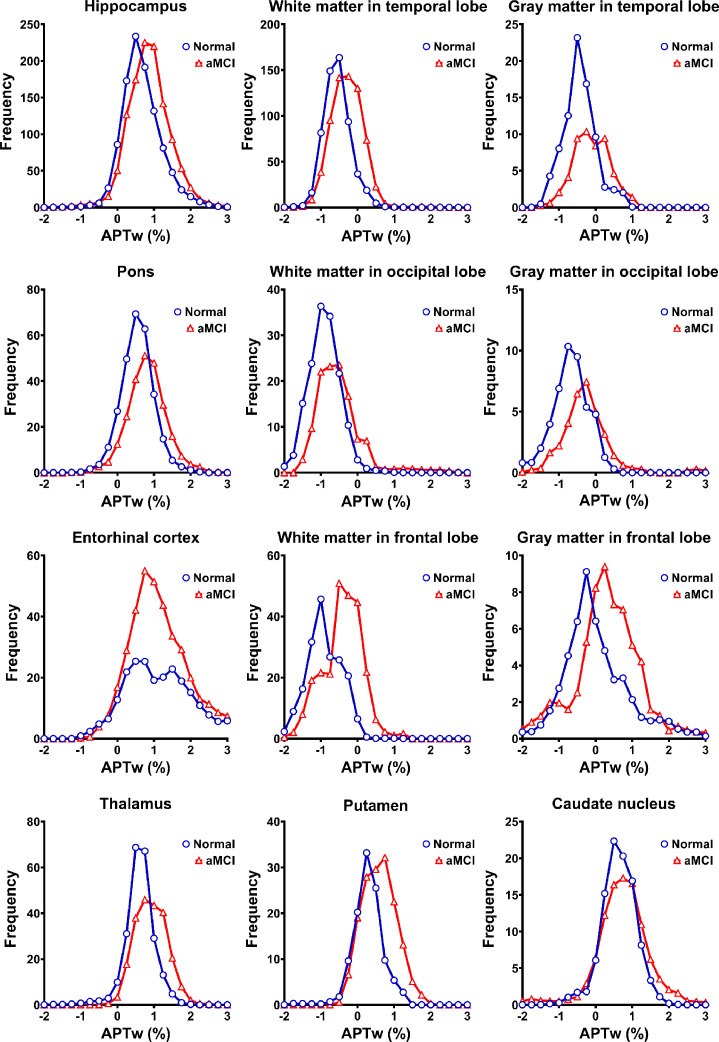
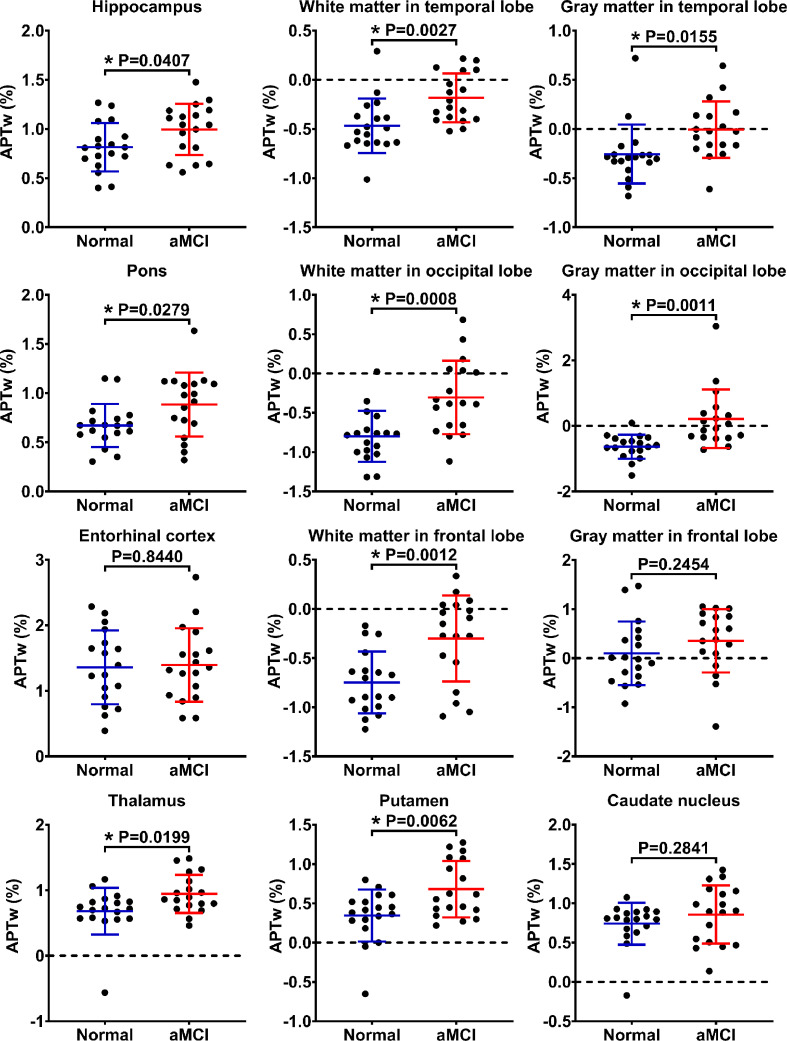
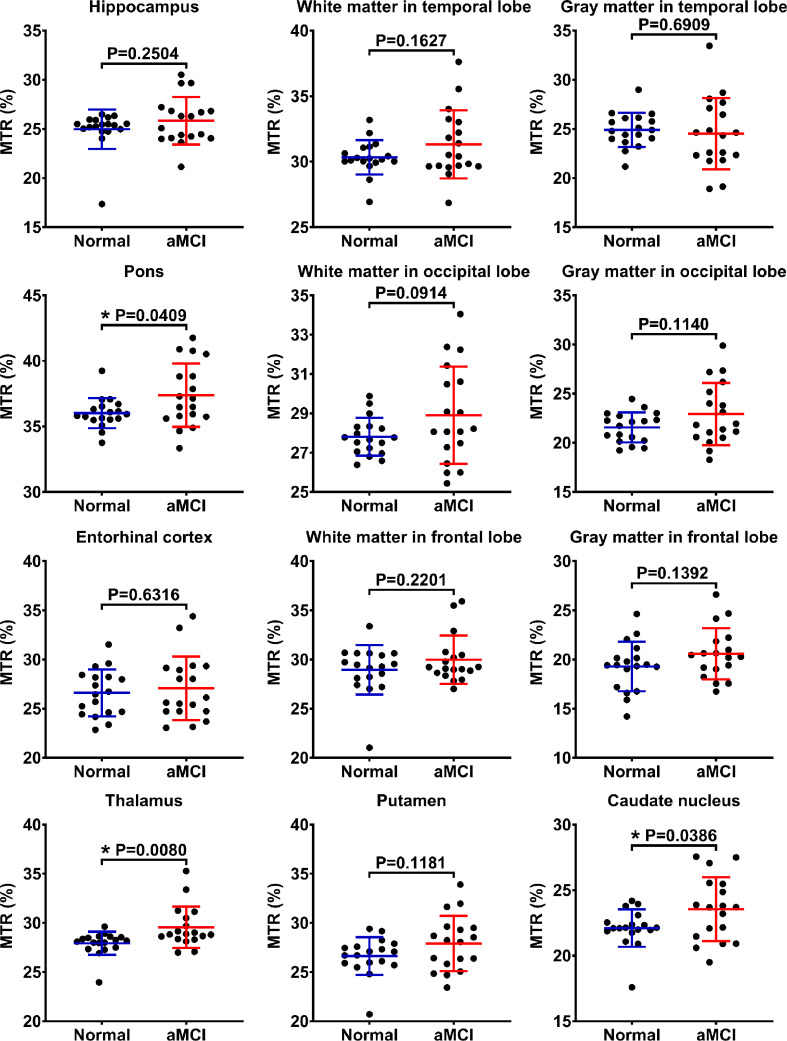
Amide proton transfer-weighted (APTw) MRI is a novel molecular imaging technique that can noninvasively detect endogenous cellular proteins and peptides in tissue. Here, we demonstrate the feasibility of protein-based APTw MRI in characterizing amnestic mild cognitive impairment (aMCI). Eighteen patients with confirmed aMCI and 18 matched normal controls were scanned at 3 Tesla. The APTw, as well as conventional magnetization transfer ratio (MTR), signal differences between aMCI and normal groups were assessed by the independent samples t-test, and the receiver-operator-characteristic analysis was used to assess the diagnostic performance of APTw. When comparing the normal control group, aMCI brains typically had relatively higher APTw signals. Quantitatively, APTw intensity values were significantly higher in nine of 12 regions of interest in aMCI patients than in normal controls. The largest areas under the receiver-operator-characteristic curves were 0.88 (gray matter in occipital lobe) and 0.82 (gray matter in temporal lobe, white matter in occipital lobe) in diagnosing aMCI patients. On the contrary, MTR intensity values were significantly higher in only three of 12 regions of interest in the aMCI group. Additionally, the age dependency analyses revealed that these cross-sectional APTw/MTR signals had an increasing trend with age in most brain regions for normal controls, but a decreasing trend with age in most brain regions for aMCI patients. Our early results show the potential of the APTw signal as a new imaging biomarker for the noninvasive molecular diagnosis of aMCI.
酰胺质子转移加权(APTw)MRI 是一种新型的分子影像学技术,可以无创地检测组织中的内源性细胞蛋白和肽。在这里,我们证明了基于蛋白质的 APTw MRI 在诊断遗忘型轻度认知障碍(aMCI)中的可行性。18 名确诊为 aMCI 的患者和 18 名匹配的正常对照组在 3 Tesla 下进行扫描。采用独立样本 t 检验评估 APTw 以及常规磁化转移率(MTR)在 aMCI 和正常组之间的信号差异,并采用受试者工作特征分析评估 APTw 的诊断性能。与正常对照组相比,aMCI 大脑通常具有相对较高的 APTw 信号。定量分析显示,在 12 个感兴趣区中有 9 个的 APTw 强度值在 aMCI 患者中显著高于正常对照组。诊断 aMCI 患者的受试者工作特征曲线下最大面积分别为 0.88(枕叶灰质)和 0.82(颞叶灰质、枕叶白质)。相反,在 aMCI 组中,只有 12 个感兴趣区中的 3 个 MTR 强度值显著升高。此外,年龄依赖性分析表明,对于正常对照组,这些横断面 APTw/MTR 信号在大多数脑区随年龄增长呈上升趋势,而对于 aMCI 患者,在大多数脑区随年龄增长呈下降趋势。我们的初步结果表明,APTw 信号作为一种新的影像学生物标志物,可能用于无创性分子诊断 aMCI。