Min Young Gi, Park Canaria, Kwon Young-Nam, Shin Je-Young, Sung Jung-Joon, Hong Yoon-Ho
Department of Neurology, Seoul National University Hospital, Seoul 03080, Korea.
Seoul National University College of Medicine and Neuroscience Research Institute, Seoul National University Medical Research Council, Seoul 03080, Korea.
Exp Neurobiol. 2019 Dec 31;28(6):720-726. doi: 10.5607/en.2019.28.6.720.
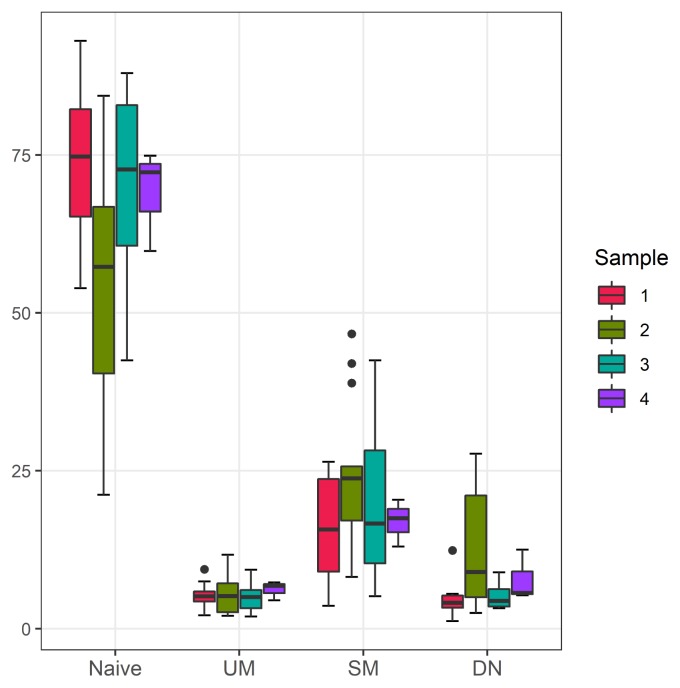
Myasthenia gravis (MG) is an autoimmune neuromuscular junction disorders mediated by various autoantibodies. Although most patients with MG require chronic immunosuppressive treatment to control disease activity, appropriate surveillance biomarkers that monitor disease activity or potential toxicity of immunosuppressants are yet to be developed. Herein, we investigated quantitative distribution of peripheral blood B cell subsets and transcriptional profiles of memory B cells (CD19+ CD27+) in several subgroups of MG patients classified according to the Myasthenia Gravis Foundation of America (MGFA) Clinical Classification. This study suggests potential immunologic B-cell markers that may guide treatment decision in future clinical settings.
重症肌无力(MG)是一种由多种自身抗体介导的自身免疫性神经肌肉接头疾病。尽管大多数重症肌无力患者需要长期免疫抑制治疗来控制疾病活动,但尚未开发出能够监测疾病活动或免疫抑制剂潜在毒性的合适监测生物标志物。在此,我们研究了根据美国重症肌无力基金会(MGFA)临床分类划分的几个重症肌无力患者亚组中,外周血B细胞亚群的定量分布以及记忆B细胞(CD19 + CD27 +)的转录谱。这项研究提示了潜在的免疫B细胞标志物,可能会在未来临床环境中指导治疗决策。