Varedi Amir, Rahman Hafeez, Kumar Dileep, Catrow Jonathan L, Cox James E, Liu Tong, Florell Scott R, Boucher Kenneth M, Okwundu Nwanneka, Burnett William J, VanBrocklin Matthew W, Grossman Douglas
Huntsman Cancer Institute, University of Utah Health Sciences Center, Salt Lake City, UT 84112, USA.
Health Science Center Cores, University of Utah Health Sciences Center, Salt Lake City, UT 84112, USA.
Pharmaceuticals (Basel). 2020 Jan 2;13(1):7. doi: 10.3390/ph13010007.
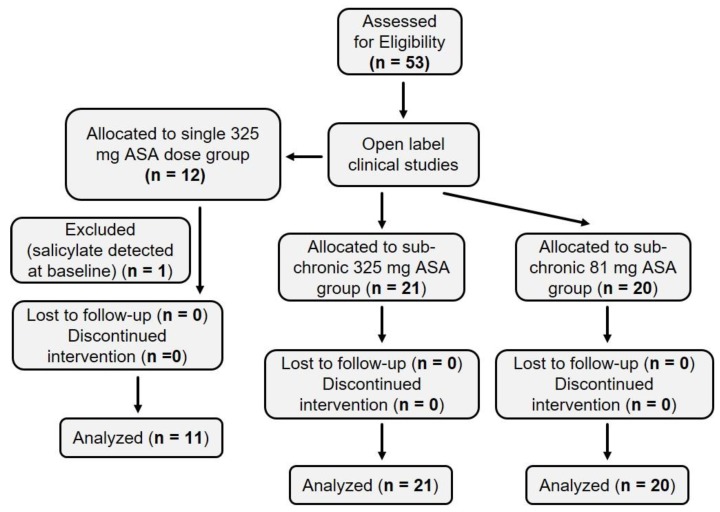
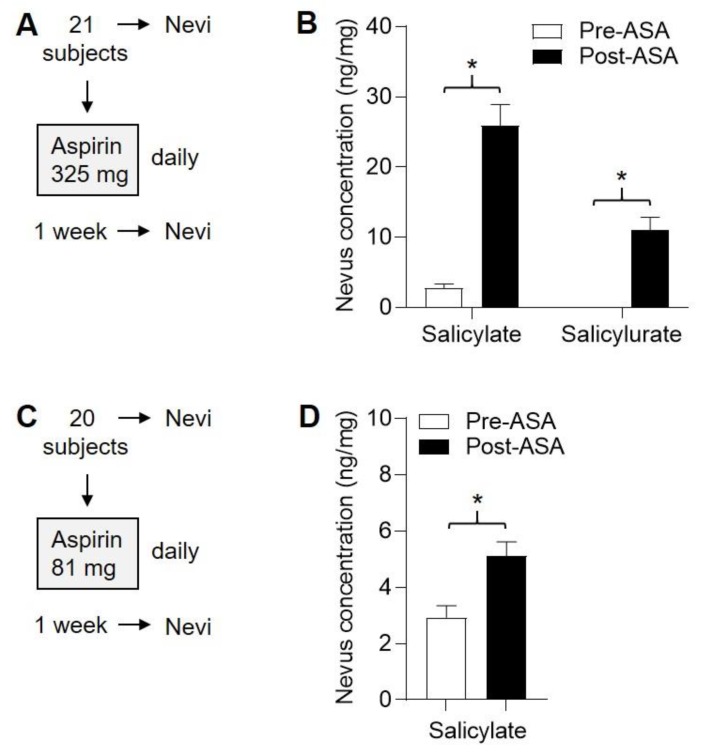
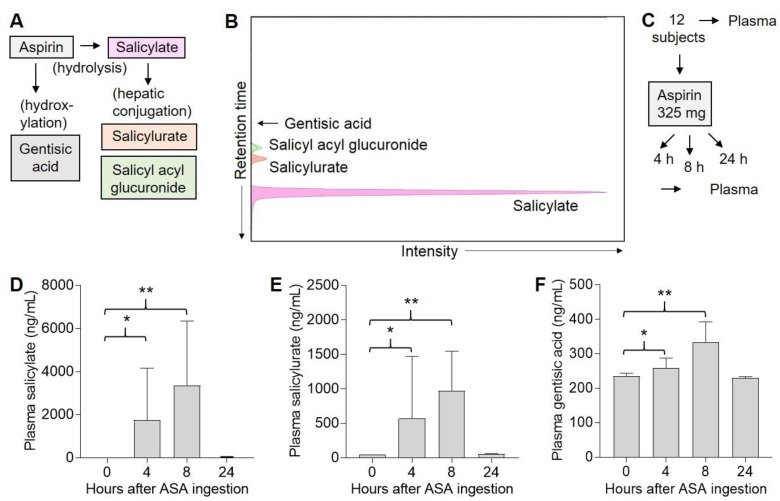
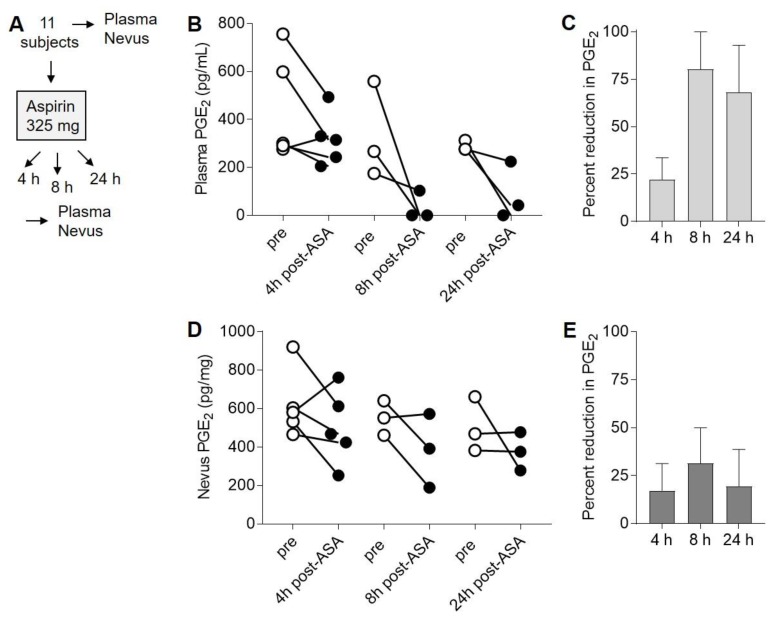
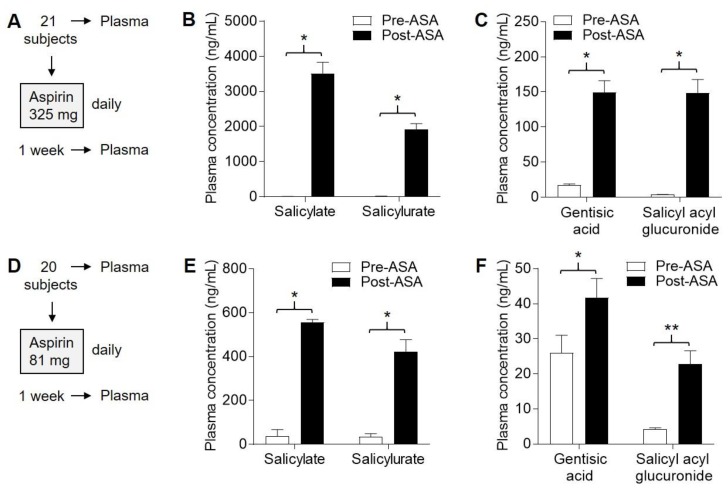
Potential anti-inflammatory and anticarcinogenic effects of aspirin (ASA) may be suitable for melanoma chemoprevention, but defining biomarkers in relevant target tissues is prerequisite to performing randomized controlled chemoprevention trials. We conducted open-label studies with ASA in 53 human subjects with melanocytic nevi at increased risk for melanoma. In a pilot study, 12 subjects received a single dose (325 mg) of ASA; metabolites salicylate, salicylurate, and gentisic acid were detected in plasma after 4-8 h, and prostaglandin E2 (PGE) was suppressed in both plasma and nevi for up to 24 h. Subsequently, 41 subjects received either 325 or 81 mg ASA (nonrandomized) daily for one week. ASA metabolites were consistently detected in plasma and nevi, and PGE levels were significantly reduced in both plasma and nevi. Subchronic ASA dosing did not affect 5" adenosine monophosphate-activated protein kinase (AMPK) activation in nevi or leukocyte subsets in peripheral blood, although metabolomic and cytokine profiling of plasma revealed significant decreases in various (non-ASA-derived) metabolites and inflammatory cytokines. In summary, short courses of daily ASA reduce plasma and nevus PGE and some metabolites and cytokines in plasma of human subjects at increased risk for melanoma. PGE may be a useful biomarker in blood and nevi for prospective melanoma chemoprevention studies with ASA.
阿司匹林(ASA)潜在的抗炎和抗癌作用可能适用于黑色素瘤的化学预防,但在相关靶组织中确定生物标志物是开展随机对照化学预防试验的前提条件。我们对53名患黑色素瘤风险增加的有黑素细胞痣的人类受试者进行了阿司匹林开放标签研究。在一项试点研究中,12名受试者接受了单剂量(325毫克)的阿司匹林;4至8小时后在血浆中检测到代谢物水杨酸、水杨尿酸和龙胆酸,并且前列腺素E2(PGE)在血浆和痣中被抑制长达24小时。随后,41名受试者每天接受325毫克或81毫克阿司匹林(非随机),持续一周。在血浆和痣中持续检测到阿司匹林代谢物,并且血浆和痣中的PGE水平均显著降低。亚慢性阿司匹林给药不影响痣中5'腺苷单磷酸激活蛋白激酶(AMPK)的激活或外周血中白细胞亚群,尽管血浆的代谢组学和细胞因子分析显示各种(非阿司匹林衍生的)代谢物和炎性细胞因子显著减少。总之,短期每日服用阿司匹林可降低患黑色素瘤风险增加的人类受试者血浆和痣中的PGE以及血浆中的一些代谢物和细胞因子。PGE可能是血液和痣中的一个有用生物标志物,用于阿司匹林前瞻性黑色素瘤化学预防研究。