Botnar Research Centre, NIHR Biomedical Research Unit Oxford, Nuffield Department of Musculoskeletal Sciences, University of Oxford, Oxford, UK.
Nuffield Department of Women's and Reproductive Health, University of Oxford, Oxford, UK.
BMC Med. 2020 Jan 7;18(1):3. doi: 10.1186/s12916-019-1470-y.
Endometriosis is a gynaecological condition characterised by immune cell infiltration and distinct inflammatory signatures found in the peritoneal cavity. In this study, we aim to characterise the immune microenvironment in samples isolated from the peritoneal cavity in patients with endometriosis.
We applied mass cytometry (CyTOF), a recently developed multiparameter single-cell technique, in order to characterise and quantify the immune cells found in peritoneal fluid and peripheral blood from endometriosis and control patients.
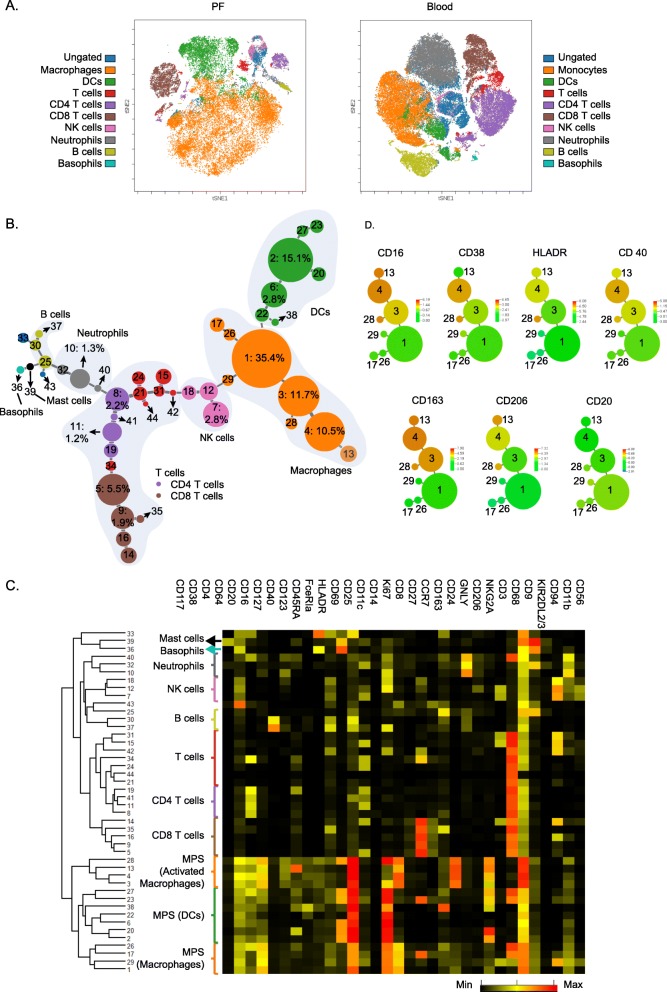
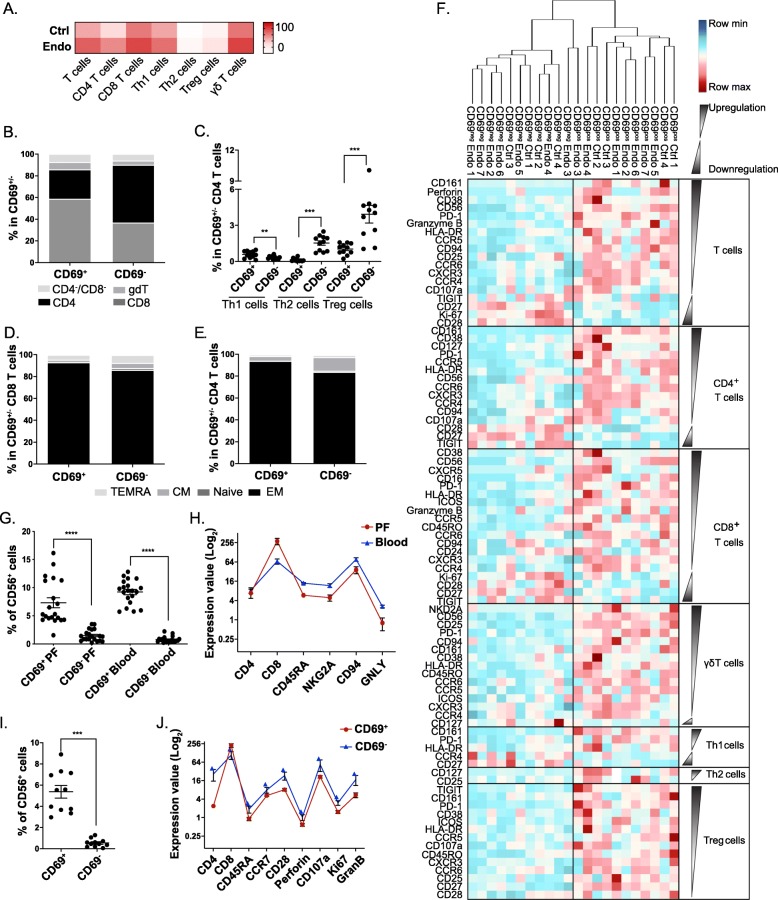
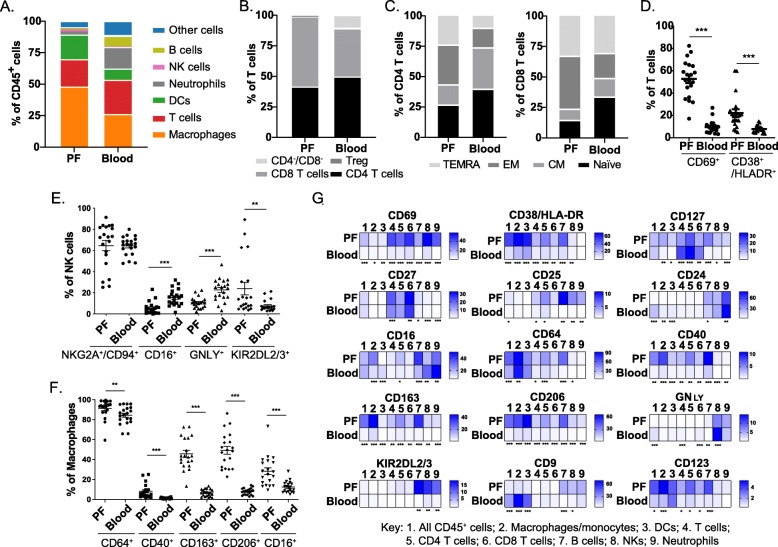
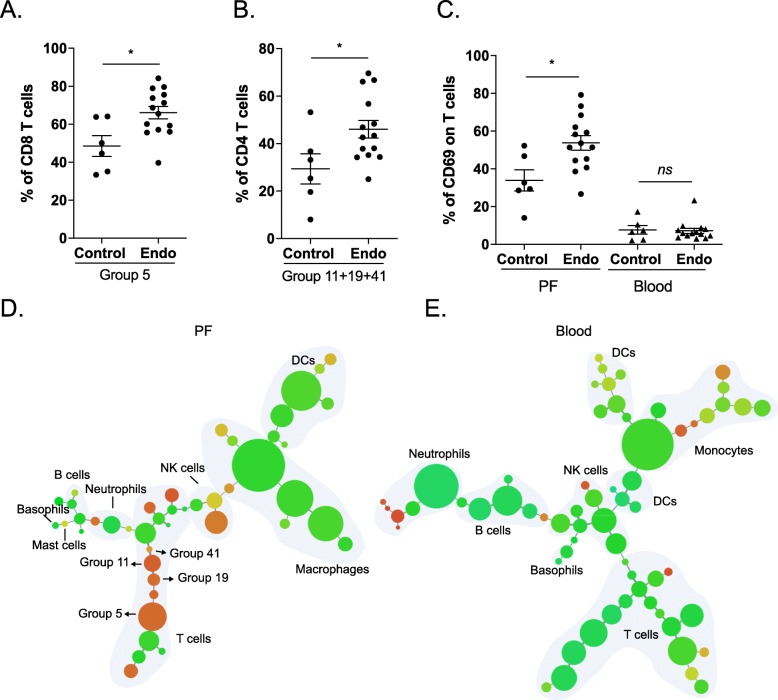
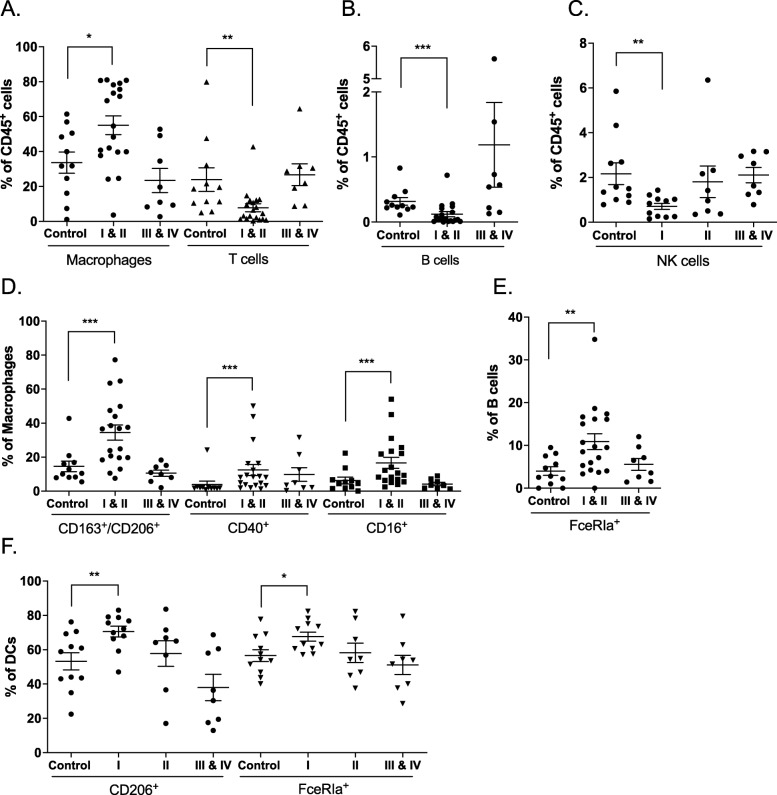
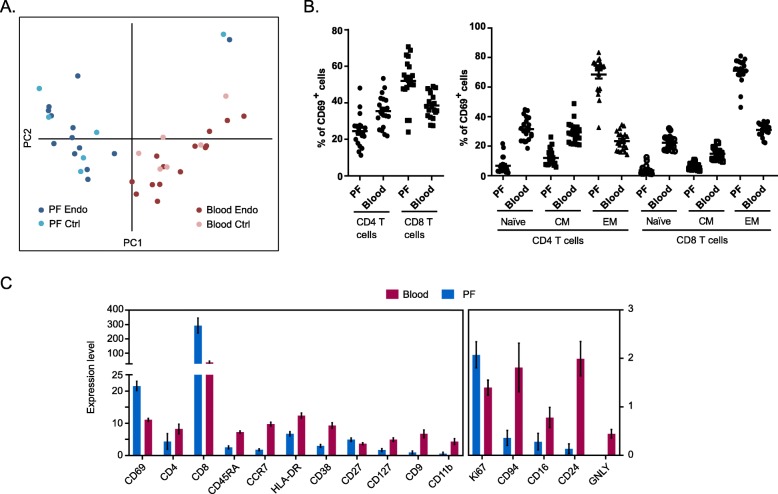
Our results demonstrate the presence of more than 40 different distinct immune cell types within the peritoneal cavity. This suggests that there is a complex and highly heterogeneous inflammatory microenvironment underpinning the pathology of endometriosis. Stratification by clinical disease stages reveals a dynamic spectrum of cell signatures suggesting that adaptations in the inflammatory system occur due to the severity of the disease. Notably, among the inflammatory microenvironment in peritoneal fluid (PF), the presence of CD69 T cell subsets is increased in endometriosis when compared to control patient samples. On these CD69 cells, the expression of markers associated with T cell function are reduced in PF samples compared to blood. Comparisons between CD69 and CD69 populations reveal distinct phenotypes across peritoneal T cell lineages. Taken together, our results suggest that both the innate and the adaptive immune system play roles in endometriosis.
This study provides a systematic characterisation of the specific immune environment in the peritoneal cavity and identifies cell immune signatures associated with endometriosis. Overall, our results provide novel insights into the specific cell phenotypes governing inflammation in patients with endometriosis. This prospective study offers a useful resource for understanding disease pathology and opportunities for identifying therapeutic targets.
子宫内膜异位症是一种妇科疾病,其特征是免疫细胞浸润和在腹腔中发现的独特炎症特征。在这项研究中,我们旨在描述子宫内膜异位症患者腹腔样本中的免疫微环境。
我们应用了质谱流式细胞术(CyTOF),这是一种最近开发的多参数单细胞技术,以对来自子宫内膜异位症和对照患者的腹腔液和外周血中的免疫细胞进行特征描述和定量。
我们的结果表明,腹腔内存在 40 多种不同的免疫细胞类型。这表明,子宫内膜异位症的病理基础是复杂的、高度异质的炎症微环境。根据临床疾病阶段进行分层,揭示了细胞特征的动态谱,表明由于疾病的严重程度,炎症系统发生了适应性变化。值得注意的是,在腹腔液(PF)的炎症微环境中,与对照患者样本相比,子宫内膜异位症患者中 CD69 T 细胞亚群的存在增加。在这些 CD69 细胞上,与 T 细胞功能相关的标记物在 PF 样本中的表达减少。CD69 和 CD69 群体之间的比较揭示了腹膜 T 细胞谱系之间的不同表型。总的来说,我们的结果表明,固有和适应性免疫系统都在子宫内膜异位症中发挥作用。
本研究对腹腔内特定免疫环境进行了系统描述,并确定了与子宫内膜异位症相关的细胞免疫特征。总体而言,我们的结果提供了子宫内膜异位症患者炎症中调控特定细胞表型的新见解。这项前瞻性研究为了解疾病病理和识别治疗靶点提供了有价值的资源。