Immunology and Immunotherapy Program, Center for Applied Medical Research, University of Navarra, Pamplona, Spain.
Department of Oncological Sciences, Icahn School of Medicine at Mount Sinai, New York, NY, United States.
Front Immunol. 2019 Dec 20;10:2990. doi: 10.3389/fimmu.2019.02990. eCollection 2019.
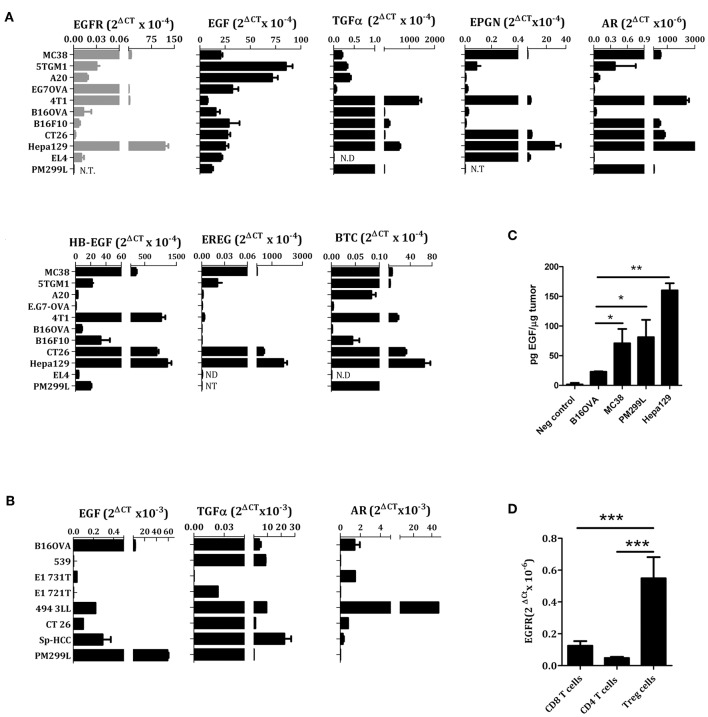
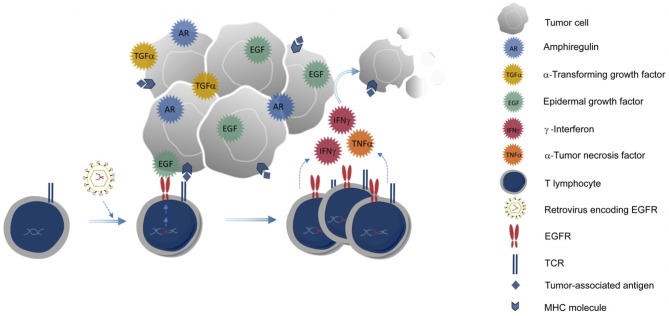
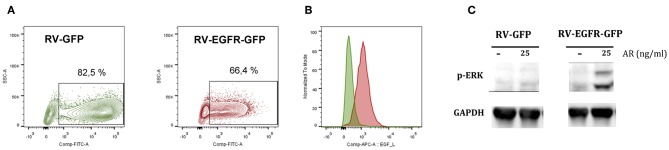
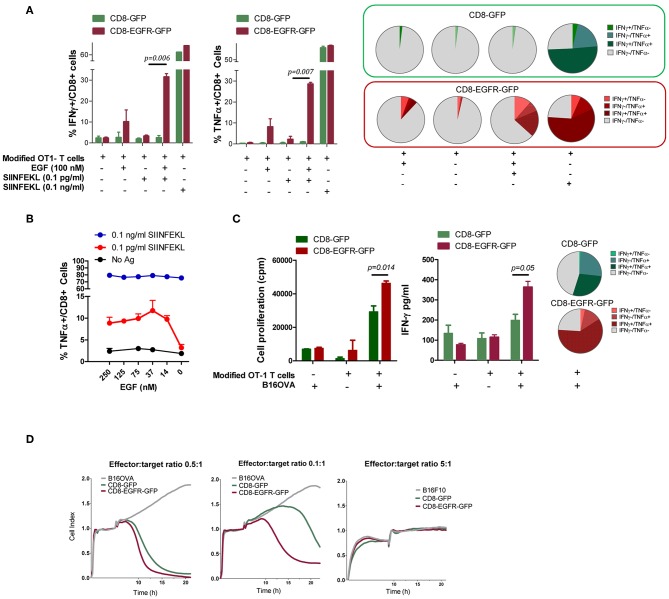
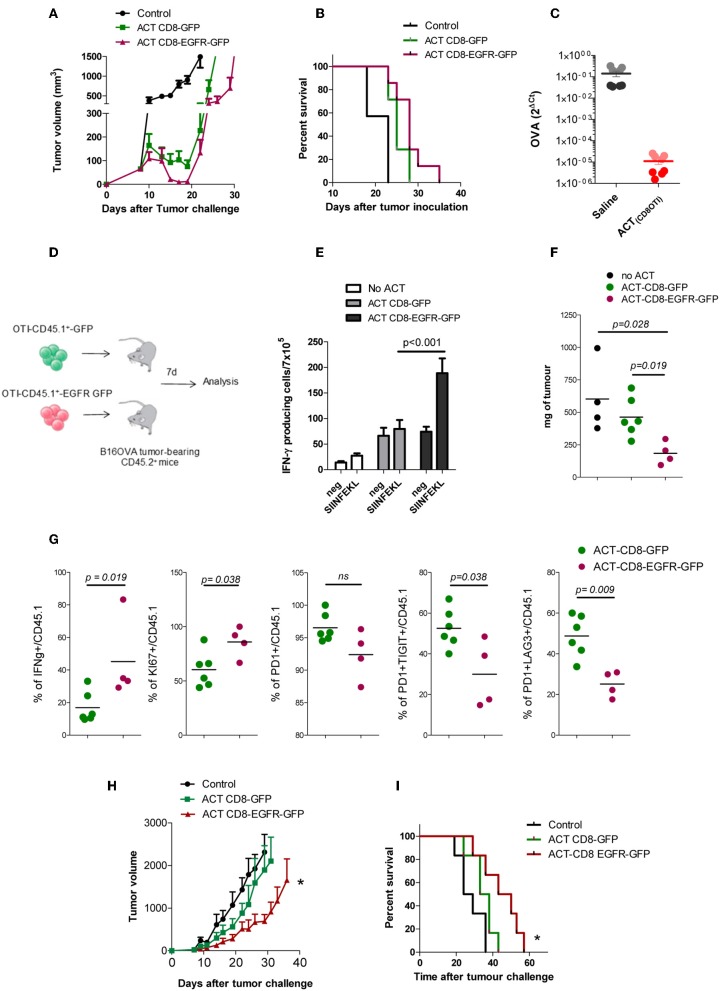
Adoptive immunotherapy with -expanded tumor-infiltrating lymphocytes (TILs) has achieved objective clinical responses in a significant number of patients with cancer. The failure of many patients to develop long-term tumor control may be, in part, due to exhaustion of transferred T cells in the presence of a hostile tumor microenvironment. In several tumor types, growth and survival of carcinoma cells appear to be sustained by a network of receptors/ligands of the ErbB family. We speculated that if transferred T cells could benefit from EGFR ligands produced by the tumor, they might proliferate better and exert their anti-tumor activities more efficiently. We found that CD8 T cells transduced with a retrovirus to express EGFR responded to EGFR ligands activating the EGFR signaling pathway. These EGFR-expressing effector T cells proliferated better and produced more IFN-γ and TNF-α in the presence of EGFR ligands produced by tumor cells . EGFR-expressing CD8 T cells from OT-1 mice were more efficient killing B16-OVA cells than control OT-1 CD8 T cells. Importantly, EGFR-expressing OT-1 T cells injected into B16-OVA tumor bearing mice were recruited into the tumor, expressed lower levels of the exhaustion markers PD1, TIGIT, and LAG3, and were more efficient in delaying tumor growth. Our results suggest that genetic modification of CD8 T cells to express EGFR might be considered in immunotherapeutic strategies based on adoptive transfer of anti-tumor T cells against cancers expressing EGFR ligands.
过继性免疫疗法采用扩增的肿瘤浸润淋巴细胞(TILs),在许多癌症患者中取得了显著的客观临床应答。许多患者未能实现长期肿瘤控制,部分原因可能是由于转移的 T 细胞在存在敌对的肿瘤微环境中衰竭。在几种肿瘤类型中,癌细胞的生长和存活似乎是由 ErbB 家族的受体/配体网络维持的。我们推测,如果转移的 T 细胞能从肿瘤产生的 EGFR 配体中受益,它们可能会更好地增殖,并更有效地发挥其抗肿瘤活性。我们发现,用逆转录病毒转导表达 EGFR 的 CD8 T 细胞可响应激活 EGFR 信号通路的 EGFR 配体。在肿瘤细胞产生的 EGFR 配体存在的情况下,这些表达 EGFR 的效应 T 细胞增殖更好,产生更多的 IFN-γ 和 TNF-α。与对照 OT-1 CD8 T 细胞相比,来自 OT-1 小鼠的表达 EGFR 的 CD8 T 细胞对 B16-OVA 细胞的杀伤效率更高。重要的是,注入 B16-OVA 肿瘤荷瘤小鼠的表达 EGFR 的 OT-1 T 细胞被招募到肿瘤中,表达较低水平的衰竭标志物 PD1、TIGIT 和 LAG3,并且更有效地延迟肿瘤生长。我们的研究结果表明,在基于过继转移表达 EGFR 配体的抗肿瘤 T 细胞的免疫治疗策略中,考虑对 CD8 T 细胞进行基因修饰以表达 EGFR 可能是有意义的。